 0866 022 097
 institute@mescells.com

Japan Public-Private Forum: Co-Creating Technology, Expanding Cooperation, and Building Future Value Chains


T5g.org.vn – On November 9, 2026, in Tokyo, the Vietnam-Japan Public-Private Forum on Economic, Scientific and Technological Cooperation, held under the theme “Co-Creating Technology, Co-Building Future Value Chains,” took place with the participation of senior leaders from both countries, representatives of ministries and agencies, economic organizations, and a large number of Vietnamese and Japanese enterprises.
In his guiding speech at the forum, General Secretary of the Communist Party of Vietnam and President of Vietnam To Lam emphasized that, after more than half a century of partnership, Vietnam and Japan have built a foundation for deep, wide-ranging, substantive, and trusted cooperation. The two countries are not only trusted partners today but also have every condition to become partners in co-creation, jointly shaping the future. Vietnam is entering a new stage of development, determined to achieve its goal of becoming a developed, high-income country by 2045.
In this context, Vietnam has identified science and technology, innovation, digital transformation, and the development of a highly skilled workforce as key drivers for improving productivity, the quality of economic growth, and national competitiveness. Japan has strengths in technology, finance, management, quality standards, and global market networks. Meanwhile, Vietnam has a dynamic workforce, a market with great potential, an important position in regional production networks, and a strong aspiration to develop.
According to General Secretary and President To Lam, combining these complementary strengths will create new growth drivers for both economies. The forum is an important activity for putting into practice the orientation of strengthening the Vietnam-Japan Comprehensive Strategic Partnership, promoting substantive cooperation among the two governments, organizations, and business communities in sectors with high development potential and high added value.
With a focus on economic cooperation linked to science and technology, innovation, digital transformation, and the development of a highly skilled workforce, the forum creates opportunities for enterprises from both countries to strengthen connections, share knowledge, transfer experience, and participate more deeply in regional and global value chains.
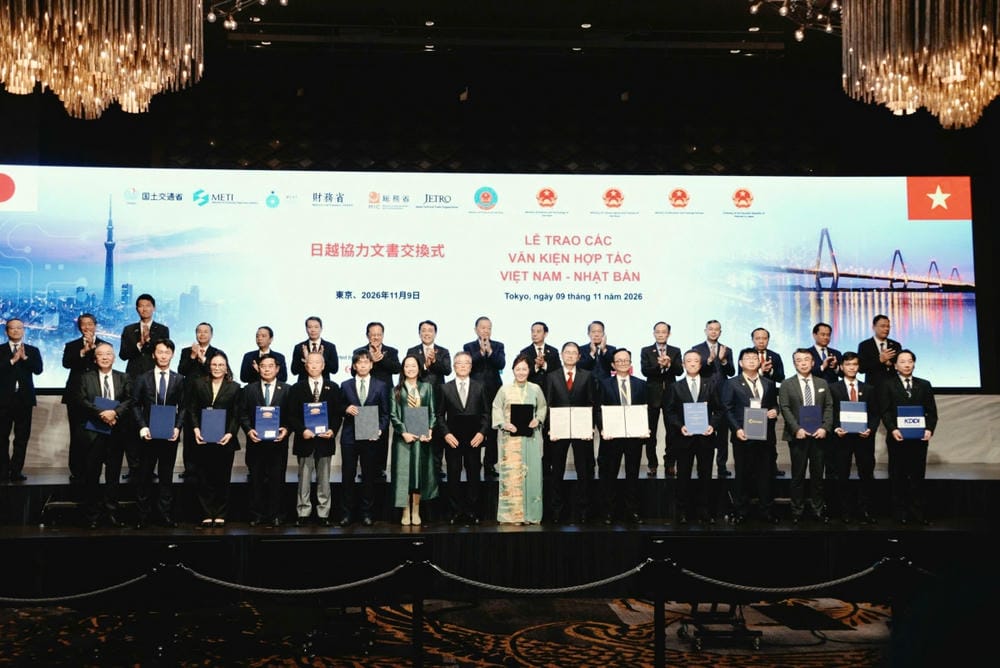
Dozens of cooperation documents between Vietnamese and Japanese enterprises, ministries, and agencies are exchanged in the presence of General Secretary and President To Lam.
From Economic Cooperation to Co-Creation and Technological Mastery. One of the key directions emphasized at the forum was the need to shift from a cooperation model primarily based on technology adoption and application toward cooperation in research, development, co-creation, and the gradual achievement of technological mastery.
As science, technology, and innovation increasingly become important drivers of economic growth, Vietnam has identified strengthening international cooperation, harnessing internal capabilities, and enhancing technological self-reliance as strategic imperatives for national development. Fields such as artificial intelligence, semiconductor technology, biotechnology, clean energy, and smart industry have been identified as areas of cooperation with great potential, in which Vietnam and Japan have many advantages in complementing each other’s resources, experience, and development capabilities.
On the Japanese side, strengths in technology, scientific research, quality management, and modern industrial development experience are valuable resources for Vietnam’s development. Conversely, Vietnam has advantages in its workforce, market, research potential, and the ability to adopt and develop new technologies. The forum therefore aims not only to promote trade and investment activities but also to contribute to the formation of long-term cooperation models, in which enterprises from both countries jointly participate in research, product development, improving standards, and building internationally competitive value chains.
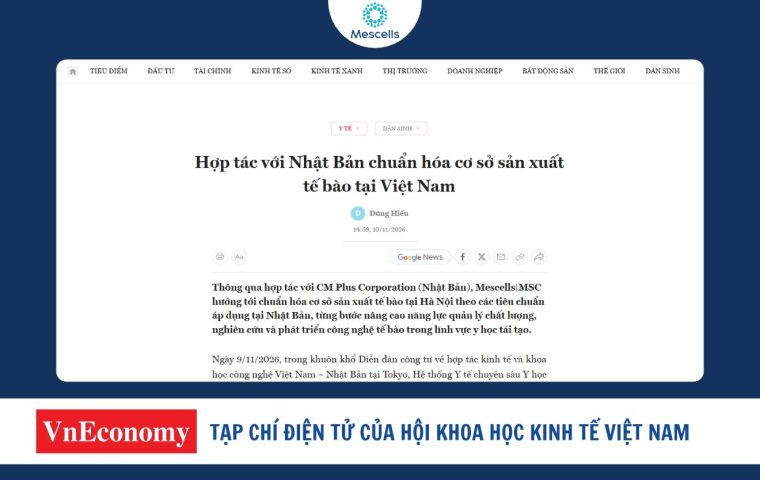
Cell-Based Technology Cooperation: A Step Forward in Connecting Vietnam-Japan Healthcare Enterprises. Within the framework of the forum, Mescells|MSC Specialized Healthcare System for Regenerative Medicine and Cell Therapy (Mescells|MSC) from Vietnam and CM Plus Corporation (CM PLUS) from Japan exchanged a Memorandum of Understanding (MOU) in the presence of senior leaders from both countries. The MOU focuses on cooperation in consulting, standardization, and improvement of the quality management system (QMS) for Mescells|MSC’s cell manufacturing and processing facility (Cell Processing Center, CPC) in Hanoi, with the aim of meeting applicable Japanese standards and requirements.
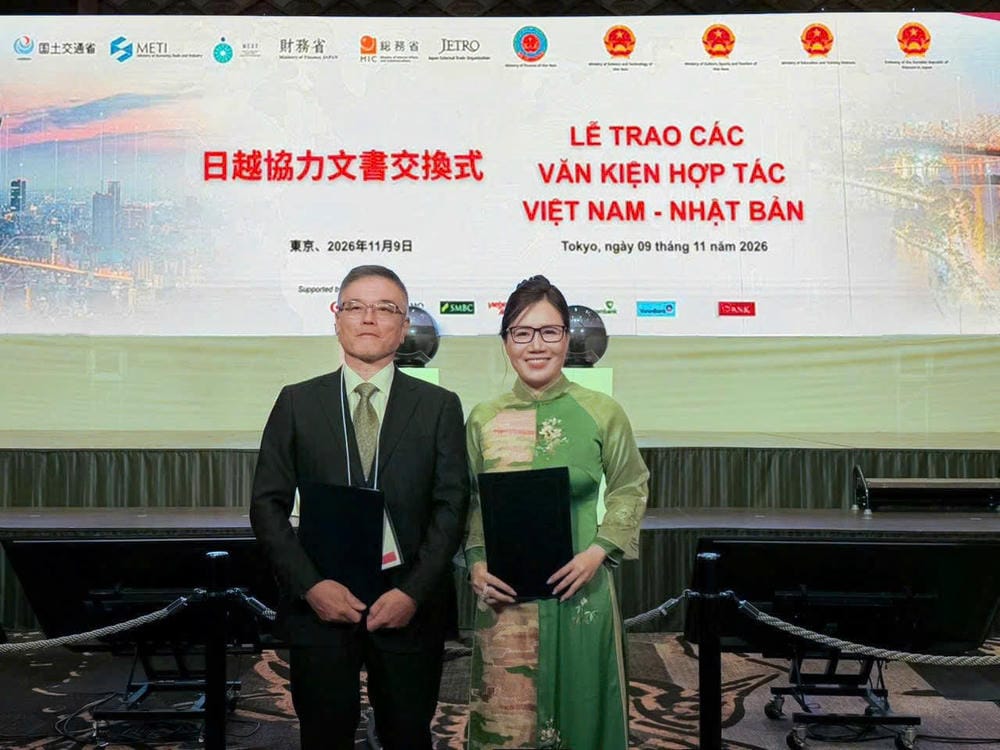
Representatives of Mescells|MSC Specialized Healthcare System for Regenerative Medicine and Cell Therapy (Vietnam) and CM Plus Corporation (Japan) exchange the cooperation documents.
This represents a concrete cooperation initiative in the fields of biotechnology and regenerative medicine, demonstrating the participation of Vietnamese private healthcare enterprises in connecting with advanced technologies, adopting management expertise, and enhancing manufacturing capabilities in line with international standards. Under the MOU, CM Plus Corporation will provide specialized consulting services and support Mescells|MSC in developing and improving its quality management system (QMS), operating procedures, facility conditions, personnel competencies, and technical requirements for cell processing and manufacturing operations.
The primary focus of the cooperation is to work toward meeting the requirements prescribed by Japan’s Ministry of Health, Labour and Welfare (MHLW), while undertaking the necessary procedures to enable the cell manufacturing facility in Vietnam to progressively adopt and meet the corresponding Japanese standards. In the field of cell therapy and cell-based technologies, product quality and safety depend not only on the technologies employed but also on the entire system for controlling the manufacturing process. All aspects, from facility design, environmental conditions, and operating procedures to quality control and the competencies of the specialized workforce, must be built in a coordinated manner and be capable of inspection, evaluation, and traceability.
Therefore, cooperation with a Japanese enterprise with consulting experience in this field is expected to help Mescells|MSC gain access to systematic quality management methods, strengthen its operational capabilities, and progressively raise the standards of its cell manufacturing facility in Vietnam.
Combining International Experience with the Self-Reliance of Vietnamese Enterprises. Commenting on the significance of the MOU, Mrs. Nguyen Thi Thu Hien, Chairwoman of the Board of Directors of Mescells|MSC, stated: “Having deeply understood the guidance of the General Secretary that Vietnamese people must master science and technology, we are even more confident in the path Mescells|MSC has chosen. Adopting Japan’s stringent standards is the key to enabling Vietnam’s private healthcare sector to become self-reliant and strong, delivering safe and effective regenerative medicine therapies with quality standardized in line with international standards, right at home in Vietnam.”
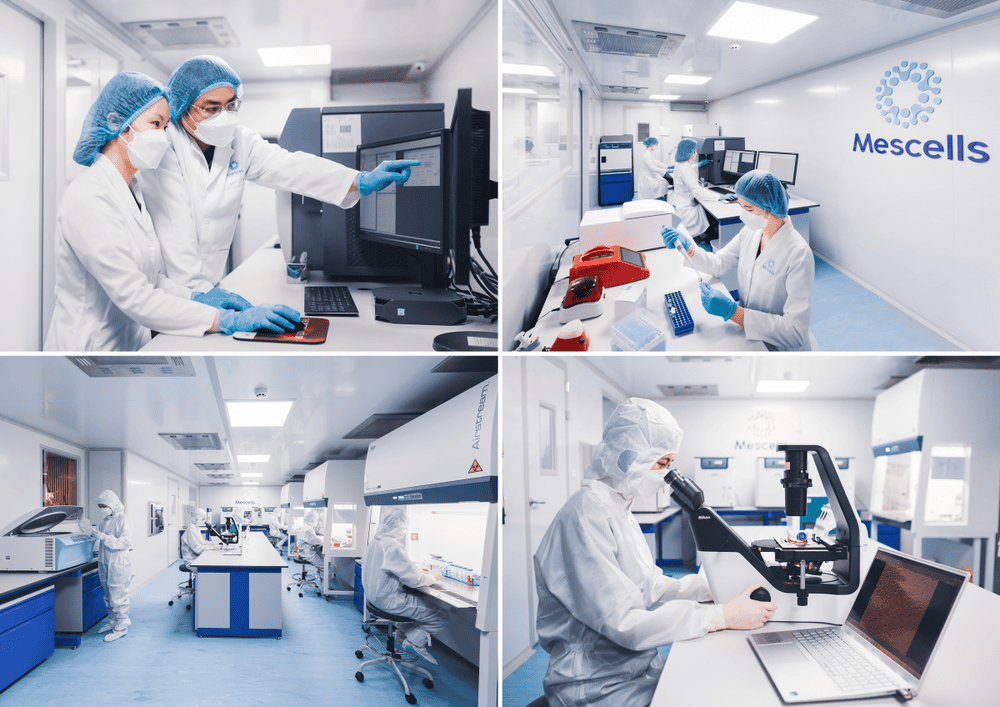
The laboratory facilities at Mescells|MSC are built in accordance with WHO Good Manufacturing Practice (WHO-GMP) standards.
According to the company’s orientation, cooperation with CM PLUS aims not only to improve the technical conditions and quality management of a cell manufacturing facility but also to accumulate knowledge, enhance specialized expertise, and establish a foundation for the development of cell-based technologies in Vietnam. This approach is also aligned with the broader direction for the development of science, technology, and innovation, in which international cooperation must be linked to strengthening internal capabilities and gradually mastering processes, technologies, and the high-value-added stages of the production chain.
From a broader perspective, concrete cooperation agreements between Vietnamese and Japanese enterprises in the fields of biotechnology and regenerative medicine show the potential for connecting Japan’s technological strengths with the needs and development capabilities of Vietnam’s market. Through the Vietnam-Japan Public-Private Forum, strategic cooperation directions are gradually being put into practice through programs, projects, and agreements between organizations and enterprises from both countries.
In this context, the cooperation between Mescells|MSC and CM PLUS is an example of efforts to connect international resources, raise quality standards, and develop technological capabilities in Vietnam’s healthcare sector. This is also a meaningful approach as Vietnam accelerates the development of science and technology, promotes innovation, and strengthens national self-reliance, with the aim of participating more deeply in technology value chains with high knowledge content and high added value.
Source: T5G



 Hotline
 Zalo
 Fanpage