 0866 022 097
 institute@mescells.com

Vietnamese Enterprises Invest in Standardizing Cell Manufacturing to Japanese Standards


Amid the growing trend of regenerative medicine development, international cooperation is creating new opportunities for Vietnamese healthcare enterprises to gain access to quality management experience and enhance their high-tech manufacturing capabilities.
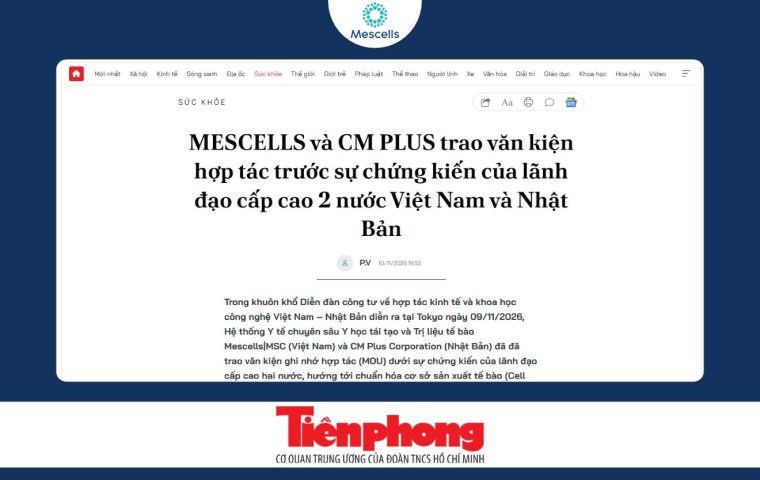
Within the framework of the Vietnam-Japan Public-Private Forum on Economic, Scientific and Technological Cooperation, Mescells|MSC Specialized Healthcare System for Regenerative Medicine and Cell Therapy (Mescells|MSC) and CM Plus Corporation (CM PLUS) exchanged a Memorandum of Understanding (MOU) in the presence of senior leaders from both countries.
As biotechnology and regenerative medicine attract increasing attention, gaining access to international standards in manufacturing, quality control, and operations management plays an important role in developing medical technology capabilities in Vietnam.
Unlike cooperation initiatives that primarily focus on equipment transfer, the cooperation between Mescells|MSC and CM PLUS aims to improve the operational capabilities of the cell manufacturing facility, covering infrastructure conditions, technical procedures, and the quality management system (QMS).
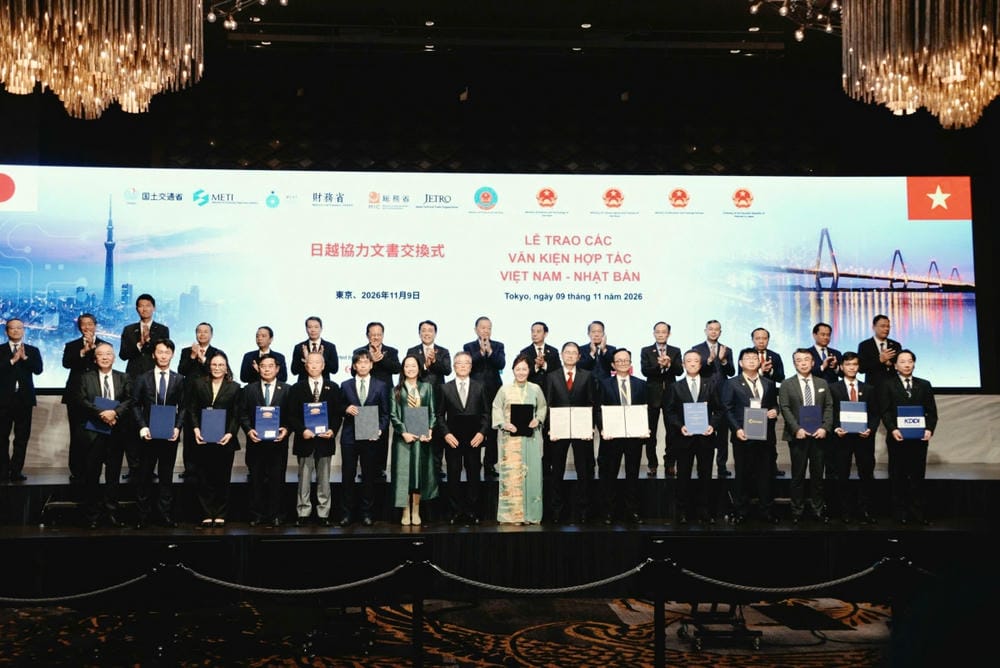
General Secretary and President To Lam witnesses the MOU signing ceremony between Mescells|MSC and CM PLUS.
Under the cooperation agreement, CM PLUS will provide consulting services for the cell manufacturing facility in Hanoi operated by Mescells|MSC or its affiliated companies, based on Japan’s requirements for a Cell Processing Center (CPC).
The planned activities will begin with a review of documentation, an on-site assessment of actual facility conditions, and a gap analysis between existing capabilities and Japanese specialized and technical requirements. Based on the assessment findings, both parties will discuss corrective measures to address areas requiring improvement, prepare documentation for registration and accreditation, and implement training programs and technical workshops.
The cooperation will be carried out in phases, taking into account the facility’s actual conditions and the scope of work agreed upon by both parties.
This approach emphasizes quality and operational capabilities, which are key factors in the research, manufacturing, and development of cell-based technologies.
In the field of regenerative medicine, quality control imposes strict requirements on manufacturing conditions, processing environments, handling procedures, traceability, and microbial contamination risk control. Therefore, investment in technology must be carried out in step with workforce development and the establishment of a management system that meets specialized standards.
Commenting on the direction of the cooperation, Mrs. Nguyen Thi Thu Hien, Chairwoman of the Board of Directors of Mescells|MSC, stated that standardizing the stem cell bank and cell manufacturing facility in accordance with the requirements of Japan’s Ministry of Health, Labour and Welfare (MHLW) is an important step in the company’s development strategy.
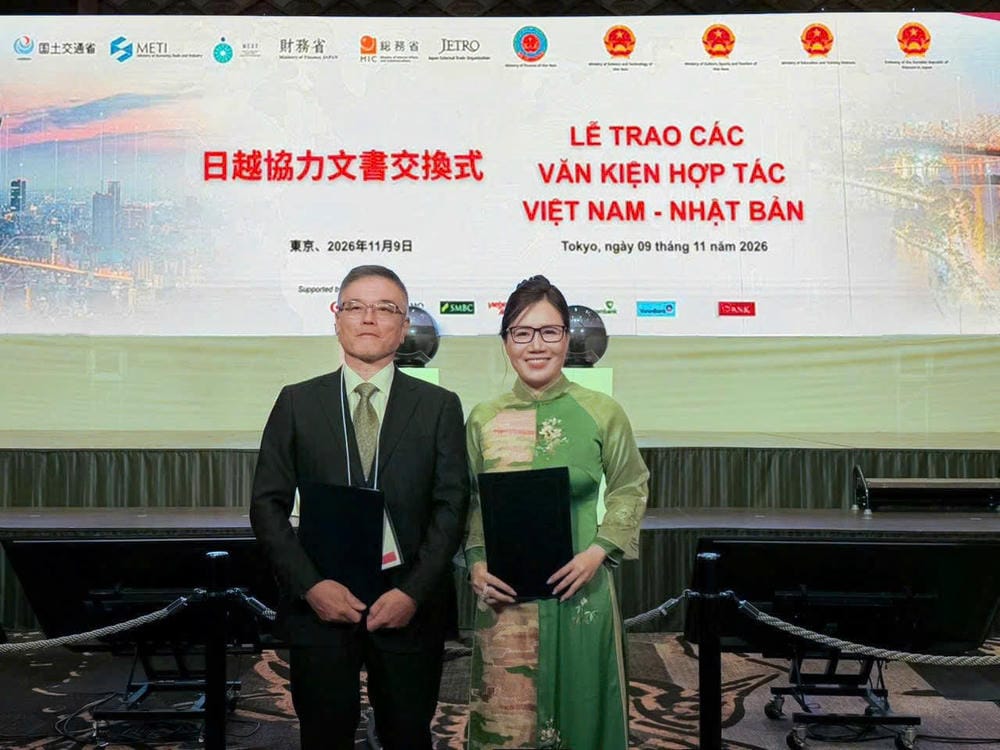
Mrs. Nguyen Thi Thu Hien, Chairwoman of the Board of Directors of Mescells|MSC, and Mr. Satoshi Suekane, President and Representative Director of CM PLUS, sign the MOU.
“In line with the Forum’s theme, ‘Co-Creating Technology, Co-Building Future Value Chains,’ standardizing the stem cell bank and cell manufacturing facility in accordance with the stringent standards of Japan’s Ministry of Health, Labour and Welfare (MHLW) is not only a strategic step for Mescells|MSC but also a strong commitment to bringing the world’s most advanced regenerative medicine standards to healthcare delivery for Vietnamese people, right in Vietnam,” Mrs. Nguyen Thi Thu Hien said.
According to the company’s representative, cooperation with the Japanese partner is expected to support improvements in manufacturing conditions, enhance quality management capabilities, and develop a specialized workforce in the field of cell-based technologies.
Before implementing this cooperation program, Mescells|MSC had developed several specialized activities related to research, tissue banking, training, and the application of cell-based technologies.
Among these, the Mescells Tissue Bank is licensed by Vietnam’s Ministry of Health to operate, handling the receipt, preservation, storage, and transport of adipose tissue and umbilical cord tissue. The Mescells Institute for Applied Cell Technology Research is licensed by Vietnam’s Ministry of Science and Technology to conduct research and develop cell-based technologies and cell therapies in regenerative medicine.
In addition to its research activities, the Institute has been authorized by a specialized agency under Vietnam’s Ministry of Health to organize Continuing Medical Education (CME) programs on stem cell technology for physicians and healthcare professionals.
The integration of research and technology development with workforce training is considered one of the essential conditions for enhancing the capacity to adopt, operate, and develop specialized techniques.
On the Japanese partner’s side, CM PLUS operates in the fields of quality management consulting, regulatory compliance, project management, and the construction of manufacturing facilities, including pharmaceuticals, medical devices, and regenerative medicine.
CM PLUS’s experience in consulting on the construction and standardization of cell processing facilities provides a foundation for both parties to implement cooperation activities aimed at improving operational quality in Vietnam.
Notably, the signing of the MOU marks only the beginning of the process of consulting, assessment, and improvement of facility conditions. Compliance with specialized standards and accreditation by competent authorities, where applicable within the scope of registration, must follow the applicable procedures, requirements, and regulations.
As Vietnam promotes the development of science, technology, and innovation, international cooperation in the field of cell-based technologies reflects a growing trend among enterprises in Vietnam to proactively gain access to management experience and technical standards from countries with advanced healthcare systems.
However, for medical technology to generate sustainable value, investment must be closely linked to research capabilities, manufacturing conditions, workforce quality, and safety control systems. These are also important requirements as research institutions and enterprises gradually expand their activities in the field of regenerative medicine.
The effectiveness of the cooperation program will depend on the outcomes of implementing the agreed activities, the extent to which the cell manufacturing facility is improved, and the degree of compliance with specialized and legal requirements.
In the long term, cooperation initiatives focused on quality standardization may contribute to strengthening medical technology capabilities in Vietnam and promoting the research, development, and application of advances in modern medicine.
Source: Vietnam Investment Review






 Hotline
 Zalo
 Fanpage