 0866 022 097
 institute@mescells.com

MESCELLS and CM PLUS Exchange Cooperation Documents in the Presence of Senior Leaders of Vietnam and Japan


Within the framework of the Vietnam-Japan Public-Private Forum on Economic, Scientific and Technological Cooperation, held in Tokyo on November 9, 2026, Mescells|MSC Specialized Healthcare System for Regenerative Medicine and Cell Therapy (Mescells|MSC) from Vietnam and CM Plus Corporation (CM PLUS) from Japan exchanged a Memorandum of Understanding (MOU) in the presence of senior leaders from both countries. The MOU aims to standardize the cell manufacturing facility, a Cell Processing Center (CPC), in Vietnam in line with applicable Japanese standards.
The event marks a new step forward in Mescells|MSC’s strategy of connecting with international technologies, improving research capabilities, and developing cell manufacturing infrastructure.
A Milestone in Cooperation at the Vietnam-Japan Public-Private Forum
On November 9, 2026, the Vietnam-Japan Public-Private Forum on Economic, Scientific and Technological Cooperation, themed “Co-Creating Technology, Co-Building Future Value Chains,” was held at Hotel New Otani in Tokyo, Japan, opening further opportunities for cooperation between enterprises from both countries in technology, innovation, and value chain development.
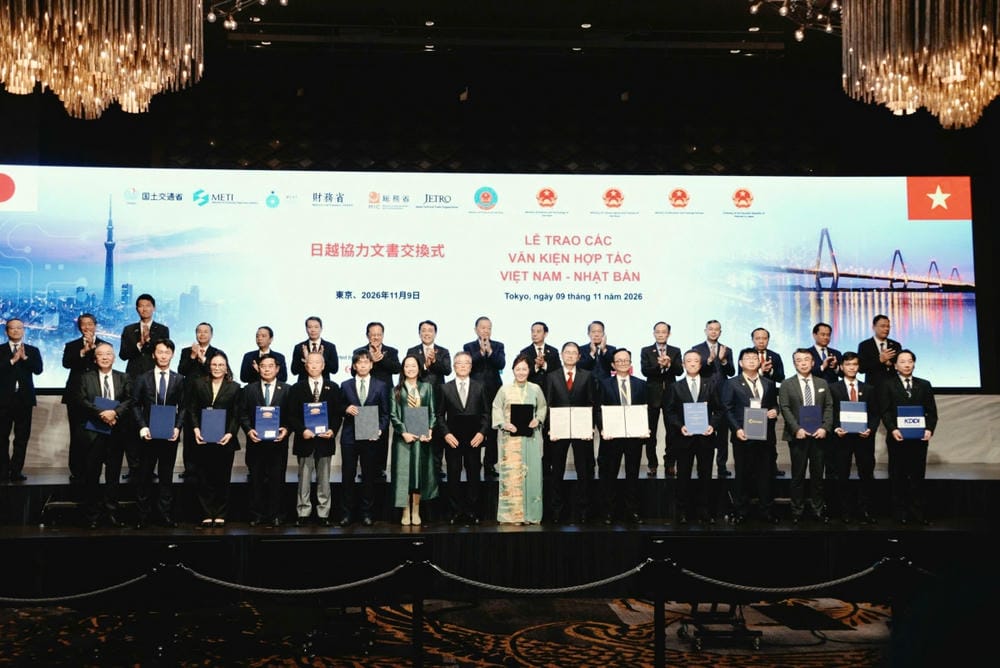
Mrs. Nguyen Thi Thu Hien (in a blue ao dai), Chairwoman of the Board of Directors of Mescells|MSC Specialized Healthcare System for Regenerative Medicine and Cell Therapy, and Mr. Satoshi Suekane, President and Representative Director of CM Plus Corporation, exchange the Vietnam-Japan cooperation documents. Photo: Vietnam News Agency (VNA)
Within the framework of the forum, Mescells|MSC and CM Plus Corporation (CM PLUS) exchanged cooperation documents in the presence of senior leaders from both countries. This is an important milestone in Mescells|MSC’s strategy of expanding international cooperation, while laying the groundwork for promoting technical exchange and gaining access to Japan’s management experience, technological processes, and technical standards, with the aim of improving capabilities in the research, development, and application of cell-based technologies and regenerative medicine in Vietnam.
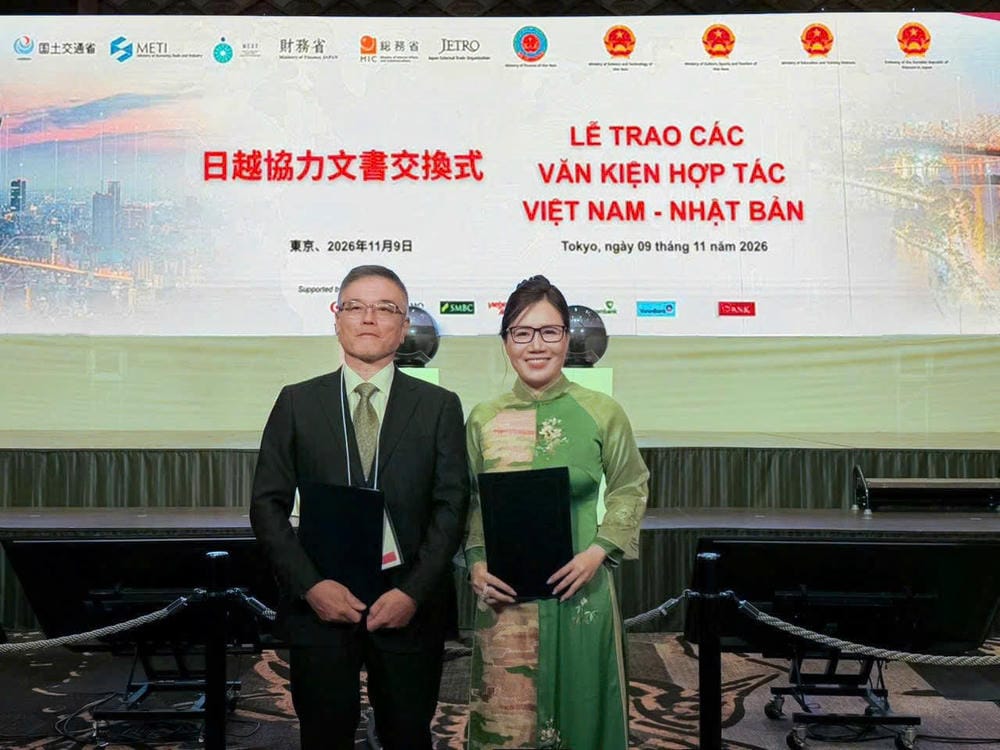
Representatives of the two organizations: Mrs. Nguyen Thi Thu Hien, Chairwoman of the Board of Directors of Mescells|MSC Specialized Healthcare System for Regenerative Medicine and Cell Therapy, and Mr. Satoshi Suekane, President and Representative Director of CM Plus Corporation, exchange the Vietnam-Japan cooperation documents. Photo: Khanh Linh
CM PLUS Supports Mescells|MSC in Standardizing Its Cell Manufacturing Facility
Under the Memorandum of Understanding (MOU), CM Plus Corporation (CM PLUS) will provide specialized consulting services to support Mescells|MSC in the standardization and registration for accreditation of its cell manufacturing facility in Hanoi, in line with Japanese standards and requirements applicable to a Cell Processing Center (CPC).
The cooperation primarily aims to enable Mescells|MSC’s cell manufacturing facility to meet the requirements prescribed by Japan’s Ministry of Health, Labour and Welfare (MHLW). This process includes gaining access to experience in establishing a quality management system (QMS), improving operating procedures and facility conditions, and meeting technical requirements for cell processing and manufacturing activities. This cooperation is of great importance to the direction of Mescells|MSC’s cell manufacturing capability development. In the field of cell therapy and cell-based technologies, establishing a manufacturing facility that meets specialized requirements demands not only a strong technological foundation but also an integrated quality management system, appropriate facility conditions, controlled operating procedures, and the ability to meet stringent technical requirements.
With the support of its Japanese partner, Mescells|MSC has the opportunity to gain access to management experience and in-depth quality control methods, progressively improving the operational capabilities of its cell manufacturing facility in line with the orientation of international standardization.
Mescells|MSC’s Foundation in Research, Training, and Development of Cell-Based Technologies
Mescells|MSC is a specialized healthcare system focusing on the research, training, manufacturing, and application of regenerative medicine and cell therapy. The Mescells|MSC ecosystem has been developed on the basis of connecting scientific research, healthcare workforce training, and infrastructure development to support cell-based technology activities.
Within this ecosystem, the Mescells Institute for Applied Cell Technology Research is one of the private institutions in Vietnam licensed by Vietnam’s Ministry of Science and Technology to conduct research on cell-based technologies and cell therapies in regenerative medicine. The Institute has also been authorized by the Department of Science, Technology and Training under Vietnam’s Ministry of Health to organize training in stem cell technology for physicians and healthcare professionals.
In addition, the Mescells Tissue Bank is one of the first private tissue banks in Vietnam to be licensed by Vietnam’s Ministry of Health to operate, handling the receipt, preservation, storage, and transport of adipose tissue and umbilical cord tissue.
These foundations form an integrated ecosystem connecting research, training, and in-depth cell-based technology activities. Within this ecosystem, developing the cell manufacturing facility in line with the orientation of international standardization is an important link, helping to improve Mescells|MSC’s capabilities across the entire chain of activities from research to manufacturing and application.
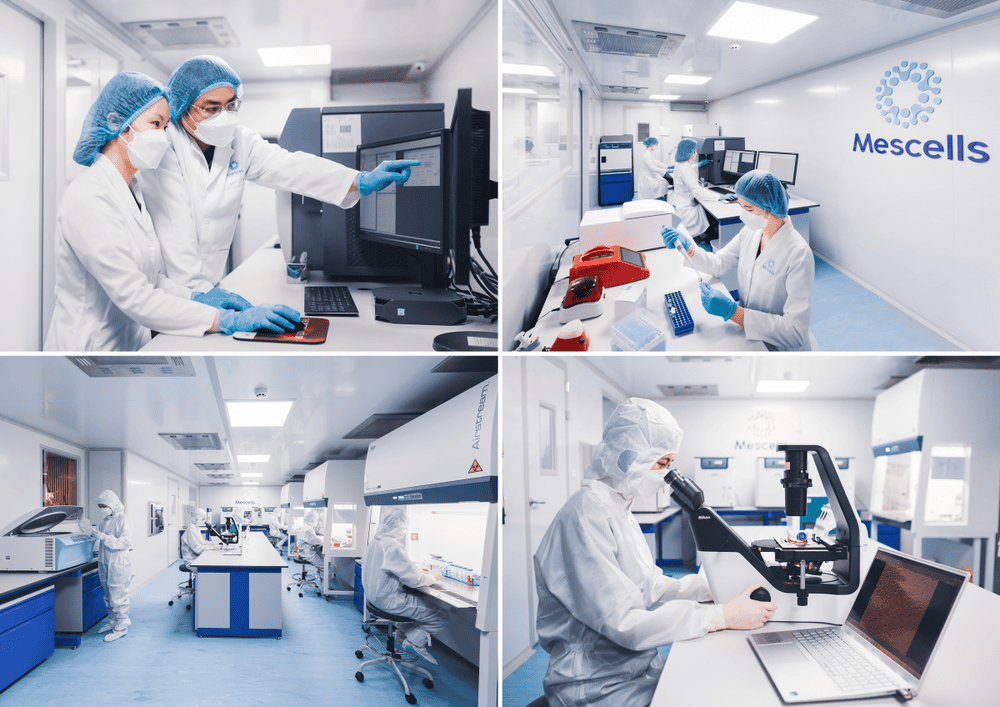
The laboratory facilities at Mescells|MSC are built in accordance with WHO Good Manufacturing Practice (WHO-GMP) standards to ensure safety and quality in the manufacturing, storage, and testing of cells.
The cooperation with CM PLUS is therefore not an isolated activity but part of Mescells|MSC’s long-term orientation to gain access to international experience, improve quality management capabilities, and progressively develop cell manufacturing infrastructure that meets increasingly demanding specialized requirements.
Source: Tien Phong Newspaper



 Hotline
 Zalo
 Fanpage