 0866 022 097
 institute@mescells.com
Serum-Free Cell Culture: Advantages, Challenges and Applications


Serum-free cell culture is becoming an important direction in cell culture technology, especially in stem cell research, biologics manufacturing and the development of cell therapy products. Compared with traditional medium supplemented with fetal bovine serum (FBS), serum-free medium allows better control of culture composition, reduces variation between raw material lots and limits some of the risks associated with animal-derived components.
So what is serum-free cell culture, what are its advantages and limitations, and how is it applied in practice? Join Mescells to find out below.
1. What is serum-free cell culture?
Serum-free cell culture is a method of growing cells in medium without added animal serum such as FBS. Instead of relying on the complex natural mixture found in serum, the culture medium is supplemented with defined or controlled essential components such as insulin, transferrin, albumin, lipids, vitamins and growth factors.
Depending on the purpose, media can be designed with different levels of control, from serum-free and xeno-free to chemically defined medium. Chemically defined media allow composition to be controlled more clearly and are attracting growing interest in large-scale cell manufacturing.
1.1. What role does serum play in cell culture?
In traditional cell culture, serum is usually added to the medium because it contains many components that support cell survival and growth. These components can provide or support:
- Growth factors and regulatory proteins.
- Hormones and lipids needed for cell activity.
- Proteins that help cells adhere and grow.
- Components that support nutrient transport.
- Certain factors that help cells adapt to culture conditions.
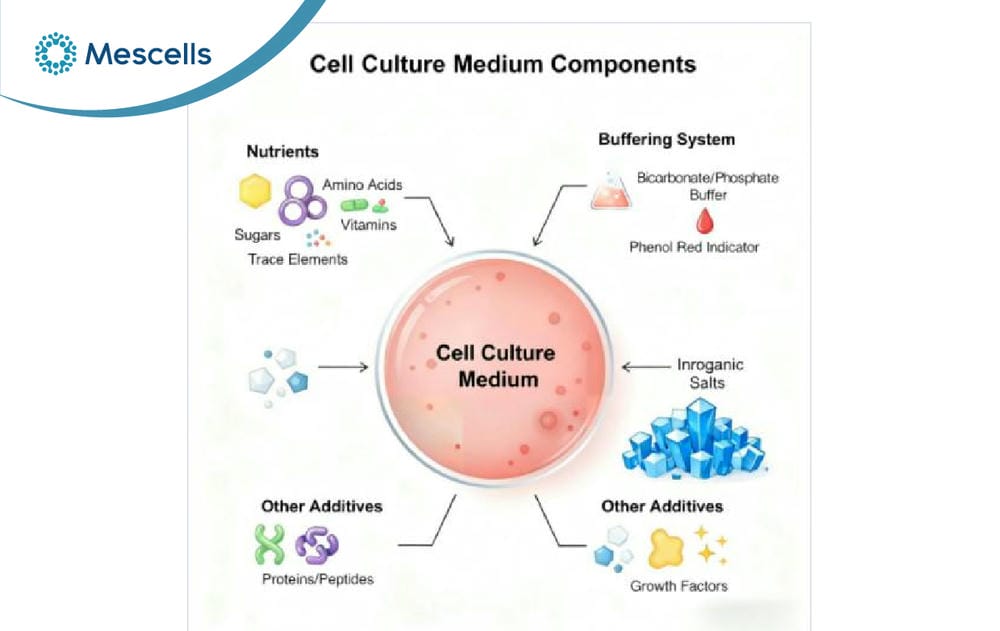
The role of fetal bovine serum (FBS) in cell culture
Because it contains so many biological components, serum can support the efficient growth of many cell types. However, its composition is very complex and can vary from lot to lot, making it difficult when the culture process needs to be tightly controlled.
1.2. Why develop serum-free culture?
The development of serum-free cell culture stems from the need for better control of the culture environment, especially when cells are used for in-depth research or for manufacturing processes with high quality requirements.
Animal-derived serum can introduce variation between raw material lots and carries a potential risk of unwanted biological agents. For cell products used in research and regenerative medicine, reducing or eliminating animal-derived components can make manufacturing easier to control and to standardize.
In particular, serum-free, xeno-free and chemically defined medium systems are attracting growing interest in the manufacture of cells, gene therapy, vaccines and biological products.
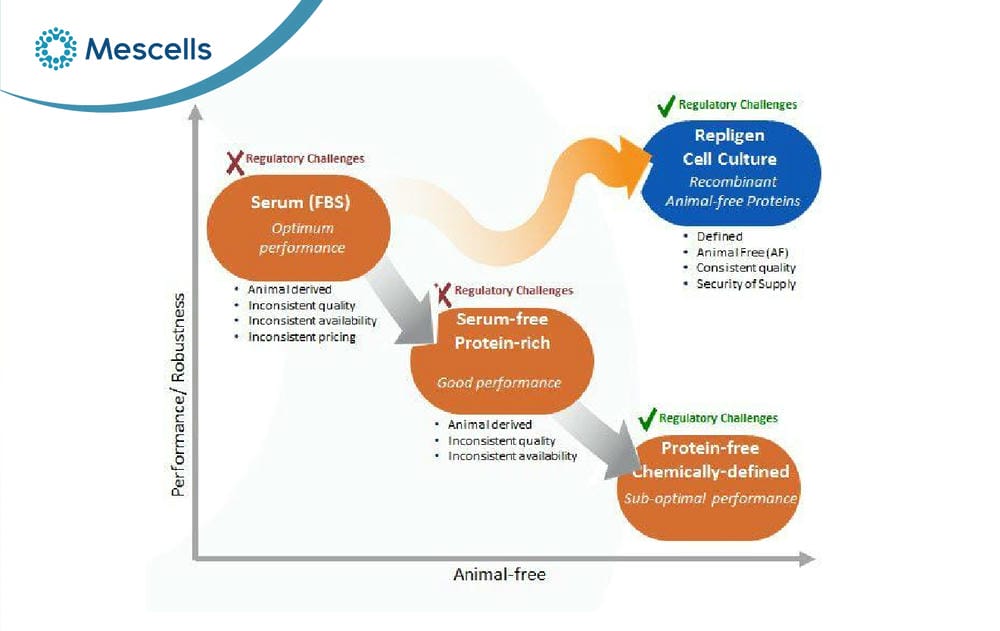
The trend towards cell culture media free of serum and animal proteins
2. Advantages of serum-free culture
When designed to suit each cell type, serum-free culture offers many benefits:
- Better control of the medium: The composition of the medium can be defined and adjusted more clearly, whereas serum is inherently complex and difficult to control fully.
- Greater consistency and reproducibility: Reducing dependence on different serum lots limits variation between experiments or between manufactured products.
- Lower risks associated with animal-derived materials: Eliminating FBS helps limit some of the risks from adventitious agents such as viruses and mycoplasma, and other issues related to animal-derived raw materials. This is especially important when developing cell products for biomedical applications.
- Easier large-scale manufacturing: A better-controlled medium can support standardization, scale-up and the development of manufacturing processes in line with GMP requirements.
- Support for research into cell mechanisms: With fewer undefined serum components, researchers can assess how individual growth factors or medium components affect cell growth. Serum-free systems have been used to study the maintenance and expansion of hematopoietic stem cells and many other cell types.
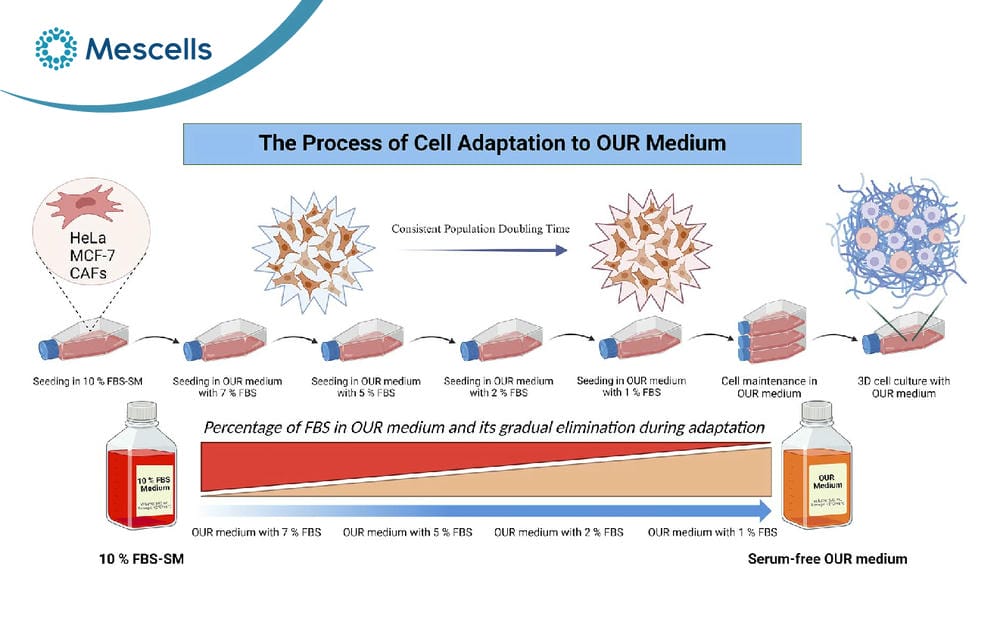
The process of gradually weaning cell cultures off FBS
3. Limitations and challenges of serum-free culture
Despite its many benefits, serum-free cell culture still has some limitations and challenges that need to be resolved before it can be widely applied in cell research and manufacturing.
- Difficult to optimize for each cell type: Serum contains many components that support cell growth and survival. When serum is removed, the necessary components must be identified and added appropriately. A medium that suits one cell type may therefore not meet the needs of another.
- Cells may need time to adapt: Switching from serum-containing to serum-free medium can affect the proliferation rate, viability and characteristics of the cells. The adaptation process needs to be controlled to limit unwanted changes in the cell population.
- Cost and medium composition: Serum-free media usually require high-purity growth factors, proteins or supplements. Selecting and controlling these components can increase the cost and technical demands of the process.
- High quality control requirements: “Serum-free” is not entirely the same as “free of animal-derived components”. Some serum-free media may still use proteins or raw materials of animal origin. Therefore, if the goal is to develop a xeno-free process or one suited to manufacturing cells for medical use, the origin and quality of every raw material must be controlled.
- Difficulties in scaling up: A medium that works well at research scale may not deliver the same performance at manufacturing scale. The medium, culture conditions and control procedures therefore need continued optimization to ensure consistent cell quality as production expands.
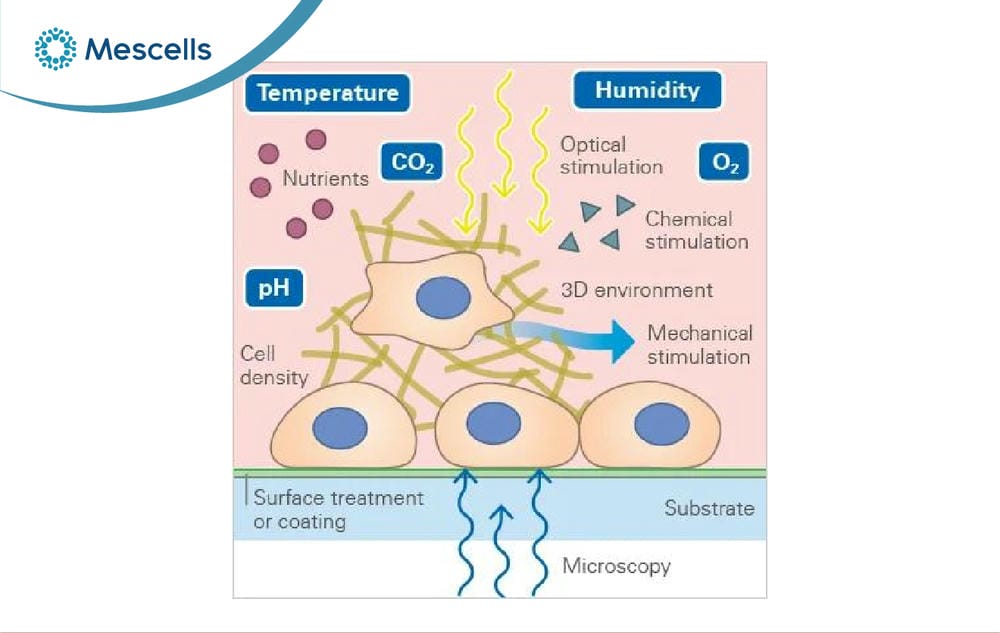
Factors affecting the 3D cell culture environment
4. Practical applications of serum-free culture
Because it allows better control of the culture environment, serum-free cell culture is being studied and applied in many fields:
- Stem cell research and culture: Serum-free media are used to maintain, expand and differentiate certain types of stem cells. For hematopoietic stem cells, serum-free systems have been studied to support the maintenance and expansion of progenitor cell populations. For stem cells and other stem cell systems, defined media can give better control over the conditions for maintaining cell state and for differentiation.
- Cell manufacturing for regenerative medicine: In regenerative medicine, serum-free media are of particular interest for expanding cell populations such as mesenchymal stem cells (MSCs). Reducing animal-derived components helps achieve more consistent products that better meet quality control requirements.
- Vaccine and biologics manufacturing: Serum-free culture is also applied in the manufacture of vaccines, recombinant proteins and biological products. The use of controlled media supports standardization and the scale-up of production.
- Cell and gene therapy: In cell therapy and gene therapy, requirements for consistency, safety and raw material control are increasingly demanding. Serum-free, xeno-free and chemically defined systems are therefore seen as important directions for the manufacture of cells and viral vectors for therapy.
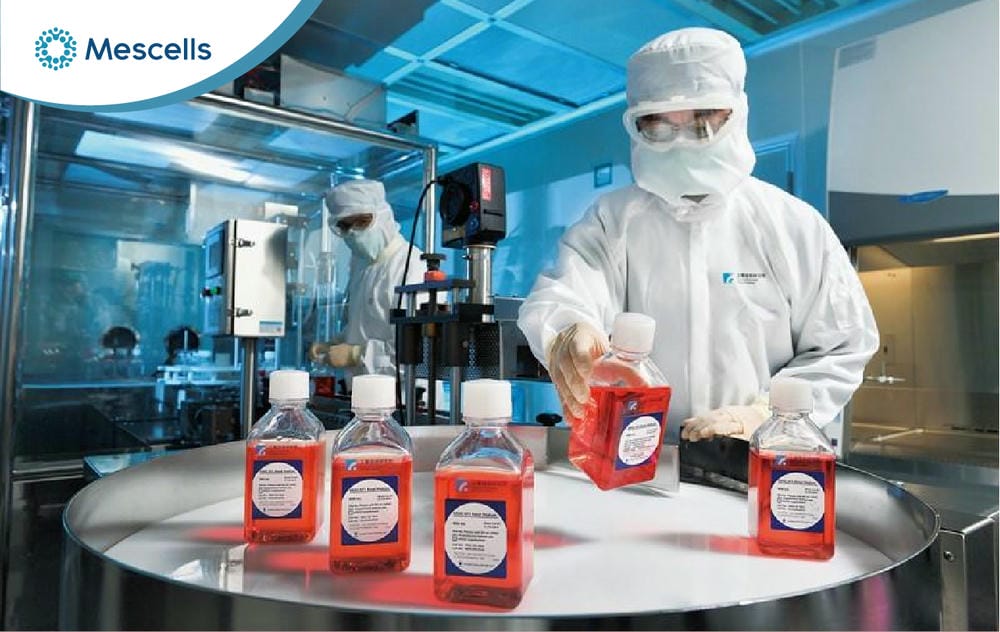
Manufacturing cell culture media to cleanroom standards
5. Cell culture technology at Mescells
To develop a serum-free cell culture process, besides choosing a suitable culture medium, it is important to maintain tight control from raw materials, culture conditions and equipment through to cell quality after harvest. The Mescells Institute of Applied Cell Technology Research builds its technology platform by combining the adoption of international regenerative medicine technology with its own capacity for research, optimization and standardization of processes in practice.
Technology transferred from Japan and the United States
Mescells has adopted cell technology platforms from Japan and the United States, while its research team continues to study, evaluate and optimize mesenchymal stem cell (MSC) culture processes. This direction is also reflected in its cooperation with Mt. Fuji GX Holdings (Japan) on the transfer of mesenchymal stem cell and immune cell production technology, providing a further basis for keeping up to date with advanced cell technology processes and standards.
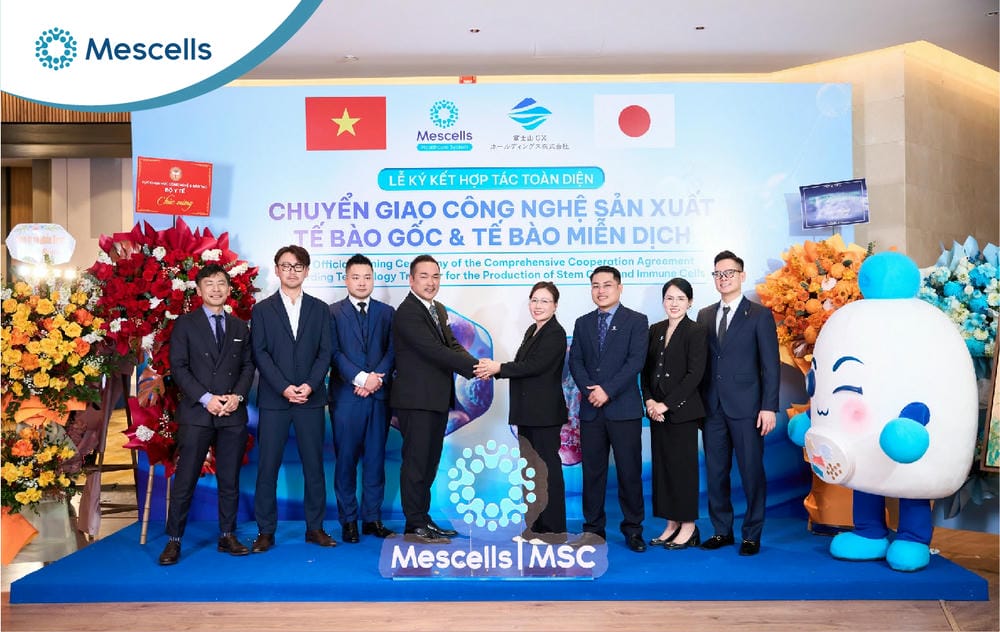
Representatives of Mescells and Mt. Fuji GX Holdings shake hands on their cooperation, laying the foundation for adopting and standardizing cell technology processes from Japan
An international medical-grade culture environment
To limit the risk of contamination and cross-contamination during culture, the Mescells lab is built and operated under strict control requirements. The cleanroom system is designed to GMP-WHO standards and meets ISO 14644-1:2015, providing a stable environment for cell research and culture processes.
Inside the lab, an AHU air handling system combined with HEPA filters controls dust and very small microorganisms, while the culture area is designed on the positive-pressure principle to limit the entry of outside air and reduce the risk of cross-contamination between batches.
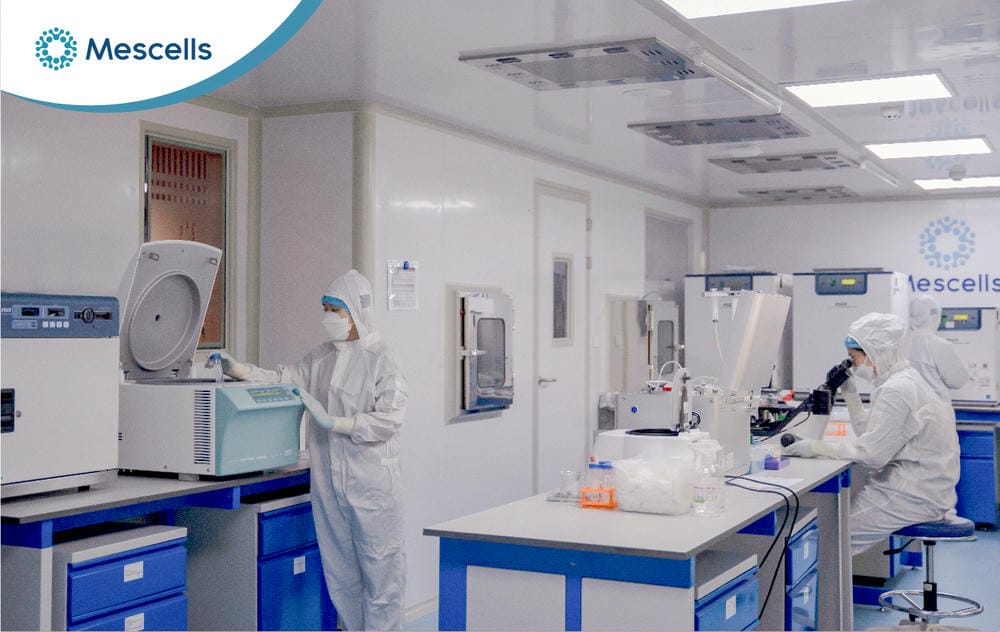
Cell manufacturing and culture in the cleanroom at the Mescells Institute of Applied Cell Technology Research
In the move towards serum-free cell culture, choosing a suitable medium and controlling raw materials, culture conditions and cell quality all need to be considered together. This is also the foundation for culture processes that are consistent, scalable and able to meet increasingly demanding quality control requirements.
Serum-free culture is an important direction in modern cell culture technology. It allows better control of medium composition, reduces variation between serum lots and limits some of the risks associated with animal-derived raw materials. However, each cell type has different needs, so the switch to serum-free medium still requires optimization and tight control. With the development of stem cells, regenerative medicine, cell therapy and biological products, serum-free culture is expected to continue to play an important role in building cell culture processes that are healthy, safe, consistent and scalable.
MESCELLS | MSC – SPECIALIZED HEALTHCARE SYSTEM FOR REGENERATIVE MEDICINE AND CELL THERAPY
- Hotline: 0866 022 097
- Address: TT21, No. 204 Nguyen Tuan, Thanh Xuan Ward, Hanoi, Vietnam.
- Fanpage: Mescells Institute of Applied Cell Technology Research
REFERENCES:
- Gottipamula S, Muttigi MS, Kolkundkar U, Seetharam RN.Serum-free media for the production of human mesenchymal stromal cells: a review.2013;46(6):608–627. https://pubmed.ncbi.nlm.nih.gov/24118248/
- Karnieli O, Friedner OM, Allickson JG, et al. A consensus introduction to serum replacements and serum-free media for cellular therapies. https://pubmed.ncbi.nlm.nih.gov/28017599/
- Al-Saqi SH, Saliem M, Asik M, et al. Defined serum-free media for in vitro expansion of adipose-derived mesenchymal stem cells. https://pubmed.ncbi.nlm.nih.gov/24726655/
- Goh BC, Teo LQ, Tan WT, et al. Serum and xeno-free, chemically defined, no-plate-coated. https://pubmed.ncbi.nlm.nih.gov/27492579/
Note: The content of this article is compiled from and refers to scientific reports and reputable medical journals around the world. However, this information is for reference only and is not a substitute for diagnosis or specialist medical treatment by a doctor.

Deputy Director, Mescells Institute of Applied Cell Technology Research




 Hotline
 Zalo
Zalo
 Fanpage