 0866 022 097
 institute@mescells.com
What Is Epigenetics? Invisible Control Layer above genome


Epigenetics is an important field of research within genetics that studies changes in gene activity and inheritance that do not alter the nucleotide sequence of DNA. In other words, the DNA does not change, but the way the DNA is expressed changes completely with each person’s age, activity and development. In the article below, Mescells explains in more detail what epigenetics is, how it works and how it is applied in medicine.
1. What is epigenetics?
Epigenetics is the study of changes in gene expression that can be inherited through cell divisions without altering the underlying DNA sequence. Epigenetic marks can, in principle, be established, erased and re-established according to the needs of the cell and signals from the environment [1].
Epigenetics can determine when genes are switched on and off (also known as gene expression) and, as a result, which proteins are made. It can even control the structure of the genome, loosening tightly packed chromosomes to allow the factors that control gene expression to reach the genes inside.
Geneticists study changes in gene activity to answer the question of what epigenetics is
2. How does epigenetics work?
To understand what epigenetics is, we need to look more closely at its mechanisms. These include:
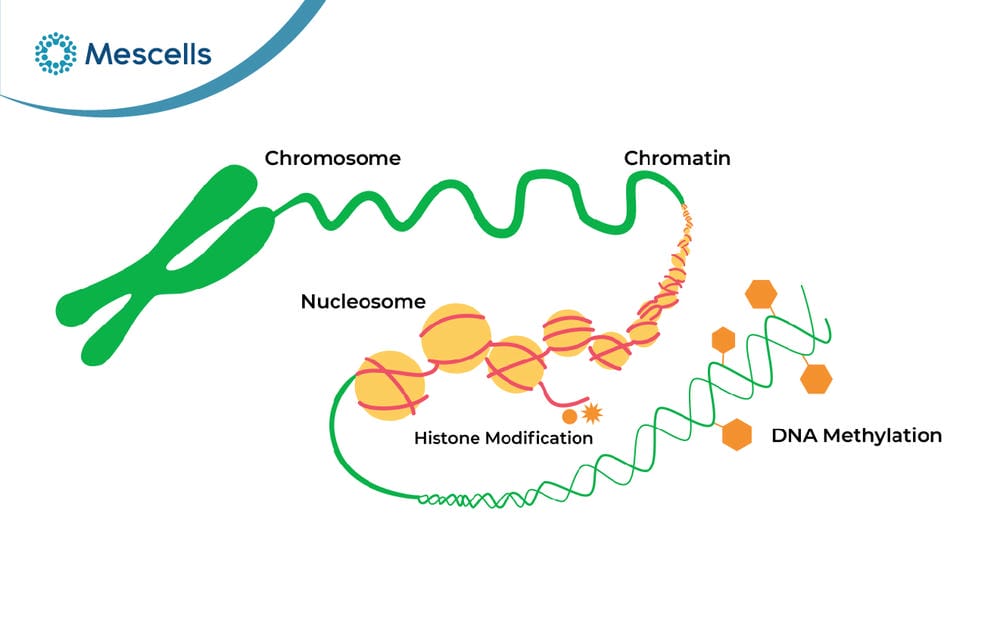
- DNA methylation: a methyl group is attached to the carbon-5 position of cytosine, mainly at CpG islands located near promoter regions. When such a region is heavily methylated, transcription factors have difficulty recognizing and binding to it, so the corresponding gene is switched off and cannot produce protein [2].
- Histone modification: DNA wraps around globular proteins called histones. Chemical reactions (such as acetylation and methylation) change how tightly the DNA strand is wound around the histones. When the interaction between DNA and histones is loose, the DNA sequence is exposed and easily transcribed. Conversely, if the DNA is wound tightly around the histones, transcription is more difficult [3].
- Chromatin remodeling: protein complexes use ATP energy to move, remove or reposition nucleosomes along the DNA strand, thereby opening up or hiding gene regions from the transcription machinery.
- Non-coding RNA: molecules such as microRNA and lncRNA can guide enzyme complexes to specific DNA or chromatin sites to establish or maintain the epigenetic state there
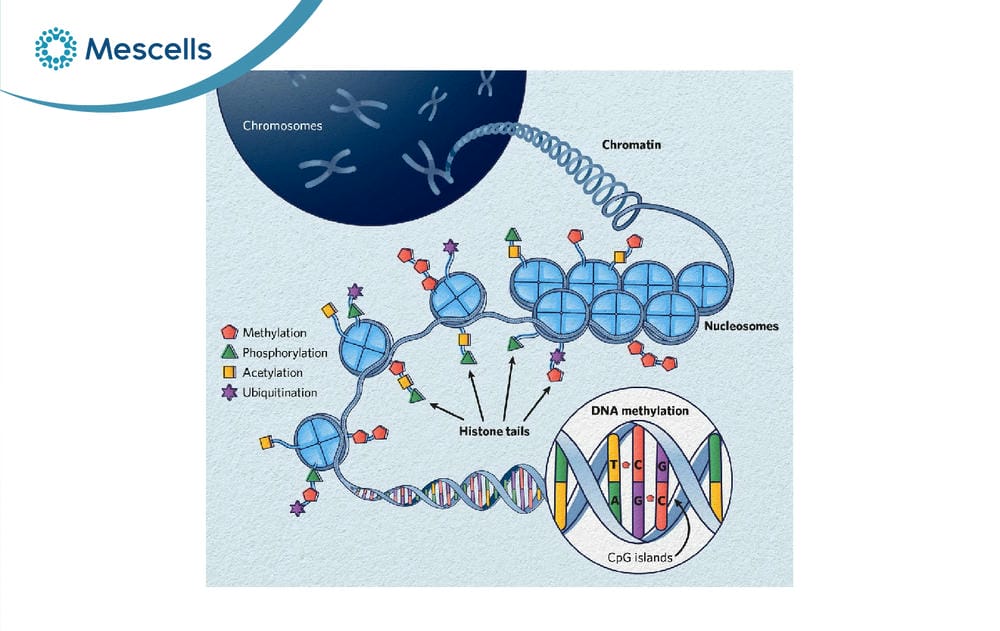
Epigenetics works through four main mechanisms
3. Factors that influence epigenetics
Unlike the DNA sequence, which is fixed from fertilization, a person’s epigenome changes continually over time and is affected by many factors both inside and outside the body.
3.1. Diet and nutrition
- Methyl donors: Foods rich in folate, vitamin B12 and choline supply the building blocks for DNA methylation.
- Bioactive compounds: Nutrients in green tea, garlic and cruciferous vegetables help suppress inflammation and regulate the activity of the enzymes that control epigenetic marks in cells.
- Maternal nutrition: A mother’s diet during pregnancy shapes the epigenetic makeup of the newborn in early life.
3.2. Lifestyle and behavior
- Physical activity: Regular exercise promotes beneficial gene changes related to metabolism and reduced inflammation.
- Chronic stress: Prolonged psychological pressure alters hormone regulation and immune function [4].
- Substance abuse: Smoking and drinking alcohol disrupt normal DNA methylation.
3.3. Environment and aging
- Toxins and pollutants: Exposure to heavy metals, plastics and tobacco smoke causes harmful changes to genes. Environmental pollutants such as chromium, cadmium, nickel, mercury and arsenic are all thought to alter the epigenetic machinery [5].
- Natural aging: As people age, cumulative environmental effects gradually change and disrupt the epigenome.
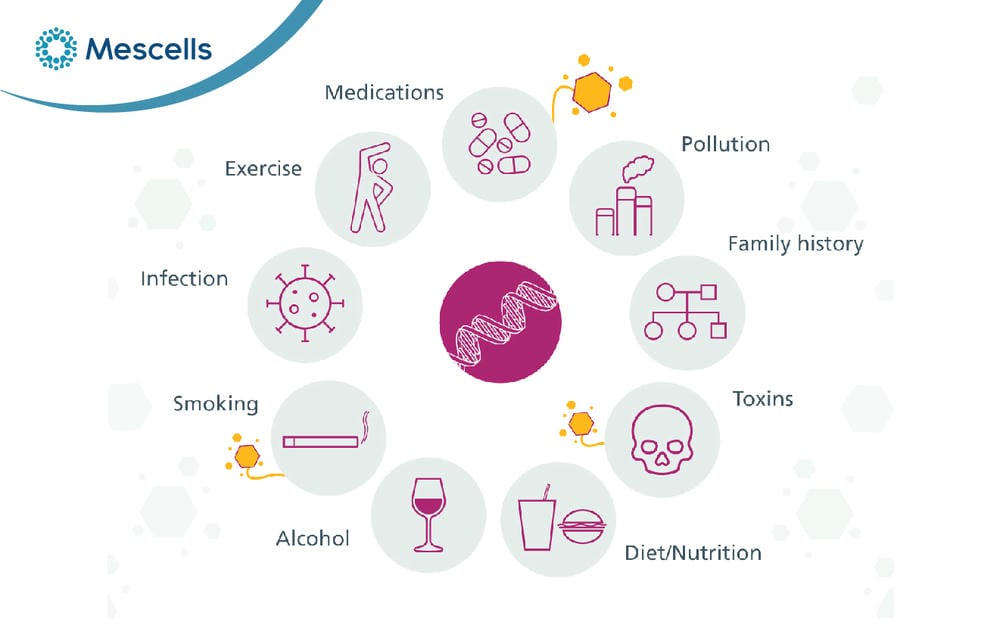
Factors such as environment, age, diet and lifestyle all influence epigenetics
4. Applications of epigenetics research in medicine
Because epigenetic marks are in principle reversible, this field has been opening up an approach to medical intervention that is entirely different from directly editing the DNA sequence.
4.1. Disease diagnosis and biomarkers
- Early detection: Detecting abnormal DNA methylation patterns in blood or tissue helps find cancer long before symptoms appear.
- Monitoring treatment response: Doctors use epigenetic changes in cell-free DNA to see whether a therapy is working or whether the disease has returned.
- Risk prediction: Testing for specific chemical marks on genes helps determine a person’s risk of cardiovascular problems, brain disorders or autoimmune diseases.
4.2. New medical treatments
- Cancer drugs: Many FDA-approved drugs target the enzymes that control DNA or histones, helping to stop the uncontrolled growth of cancer cells. For example, histone deacetylase inhibitors (HDAC inhibitors) such as vorinostat and romidepsin have been approved for the treatment of some types of T-cell lymphoma; they maintain histone acetylation, which helps reopen genes that have been abnormally “locked” in cancer cells [1].
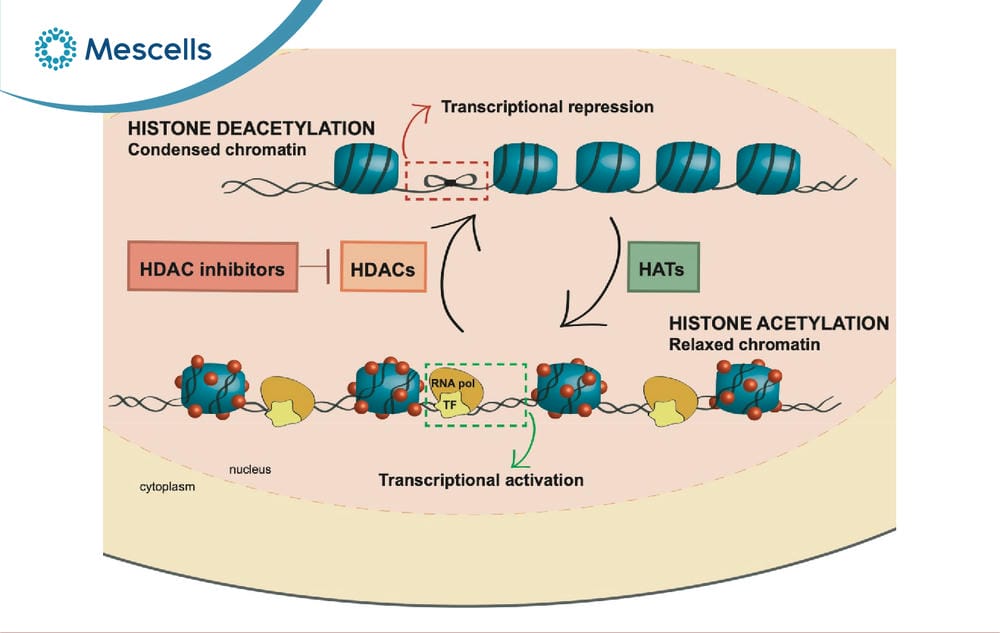
How histone deacetylase inhibitors work in cancer treatment
- CRISPR-based gene editing technology: New tools use modified CRISPR systems combined with regulatory molecules to switch specific disease-causing genes on or off without cutting the DNA code.
- A broad range of diseases under study: Research is expanding from cancer to metabolic, inflammatory and neurological diseases.
4.3. Advancing regenerative medicine
- Cell rejuvenation: Scientists use targeted factors to reverse harmful epigenetic changes associated with aging.
- Tissue repair: Reprogramming cell state helps improve damaged tissue and supports regenerative medicine in the future.
4.4. Remaining challenges
- Off-target toxicity: Current epigenetic drugs often lack precision, affecting both normal and diseased cells and causing unwanted side effects.
- Limits of reversibility: Although epigenetic changes can be reversed, this plasticity means that treatment effects may fade or need continuous management.
- Tissue complexity: Epigenetic profiles vary considerably between cell types and under different environmental influences, making it difficult to establish common clinical standards.
These are important limitations that researchers need to continue to clarify before epigenetic technology can be applied more widely and safely in clinical practice.

Research on and application of epigenetics in medicine still face many challenges that need to be clarified
To answer the question of what epigenetics is in full, we cannot stop at treating it as an abstract biological concept; we need to understand how it works and what can affect this special control layer of the genome. From that foundation of understanding, medicine is gradually opening up an entirely new approach: not changing the genome, but changing how the genome is read. As research continues to accelerate, it is hoped that in the not-too-distant future our understanding of epigenetics will go on to yield many breakthrough therapies that bring real benefits to human health.
MESCELLS | MSC – SPECIALIZED HEALTHCARE SYSTEM FOR REGENERATIVE MEDICINE AND CELL THERAPY
- Hotline: 0866 022 097
- Address: TT21, No. 204 Nguyen Tuan, Thanh Xuan Ward, Hanoi, Vietnam.
- Fanpage: Mescells Institute of Applied Cell Technology Research
REFERENCES:
- Chen Ma, 2025, “Epigenetic drugs in cancer therapy: mechanisms, immune modulation, and therapeutic applications”, PMC, https://pmc.ncbi.nlm.nih.gov/articles/PMC12675902/
- “DNA Methylation”, Science Direct, https://www.sciencedirect.com/topics/medicine-and-dentistry/dna-methylation
- “Histone Modification”, Science Direct, https://www.sciencedirect.com/topics/medicine-and-dentistry/histone-modification
- Ayman Ahmed, 2022, “Understanding the Factors that Influence Epigenetics”, Longdom, https://www.longdom.org/open-access/understanding-the-factors-that-influence-epigenetics-100283.html
- Alessio Metere, 2020, “Factors Influencing Epigenetic Mechanisms: Is There A Role for Bariatric Surgery?”, PMC, https://pmc.ncbi.nlm.nih.gov/articles/PMC7151212/#sec3
Note: The content of this article is compiled from and refers to scientific reports and reputable medical journals around the world. However, this information is for reference only and is not a substitute for diagnosis or specialist medical treatment by a doctor.

Deputy Director, Mescells Institute of Applied Cell Technology Research




 Hotline
 Zalo
Zalo
 Fanpage