 0866 022 097
 institute@mescells.com
What Is Transcription? The Process of Converting DNA into RNA


DNA exists as two complementary strands in a double helix, but when synthesizing RNA the cell chooses exactly one strand as the template. This precise, directed selection mechanism is the starting point of transcription. So what exactly is transcription, where does it take place, which components are involved, and what are its role and potential applications in biology? Join Mescells to find out in more detail in the following article.
1. What is transcription? Where does it take place?
Transcription is the process in which the enzyme RNA polymerase uses one strand of DNA as a template to synthesize an RNA molecule with the corresponding complementary sequence. It is the first step, and also the most tightly controlled step, in the whole process of gene expression.
In eukaryotic cells, transcription occurs in the cell nucleus, where DNA is stored, and newly made RNA must be processed and exported to the cytoplasm before it can take part in translation. By contrast, in bacteria (prokaryotic cells), which have no nuclear membrane, transcription and translation can take place almost simultaneously in the same cell compartment. The DNA strand used as the template is called the template strand, while the other strand, whose sequence is identical to the RNA produced (except that T is replaced by U), is called the coding strand.
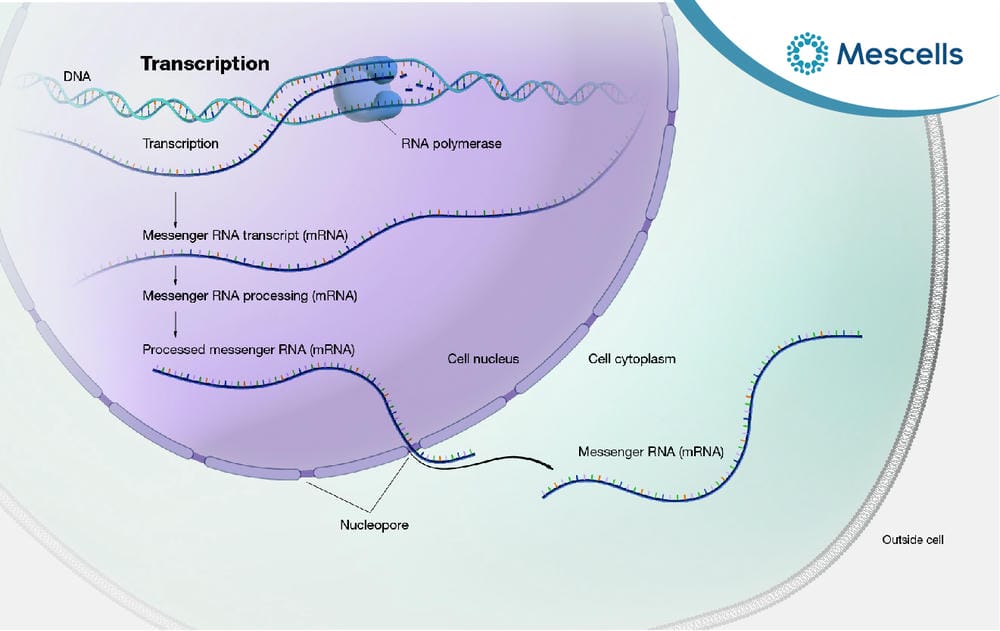
In eukaryotic cells, transcription takes place in the cell nucleus
2. Components involved in transcription
The components involved in transcription include [1]:
- DNA template: A specific segment of the DNA molecule that is read in the 3′ to 5′ direction to guide the synthesis of the new RNA chain.
- RNA polymerase: The main enzyme, which separates the DNA strands and joins RNA nucleotides in the 5′ to 3′ direction.
- Ribonucleotides: Free building blocks (ATP, UTP, GTP and CTP) used to build the growing RNA chain.
- Promoter: A specific DNA sequence located just before the gene, where RNA polymerase binds securely to begin the process.
- Terminator: A specific DNA sequence that signals to the enzyme when to stop and release the completed RNA
- Transcription factors: Helper proteins in higher cells (eukaryotes) that help RNA polymerase find the right promoter and bind to the DNA.
- Activators and repressors: Control proteins that switch genes on or off by assisting or blocking the main enzyme.
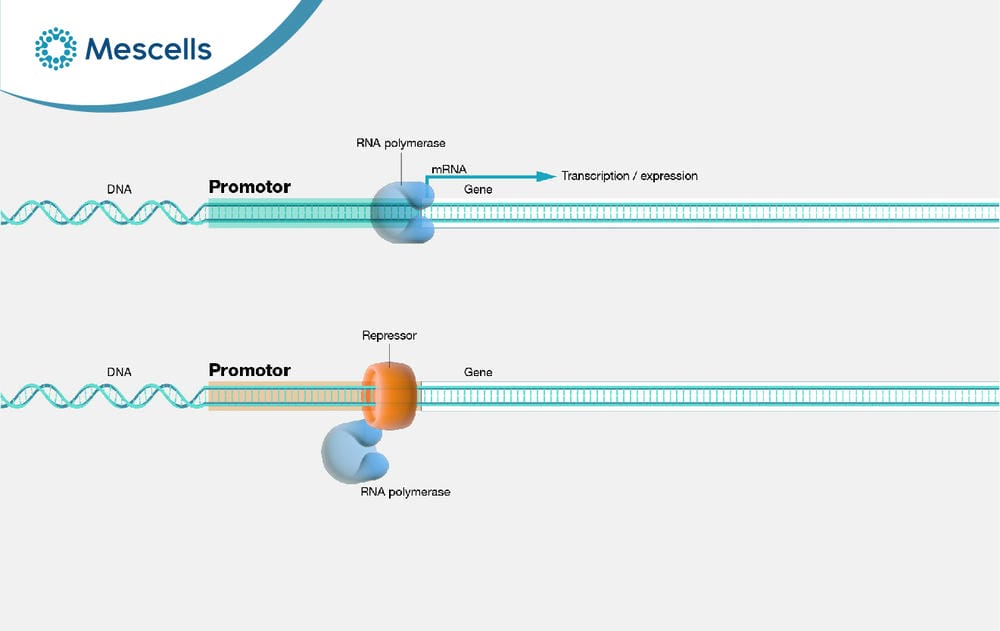
Some of the main components involved in transcription
3. Stages and outcome of transcription
Initiation
General transcription factors recognize and bind to the promoter region, recruiting RNA polymerase to assemble together into the initiation complex. This complex locally unwinds the DNA double helix at the transcription start site, exposing the template strand.
Elongation
After leaving the promoter region, RNA polymerase moves along the template strand. It produces a single-stranded RNA molecule by adding complementary RNA nucleotides (pairing adenine with uracil and cytosine with guanine).
Termination
When RNA polymerase passes the termination signal at the end of the gene, transcription stops, and the enzyme and the newly made RNA chain detach from the DNA.
Outcome of transcription
The direct product of transcription is a primary RNA molecule (precursor RNA). Post-transcriptional processing differs depending on the type of RNA produced. For example, pre-mRNA in eukaryotic cells must go through three characteristic processing steps before becoming mature mRNA: addition of a protective cap at the 5′ end, removal of introns and joining of exons (splicing), and addition of a poly-A tail at the 3′ end. Only after all three steps are complete is the mRNA exported to the cytoplasm to serve as the template for translation [2].
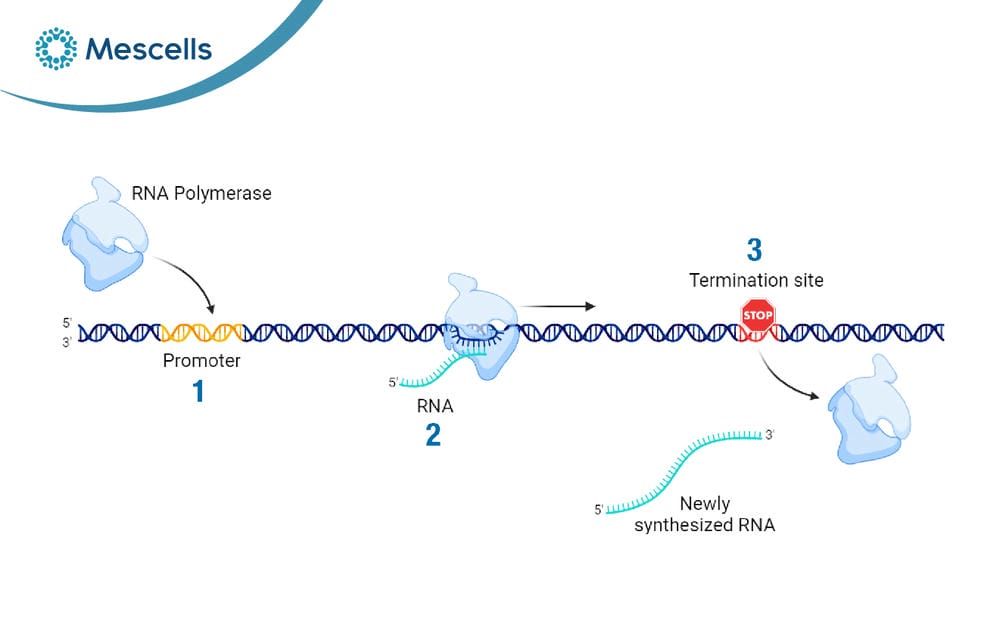
The outcome of transcription is a single-stranded RNA chain
4. The role of transcription in the cell
Transcription is the crucial first step in gene expression. It allows the cell to read genetic instructions safely and produce messenger RNA (mRNA) or non-coding RNA, which then guide protein production and control cell activity.
As the first step and the most tightly controlled checkpoint in gene expression, transcription plays a central role in determining the specific characteristics of each cell type. Liver cells, for example, carry the same genome as other cells but strongly transcribe only genes related to metabolism, whereas nerve cells prioritize the transcription of genes related to signal transmission. Besides being the foundation of differentiation, the ability to switch transcription on and off quickly allows cells to respond flexibly to environmental signals, for example by increasing transcription of heat shock genes when the temperature rises suddenly, or of inflammatory genes when a pathogen is detected.
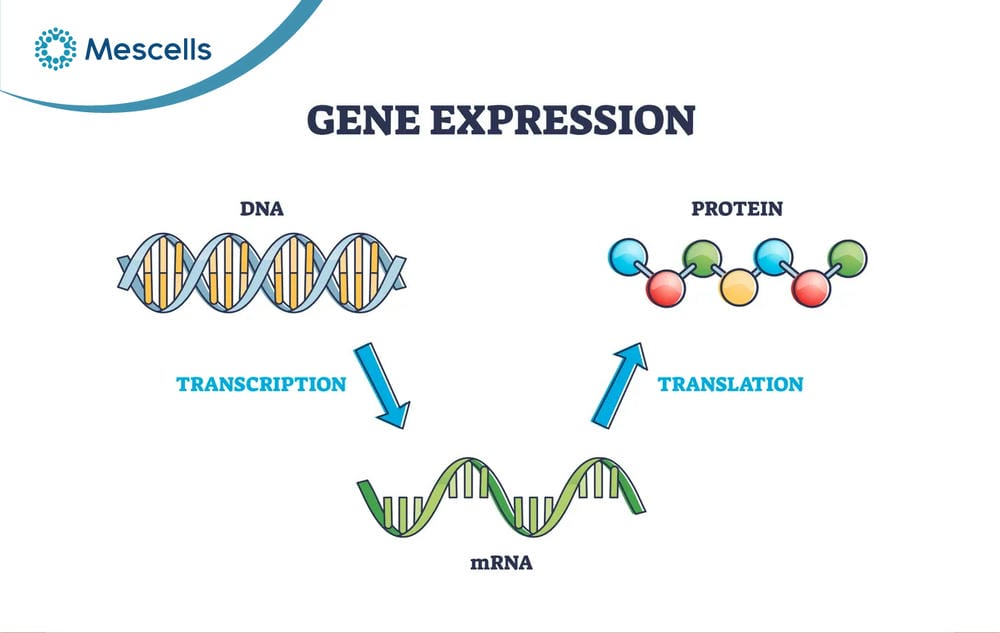
Transcription plays an important role in gene expression
5. Factors affecting transcription
RNA transcription is affected by core biological factors such as:
5.1. Enzyme and template factors
- RNA polymerase: The core catalyst driving RNA synthesis. Different types (such as RNA polymerase I, II and III in eukaryotes) target specific genes [2].
- Accessibility of the DNA template: The physical state of the DNA strand. Tightly packed chromosomes prevent access, whereas transcription can proceed easily only when the DNA is loosely packed.
- Nucleotide availability: A ready supply of the building blocks ATP, GTP, CTP and UTP is needed in the cell to build the RNA chain.
5.2. Gene sequence and regulation
- Promoter: Specific DNA regions (such as the TATA box) near the start of the gene that signal where the enzyme should bind.
- Enhancers and silencers: Distant DNA segments that bind proteins to increase or decrease the rate of transcription.
- Transcription factors: Helper proteins that bind to DNA to help switch genes on (activators) or off (repressors) [3].
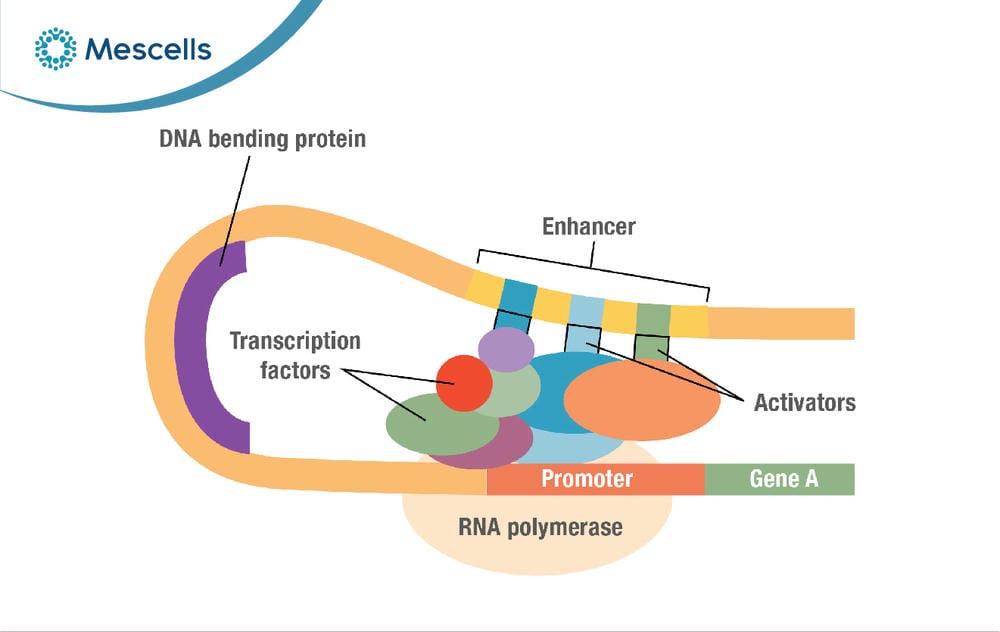
Factors such as enzymes and the DNA template all affect transcription
5.3. Chemical and environmental modulators
- Epigenetic marks: Chemical changes such as DNA methylation or histone modification alter how tightly the DNA is packed, thereby changing gene activity without changing the genetic code.
- Cell signals: Hormones, temperature changes and stress-induced metabolites act on transcription factors and adjust the cell’s output.
6. Applications of transcription in medicine
Because they play a pivotal role in controlling gene expression, transcription and transcription factors have become highly attractive yet highly challenging targets for intervention in modern molecular medicine.
6.1. Medical applications
- Vaccines: Messenger RNA (mRNA) instructs cells to make a harmless piece of a virus. This safely trains your immune system to fight viruses such as COVID-19.
- Targeted cancer therapy: RNA strands and aptamers seek out tumor markers. They deliver drugs where they are needed or stimulate immune cells to attack the cancer
- Gene silencing: One prominent approach is CRISPR interference (CRISPRi), which uses an inactivated version of the Cas9 protein (dCas9) fused to a repressor domain and guided by RNA to bind precisely to the promoter region of a target gene and block transcription without cutting or editing the underlying DNA sequence. This approach is particularly useful for cancer-causing genes long considered “undruggable”, such as MYC and KRAS, because these proteins lack a suitable binding pocket for traditional small-molecule drugs [4].
- Protein replacement therapy: Synthetic mRNA supplies cells with the instructions they need. This helps patients who lack essential functional proteins.
In parallel, many new strategies that directly target disease-causing transcription factors are being developed, including molecular glue degraders and TRAFTACs (transcription factor targeting chimeras), hybrid compounds able to bind simultaneously to the target transcription factor and the cell’s protein degradation machinery in order to selectively remove the disease-causing protein [5].
6.2. Remaining challenges
The core challenge lies in the very nature of transcription factors: because they have no clear catalytic site like ordinary enzymes, and instead act mainly through broad, structurally flexible protein-DNA or protein-protein interaction surfaces, transcription factors such as MYC were for decades almost beyond the reach of traditional small-molecule pharmacology [5].
As for CRISPRi, although it offers high selectivity in preclinical models, delivering the large dCas9 complex to the right target cell type in the human body remains a significant technical barrier, similar to the delivery challenges faced by other RNA therapies; at the same time, the risk of off-target effects on genes with similar promoter sequences must be tightly controlled before these therapies can enter large-scale clinical trials [4].
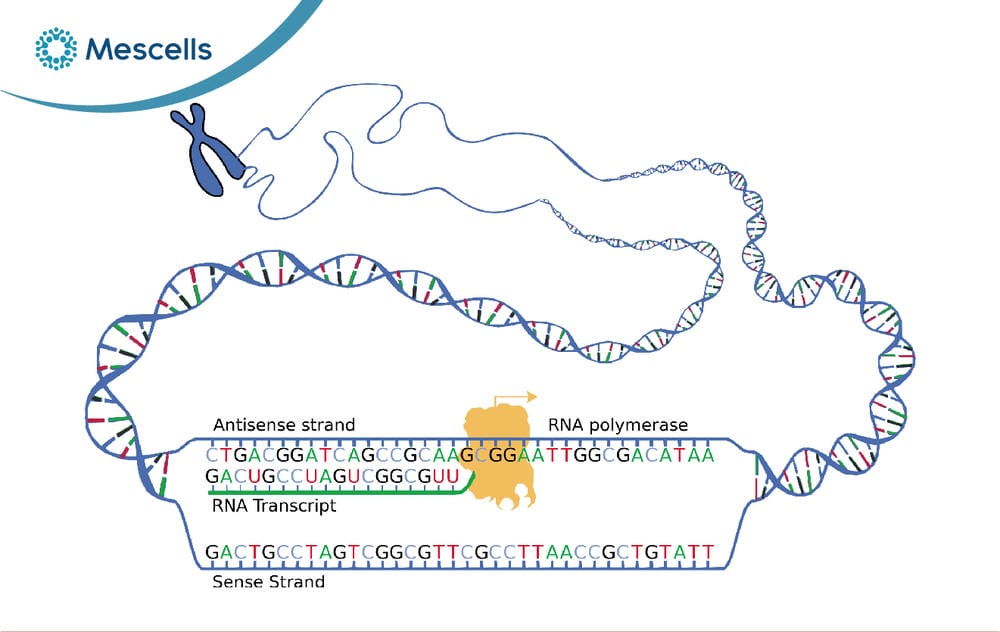
Despite its great potential, research on and application of transcription in medicine still face many challenges
On the surface, transcription is just a biochemical reaction that takes place very quickly inside the cell nucleus. But once we understand what transcription is, we realize that this seemingly simple conversion step is where much of a cell’s fate and function is decided. The more deeply we understand how transcription is initiated, elongated, terminated and regulated, the closer medicine comes to intervening directly at the level of gene control, opening up a generation of therapies aimed precisely at life’s on/off switch, rather than merely dealing with the consequences after a disease gene has been expressed.
MESCELLS | MSC – SPECIALIZED HEALTHCARE SYSTEM FOR REGENERATIVE MEDICINE AND CELL THERAPY
- Hotline: 0866 022 097
- Address: TT21, No. 204 Nguyen Tuan, Thanh Xuan Ward, Hanoi, Vietnam.
- Fanpage: Mescells Institute of Applied Cell Technology Research
REFERENCES:
- Suzanne Clancy, 2008, “DNA Transcription”, Scitable by nature education, https://www.nature.com/scitable/topicpage/dna-transcription-426/
- “RNA Transcription”, Science Direct, https://www.sciencedirect.com/topics/immunology-and-microbiology/rna-transcription
- “Transcription Factors”, Science Direct, https://www.sciencedirect.com/topics/neuroscience/transcription-factors
- Bin Guo, 2026, “CRISPR Interference to Inhibit Oncogenes for Cancer Therapy”, MDPI, https://www.mdpi.com/1422-0067/27/8/3564
- Hui Chen, 2026, “Transcription factor targeting strategies in cancer: mechanisms, challenges and cutting-edge progress”, Nature, https://www.nature.com/articles/s41401-026-01877-8
Note: The content of this article is compiled from and refers to scientific reports and reputable medical journals around the world. However, this information is for reference only and is not a substitute for diagnosis or specialist medical treatment by a doctor.

Deputy Director, Mescells Institute of Applied Cell Technology Research


 Hotline
 Zalo
Zalo
 Fanpage