 0866 022 097
 institute@mescells.com
Treating Rheumatoid Arthritis with Stem Cells: Prospects from Regenerative Medicine


Rheumatoid arthritis is a chronic autoimmune disease that seriously affects the musculoskeletal system and impairs patients’ quality of life. Today, alongside conventional drug regimens aimed at controlling clinical symptoms, regenerative medicine is opening up new, more groundbreaking approaches.
Among them, treating rheumatoid arthritis with stem cells is attracting great interest from scientists thanks to its ability to act deeply on immune mechanisms and support the repair of joint damage. Join Mescells in the article below for a detailed look at the scientific basis, the potential and the latest clinical research on this therapy.
1. Overview of rheumatoid arthritis
1.1. What is rheumatoid arthritis?
Rheumatoid arthritis is a chronic, progressive systemic autoimmune disease characterized by inflammation of the synovial membrane of the joints, leading to cartilage destruction, erosion of the bone ends, fibrosis and complete loss of joint function. It affects about 0.5-1% of the global population and can lead to a rate of severe disability of up to 70% within just 3 years of onset if not optimally controlled (Qing Zhang et al., 2019).
1.2. Causes of rheumatoid arthritis
The onset of rheumatoid arthritis is influenced by a complex interaction between genetic susceptibility factors (such as the HLA-DRB1, PTPN22 and CTLA4 genes), epigenetic changes and triggers from the external environment. This interaction causes the immune system to lose tolerance and to activate immune cascades that attack the body’s own joint tissues.
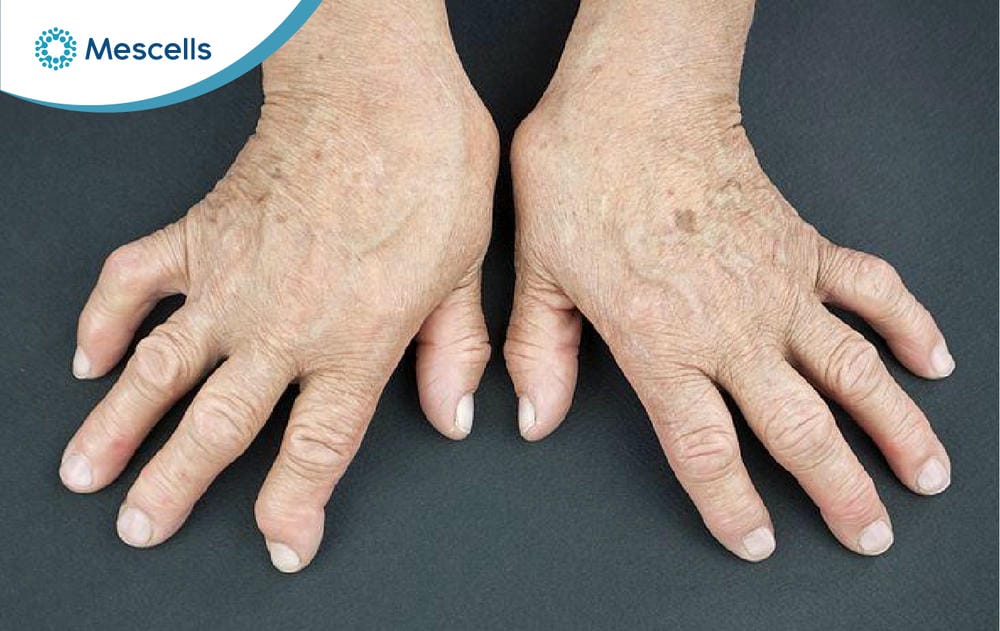
Rheumatoid arthritis causes swelling and pain in the joints of the hand
1.3. Typical symptoms of rheumatoid arthritis
- Early stage: Patients usually experience aching, swelling and redness in the small joints, in a symmetrical pattern, such as the metacarpophalangeal joints, wrists and proximal finger joints… Prolonged morning stiffness (usually more than 1 hour) is also a very characteristic sign. In addition, patients often feel tired, run a low-grade fever, lose weight or feel generally unwell.
- Late stage: The damage spreads, with the synovial membrane overgrowing into a layer of pannus that invades and destroys cartilage and bone, leading to joint deformity, loss of function and disability.
2. Current treatments for rheumatoid arthritis
In conventional clinical practice, disease control relies mainly on immunosuppressive and pain-relieving drugs, including non-steroidal anti-inflammatory drugs (NSAIDs), corticosteroids, conventional disease-modifying antirheumatic drugs (cDMARDs such as methotrexate and leflunomide) and targeted biological agents (bDMARDs). These are accompanied by rehabilitation exercises that strengthen the muscles around the joints and reduce stiffness.
However, these methods still have several major drawbacks:
- They only help control and relieve symptoms and reduce inflammation temporarily, without acting on the underlying disease mechanism to restore tissue.
- A large proportion of patients do not achieve complete remission, or gradually develop drug resistance after a period of treatment.
- Long-term use of systemic immunosuppressants is often accompanied by very serious side effects, including an increased risk of opportunistic infections, bone marrow suppression, and toxicity to the cardiovascular system, liver and kidneys.
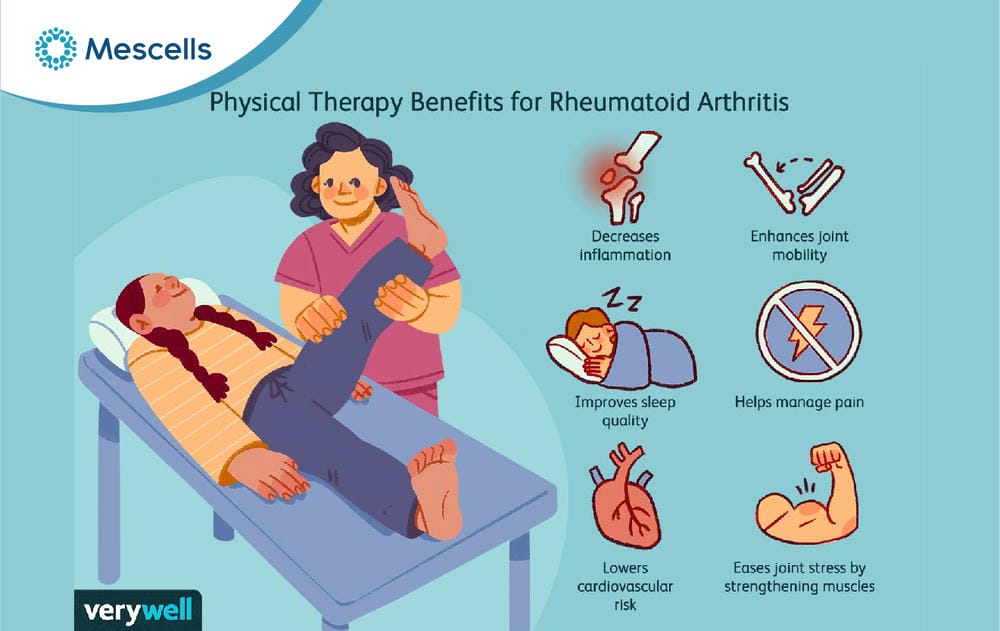
Rehabilitation for people with rheumatoid arthritis
3. The potential of stem cells in treating rheumatoid arthritis
Because of the limitations of current drug treatments, medicine is looking for a solution that can both re-establish immune balance and promote the regeneration of joint tissue. Stem cell treatment of rheumatoid arthritis is a focus of research, in which mesenchymal stem cells (MSCs) have emerged as the most promising therapy thanks to three core properties:
- Multidirectional immunomodulation: MSCs act strongly on the immune system by inhibiting the proliferation of destructive T cells (Th1, Th17) and promoting the generation of anti-inflammatory regulatory T cells (Tregs). They also comprehensively suppress autoimmune B cells and stimulate macrophages to shift from the pro-inflammatory state (M1) to the anti-inflammatory, tissue-repairing state (M2).
- Natural anti-inflammatory activity: The secretions of MSCs release a network of potent anti-inflammatory soluble factors such as TGF-β1, PGE-2 and IL-10, which help rapidly neutralize the inflammatory response in the joint.
- Differentiation and regeneration capacity: MSCs can stably differentiate along multiple lineages into bone and cartilage cells, playing a direct role in restoring and protecting the structure of joint cartilage and minimizing bone erosion.
>>> See also: The potential of mesenchymal stem cells in treating osteoarthritis
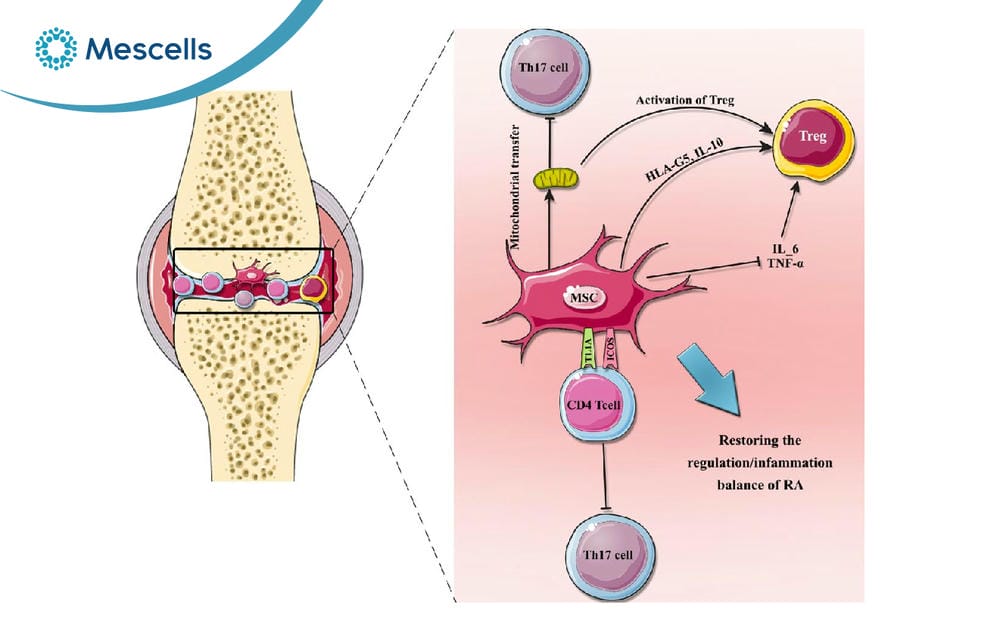
The immunomodulatory mechanism of mesenchymal stem cells (MSCs) in the treatment of rheumatoid arthritis
4. Current scientific research on treating rheumatoid arthritis with stem cells
The world’s leading medical libraries now contain many clinical trials demonstrating the efficacy and safety of mesenchymal stem cell (MSC) therapy in treating rheumatoid arthritis. The most notable evidence is set out below:
4.1. Rapid reduction in inflammation and improvement in joint function
A notable clinical trial (Phase Ia CURE-iv) conducted in patients with drug-resistant rheumatoid arthritis showed extremely encouraging signs. Patients who received an intravenous infusion of umbilical cord blood stem cells (hUCB-MSCs) showed the following results:
- After just 24 hours, blood levels of joint-destroying inflammatory mediators (such as IL-1β, IL-6 and TNF-α) had fallen quickly and markedly.
- After 4 weeks, the disease activity score (DAS28) and erythrocyte sedimentation rate (ESR) had fallen by a statistically significant amount, showing that inflammation was well controlled.
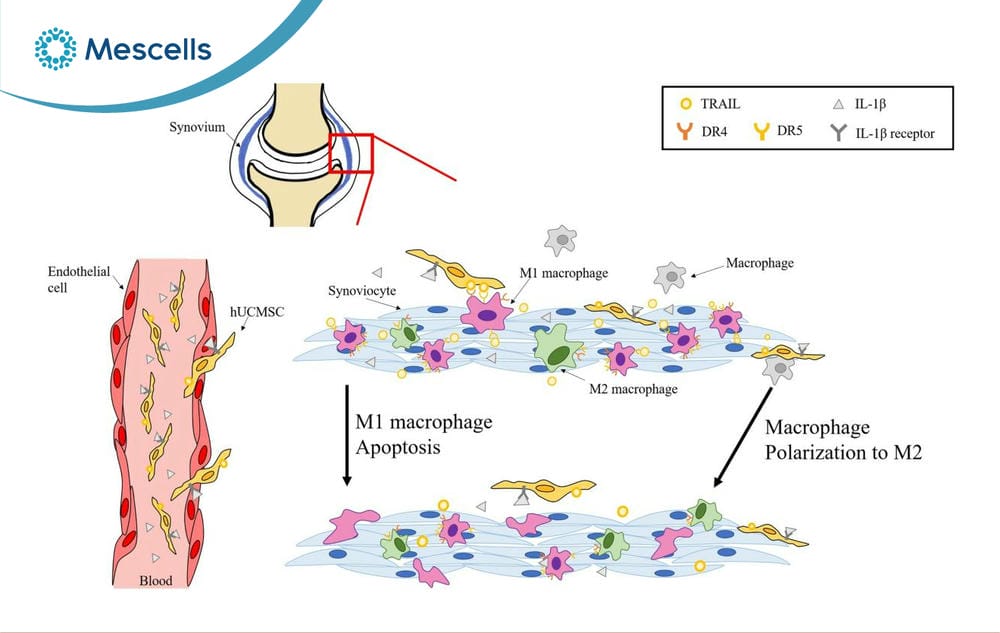
How mesenchymal stem cells (hUCMSCs) regulate macrophages in the treatment of rheumatoid arthritis
4.2. Safety and sustained efficacy in the long term
Many patients worry about whether stem cells have long-term side effects. To answer this, a 3-year prospective study of 64 patients combined umbilical cord stem cell infusion with a low-dose regimen of antirheumatic drugs (DMARDs). The results showed:
- Efficacy: Pain, joint swelling and chronic inflammation markers (CRP, ESR, rheumatoid factor RF) all fell sharply and remained stable at 1 year and 3 years.
- Safety: Patients’ liver and kidney function, blood counts and immune levels remained entirely within normal safe limits after 3 years of treatment, showing that the therapy does not cause cumulative toxicity or bone marrow suppression.
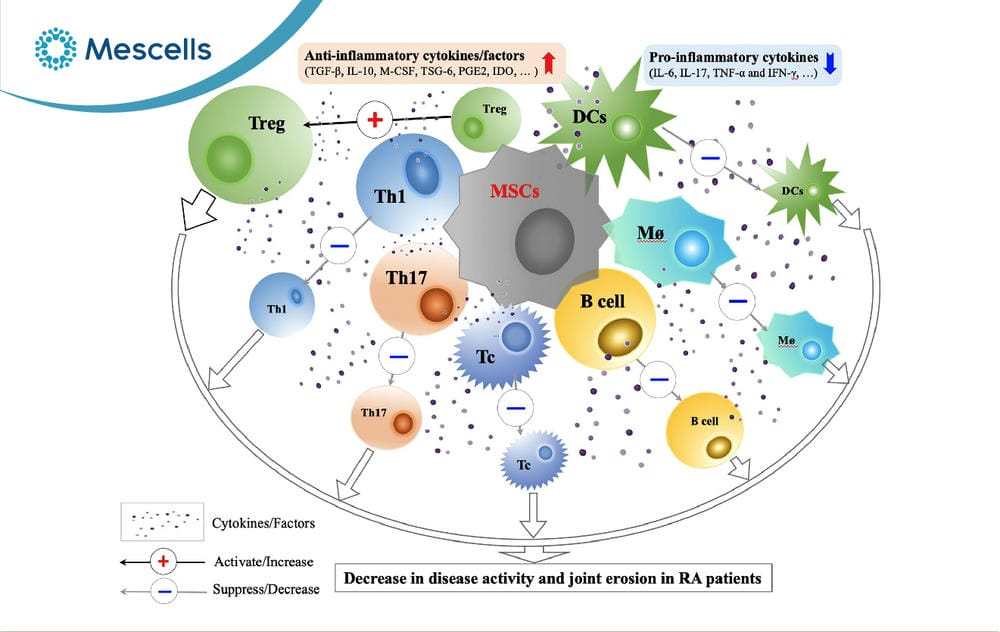
Diagram illustrating how mesenchymal stem cells (MSCs) regulate the immune system, increase anti-inflammatory cytokines, reduce pro-inflammatory cytokines and reduce disease activity in rheumatoid arthritis
5. Remaining limitations of stem cell therapy for rheumatoid arthritis
Based on published scientific reviews and discussion, stem cell therapy for rheumatoid arthritis still has a number of challenges to overcome:
- No uniform global standard yet: Current studies still use many different cell doses, and differ in the method of administration (injection directly into the painful joint or systemic intravenous infusion). Medicine worldwide is still working to optimize and arrive at a common standard protocol for each stage of the disease.
- More large-scale, long-term follow-up data needed: Most published studies followed patients for 1 to 3 years with moderate sample sizes (tens to a few hundred patients). Scientists need larger Phase III clinical trials to assess accurately how well the effect lasts over the following 10-20 years.
- Cost and accessibility: Because it requires isolation and culture in a laboratory that meets extremely strict GMP standards to ensure the cells are alive, healthy and free of genetic changes, the cost of a course of stem cell therapy is still quite high for most patients.
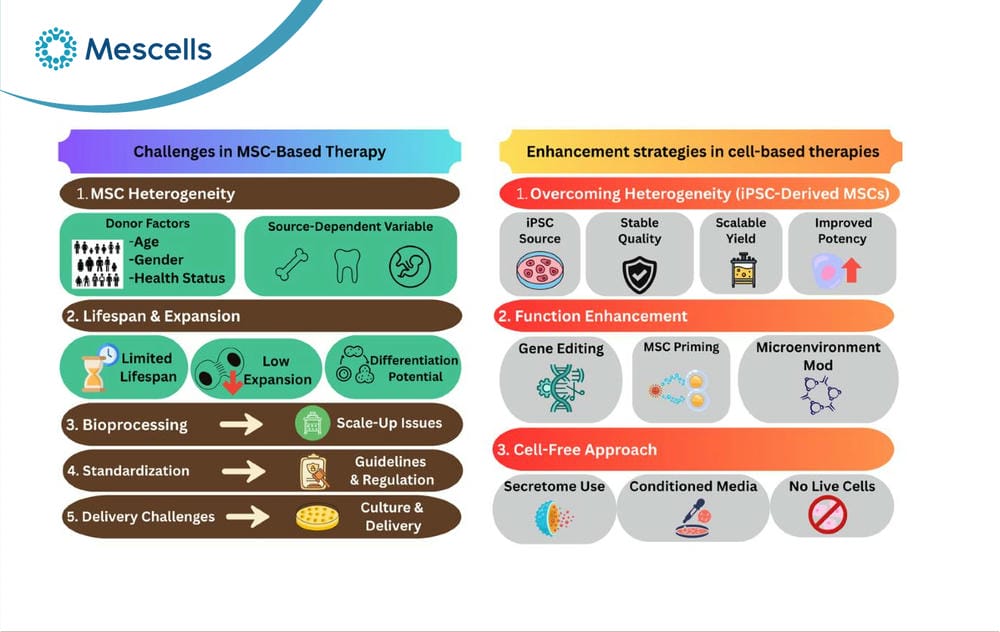
Limitations of mesenchymal stem cells (MSCs) in treating rheumatoid arthritis with stem cells and strategies for improvement
Rheumatoid arthritis no longer has to be a constant dread that forces patients to accept living with pain and the risk of disability. Treating rheumatoid arthritis with stem cells is gradually making the dream of repairing the underlying damage to the bones and joints a reality. We hope this article has given you a scientific and practical perspective. Stay with Mescells for updates on the most advanced trends in regenerative medicine to protect your family’s health.
MESCELLS | MSC – SPECIALIZED HEALTHCARE SYSTEM FOR REGENERATIVE MEDICINE AND CELL THERAPY
- Hotline: 0866 022 097
- Address: TT21, No. 204 Nguyen Tuan, Thanh Xuan Ward, Hanoi, Vietnam.
- Fanpage: Mescells Institute of Applied Cell Technology Research
REFERENCES:
- Wang, Y., et al. (2024). Mesenchymal Stem Cells-Involved Strategies for Rheumatoid Arthritis Therapy. Advanced Science, 11(15), 2305116, https://pubmed.ncbi.nlm.nih.gov/38477559/
- Luz-Crawford, P., et al. (2019). Mesenchymal Stem Cells Improve Rheumatoid Arthritis Progression by Controlling Memory T Cell Response. Frontiers in Immunology, 10, 798. https://pubmed.ncbi.nlm.nih.gov/31040848/
- Lopez-Santalla, M., et al. (2020). Therapeutic Potential of Mesenchymal Stromal Stem Cells in Rheumatoid Arthritis: a Systematic Review of In Vivo Studies. Frontiers in Immunology, 11, 48. https://pubmed.ncbi.nlm.nih.gov/31950339/
- Kubo, S., & Nakayamada, S. (2023). Management of Rheumatoid Arthritis: Possibilities and Challenges of Mesenchymal Stromal/Stem Cell-Based Therapies. International Journal of Molecular Sciences, 24(14), 11467. https://pmc.ncbi.nlm.nih.gov/articles/PMC10378234/
Note: The content of this article is compiled from and refers to scientific reports and reputable medical journals around the world. However, this information is for reference only and is not a substitute for diagnosis or specialist medical treatment by a doctor.

Deputy Director, Mescells Institute of Applied Cell Technology Research





 Hotline
 Zalo
Zalo
 Fanpage