 0866 022 097
 institute@mescells.com
Bone Marrow-Derived Mesenchymal Stem Cells: Characteristics and Potential Applications


Bone marrow mesenchymal stem cells are one of the most widely studied cell sources in regenerative medicine and cell therapy. With their capacity for differentiation, immunomodulation and support of tissue repair, these cells are opening up many promising lines of research in the treatment of bone, tissue and immune system disorders. However, alongside their notable advantages, bone marrow-derived mesenchymal stem cells still have limitations relating to heterogeneity, the culture process and the standardization of cell products. Join Mescells to learn about the characteristics, advantages, limitations and potential applications of bone marrow-derived mesenchymal stem cells in modern medicine.
1. What are bone marrow-derived mesenchymal stem cells?
Bone marrow-derived mesenchymal stem cells (BM-MSCs) are cells originating from bone marrow tissue and belong to the group of adult stem cells. They are able to self-proliferate and differentiate into mesenchymal lineages, typically bone, cartilage and fat cells, under appropriate conditions.
Beyond their differentiation capacity, BM-MSCs also attract interest for their ability to secrete many biological factors that act on the microenvironment of damaged tissue. These factors can take part in regulating inflammation, supporting blood vessel formation and promoting tissue repair.
Unlike hematopoietic stem cells, which are also found in bone marrow, mesenchymal stem cells are studied mainly for their role in supporting tissue regeneration and immunomodulation.
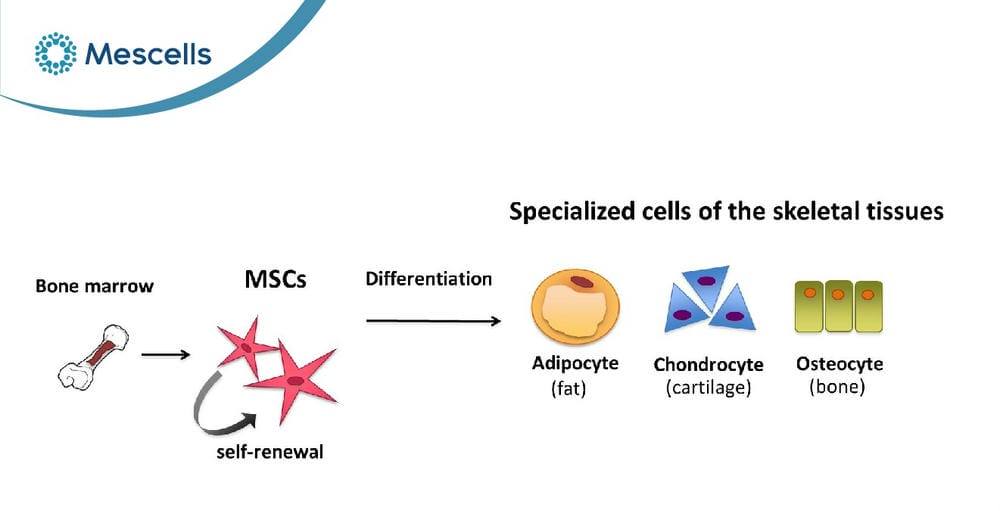
Morphology of human bone marrow-derived mesenchymal stem cells
2. Characteristics of bone marrow-derived mesenchymal stem cells
- Self-renewal: Mesenchymal stem cells can proliferate under suitable culture conditions, serving research and application purposes.
- Differentiation capacity: BM-MSCs can differentiate in multiple directions, in particular into: bone-forming cells (osteoblasts), cartilage cells (chondrocytes), fat cells (adipocytes).
In addition, many studies have examined the ability of mesenchymal stem cells (MSCs) to differentiate into other cell lineages under certain conditions.
- Immunomodulation: An important property of mesenchymal stem cells is their ability to interact with many components of the immune system. BM-MSCs can secrete immunomodulatory molecules and factors, thereby influencing the activity of T cells, B cells, NK cells and other immune cells.
- Secretion of biological factors: BM-MSCs can secrete many cytokines, chemokines and growth factors. These substances can take part in regulating inflammation, blood vessel formation and tissue repair.
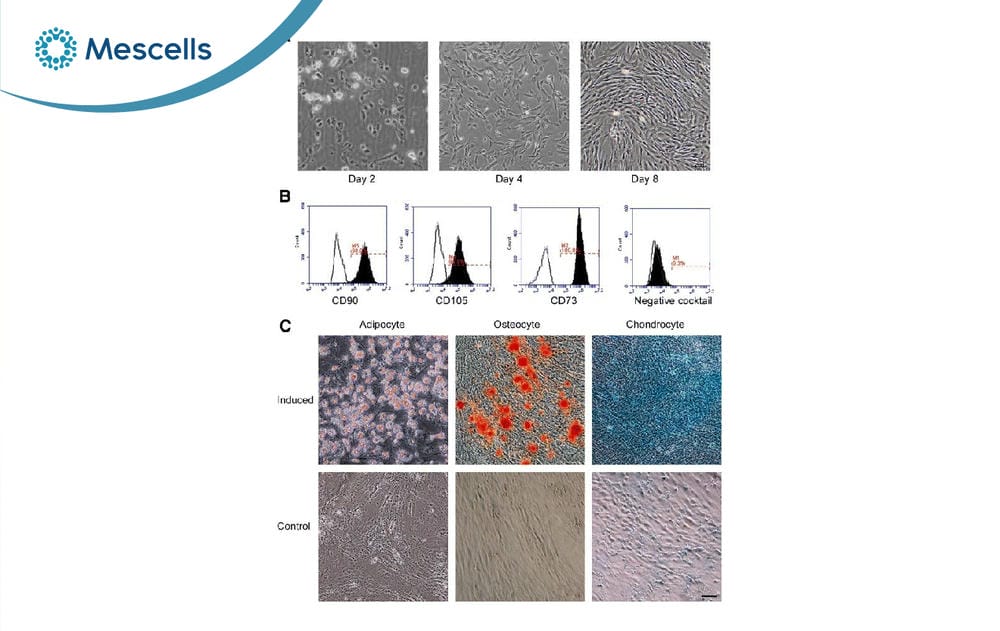
Morphology, surface markers and differentiation capacity of bone marrow-derived mesenchymal stem cells
3. Advantages and limitations of bone marrow-derived mesenchymal stem cells
Bone marrow-derived mesenchymal stem cells have many notable advantages in terms of differentiation, immunomodulation and support of tissue regeneration. However, heterogeneity, donor dependence and difficulties in product standardization remain limitations that need to be addressed to improve their clinical applicability. The table below compares the advantages and limitations of bone marrow-derived mesenchymal stem cells:
| Advantages | Limitations |
| Differentiation capacity: Able to differentiate into multiple mesenchymal lineages, with particular potential for forming bone and cartilage. | Limited initial numbers: Bone marrow-derived mesenchymal stem cells are relatively scarce in bone marrow tissue, so cell expansion is usually required before use. |
| Immunomodulation: Can interact with many types of immune cells and modulate inflammatory responses. | Heterogeneity: Cell populations may differ in characteristics, proliferation, differentiation and function. |
| Tissue regeneration potential: Able to support the repair and regeneration of damaged tissues through differentiation and secretion of biological factors. | Donor dependence: The donor’s age, health status and biological characteristics can affect cell quality and function. |
| Interaction with the injury environment: Can migrate and respond to signals from the injury microenvironment, providing a basis for applications in regenerative medicine. | Effects of the culture process: Culture conditions, the number of passages and the preservation process can alter cell properties. |
| Broad application potential: Studied in bone and cartilage regeneration, immunomodulation and support of hematopoietic stem cell transplantation. | Difficult product standardization: Differences between cell sources and manufacturing processes make it difficult to establish uniform quality and potency standards. |
4. Potential applications of bone marrow-derived mesenchymal stem cells
Thanks to their capacity for differentiation, immunomodulation and support of tissue repair, bone marrow-derived mesenchymal stem cells are being widely studied in regenerative medicine and cell therapy. Studies show that BMSCs can act on the injury environment through cell interactions and secreted factors, opening up many potential applications.
4.1. Potential applications
- Bone and cartilage regeneration: BMSCs can differentiate towards bone and cartilage, and are therefore studied for repairing damage to bone, cartilage and connective tissues.
- Supporting the treatment of immune disorders: Their ability to regulate the activity of T cells, B cells, macrophages and other immune cells makes BMSCs a promising research direction for inflammatory diseases and immune disorders.
- Supporting hematopoietic stem cell transplantation: BMSCs help support the bone marrow microenvironment and hematopoiesis, and are also studied for controlling graft-versus-host disease after hematopoietic stem cell transplantation.
- Tissue repair and wound healing: Factors secreted by BMSCs can support regeneration, reduce inflammation and improve the environment at the site of injury.
- Applications in next-generation cell therapy: BMSCs are also being studied as a vehicle for delivering drugs or therapeutic molecules, thanks to their ability to home to damaged areas.
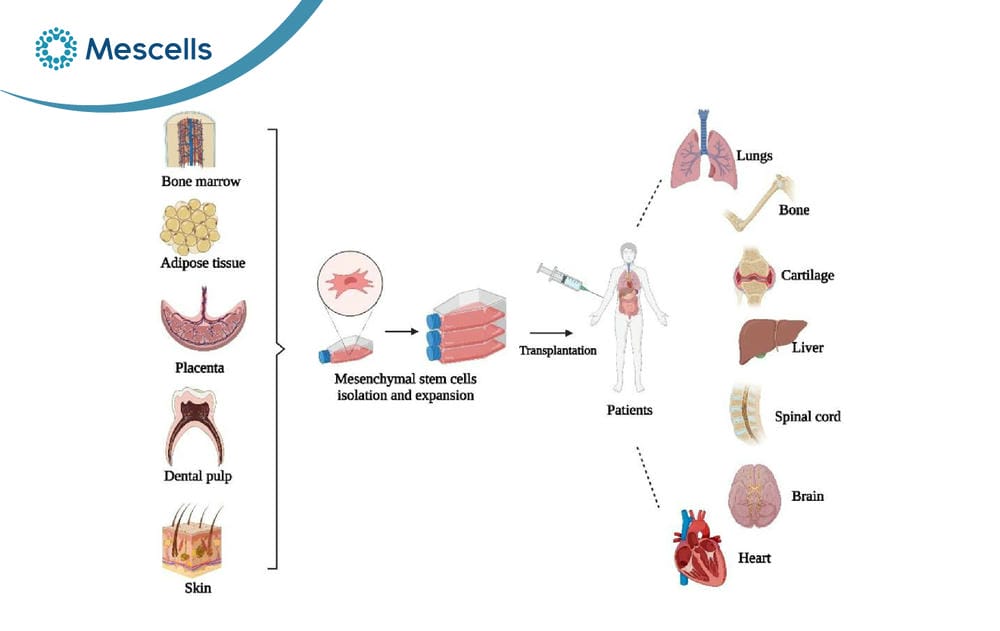
Potential applications of bone marrow-derived mesenchymal stem cells in regenerative medicine
4.2. Challenges
Although bone marrow-derived mesenchymal stem cells have great potential in tissue regeneration and immunomodulation, their widespread clinical application still faces many challenges. First, cell properties can differ between donors and change during culture, leading to differences in proliferative capacity and therapeutic efficacy.
In addition, standardizing the processes of isolation, culture, preservation and quality control remains an important issue. Different manufacturing processes can yield cell products with inconsistent properties and potency, making it difficult to compare results between studies.
Another challenge is the need to clearly establish potency, safety and appropriate dosing before cell products are used in treatment. Large-scale cell manufacturing under GMP requirements, together with quality control standards and regulatory requirements, also demands rigorous and stable processes.
Therefore, to realize the potential of bone marrow-derived mesenchymal stem cells, future research needs to focus on standardizing cell sources and manufacturing processes, evaluating potency and establishing unified safety criteria. These factors will help narrow the gap between laboratory research and clinical application.
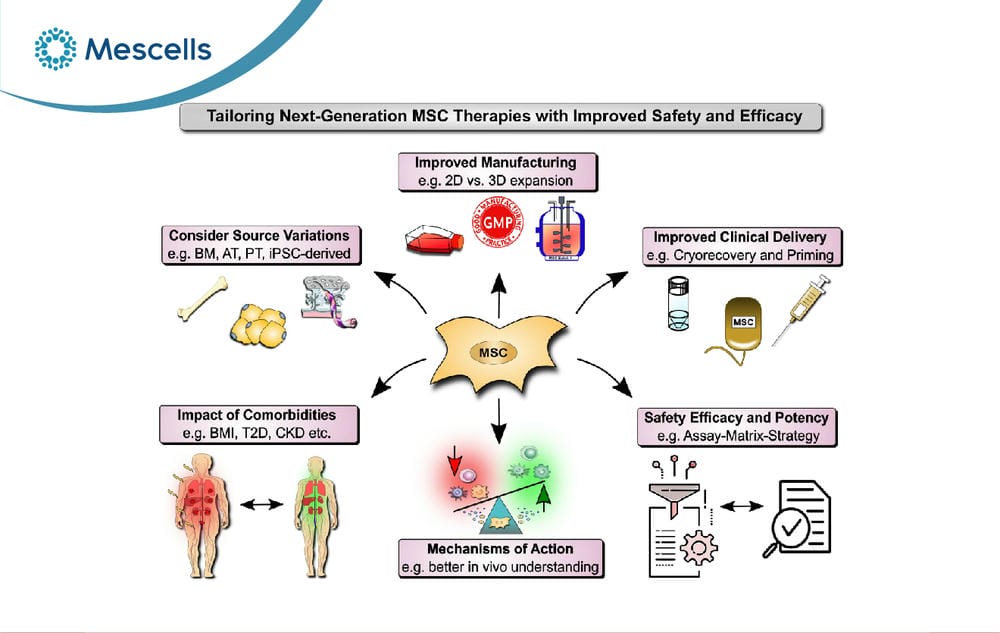
Challenges in translating MSC therapy from research to the clinic
Bone marrow-derived mesenchymal stem cells are a highly promising cell source thanks to their capacity for differentiation, immunomodulation and support of tissue regeneration. These properties open up many applications in regenerative medicine, bone disorders and cell therapy. However, cell heterogeneity, donor-to-donor differences and the need to standardize manufacturing processes remain challenges to be addressed. With advances in biotechnology and cell engineering, bone marrow-derived mesenchymal stem cells continue to be a promising research direction, helping to expand the applicability of cell therapy in modern medicine.
MESCELLS | MSC – SPECIALIZED HEALTHCARE SYSTEM FOR REGENERATIVE MEDICINE AND CELL THERAPY
- Hotline: 0866 022 097
- Address: TT21, No. 204 Nguyen Tuan, Thanh Xuan Ward, Hanoi, Vietnam.
- Fanpage: Mescells Institute of Applied Cell Technology Research
REFERENCES:
- Miura Y. 2016 Feb Human bone marrow mesenchymal stromal/stem cells: current clinical applications and potential for hematology https://pubmed.ncbi.nlm.nih.gov/26692196/
- Chu DT, Nguyen TTP, Nguyen LBT, et al. An Update on the Progress of Isolation, Culture, Storage, and Clinical Application of Human Bone Marrow Mesenchymal Stem/Stromal Cells. International Journal of Molecular Sciences. 2020;21(3):708. PMID: 31973182.https://pubmed.ncbi.nlm.nih.gov/31973182/
- Deng Y, et al. Clinical Application of Bone Marrow MesenchymaInternational Journal of Molecular Sciences. 2020;21(24):9759. https://pubmed.ncbi.nlm.nih.gov/33371306/
- Aithal AP, Bairy LK, Seetharam RN. Safety and therapeutic potential of human bone marrow-derived mesenchymal stromal cells in regenerative medicine. Stem Cell Investigation. 2021;8:10.https://pubmed.ncbi.nlm.nih.gov/34124233/
Note: The content of this article is compiled from and refers to scientific reports and reputable medical journals around the world. However, this information is for reference only and is not a substitute for diagnosis or specialist medical treatment by a doctor.

Deputy Director, Mescells Institute of Applied Cell Technology Research




 Hotline
 Zalo
Zalo
 Fanpage