 0866 022 097
 institute@mescells.com
What Is Mycoplasma? Characteristics and Its Impact on Cell Culture


In the cell culture laboratory there is an extremely small microorganism that does not cloud the culture medium, yet silently ruins experiment after experiment and distorts research results. It is Mycoplasma, one of the hardest contaminants to control in modern biotechnology and biomedicine. This article from Mescells explains in detail what Mycoplasma is, the distinctive biological characteristics of this group of bacteria, how they affect cultured cells, and the effective preventive measures widely applied in accredited laboratories around the world.
1. What is Mycoplasma?
Mycoplasma is a small bacterium that has no cell wall and lacks various metabolic pathways because of its small genome. It is difficult to detect with an ordinary light microscope and is unaffected by common antibiotics. Besides being a common contaminant in cell culture, some Mycoplasma species are also known as human pathogens, for example causing respiratory and urogenital tract diseases [1].
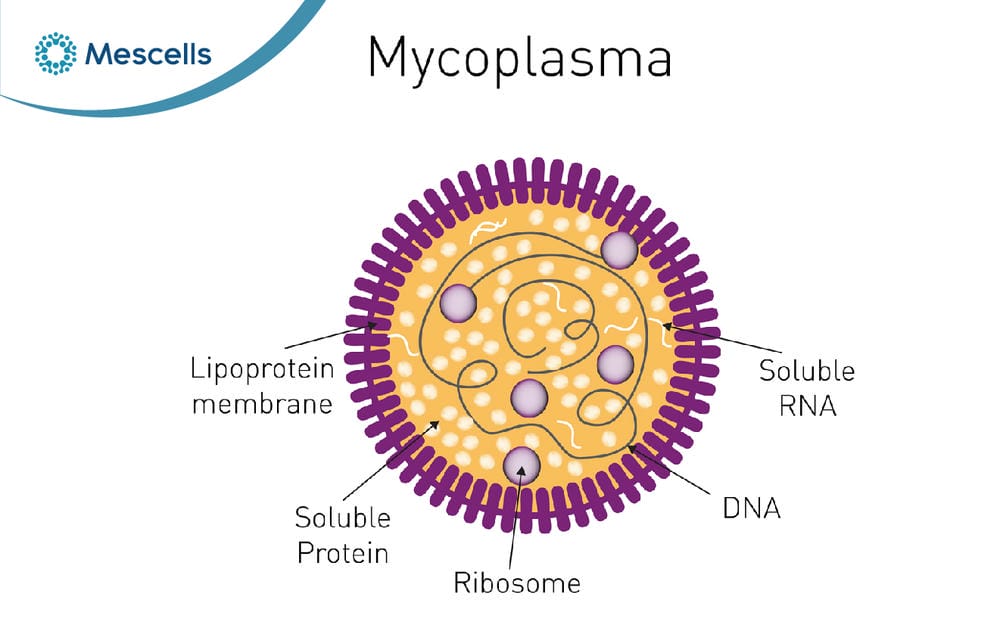
Mycoplasma is small in size and has no cell wall
2. Characteristics of Mycoplasma
2.1. Shape and size
Mycoplasma varies in morphology (spherical, filamentous or irregular) with a diameter of 100-300 nm. Its small size and structural flexibility allow it to change shape and even shrink enough to pass through standard sterilizing filters (typically with a pore size of 0.22 micrometers), which are designed to remove ordinary bacteria [2].
2.2. Genetics and growth
Small genome
Its DNA content is very small, meaning it lacks the genes for many standard metabolic pathways.
Host dependence
Mycoplasma relies heavily on a host organism or a nutrient-rich laboratory culture medium to supply essential nutrients. For example, cultures need to be supplemented with 10-20% human or animal serum to provide the cholesterol required for its cell membrane.
Most Mycoplasma species grow best at neutral to slightly alkaline pH (about 7.3-7.8), although pH tolerance varies by species. Most are facultative anaerobes, and some strains grow better when 5% CO2 is added at initial isolation. They form small colonies of characteristic shape, with a raised center that grows down into the agar surface, surrounded by a flatter, thinner and more translucent peripheral zone [2].

Mycoplasma has a rather small genome and depends on the culture medium
2.3. Natural resistance to many antibiotics
Because beta-lactam antibiotics (often pre-added to cell culture media) work by inhibiting cell wall synthesis, this class of drugs has no effect at all on Mycoplasma, which has no cell wall [1]. This is why eliminating Mycoplasma from a culture is much harder than dealing with ordinary bacterial or fungal contamination.
2.4. Difficult to detect by ordinary observation
Unlike bacterial or mold contamination, which usually shows up clearly as turbidity of the medium or a change in the color of the pH indicator, Mycoplasma contamination in its early stage often produces no abnormal signs visible to the naked eye. This allows Mycoplasma to persist silently in the laboratory for a long time before it is detected.

Mycoplasma forms round, smooth colonies when spread on agar medium
3. How does Mycoplasma affect cultured cells?
Once it enters a culture, Mycoplasma usually attaches firmly to the surface of the host cell membrane and causes a series of biological consequences, including:
- Competing for and depleting nutrients: Mycoplasma directly consumes glucose, amino acids and nucleotide precursors in the culture medium, depriving host cells of the raw materials needed for proliferation and leading to reduced growth rate and cell density
- Distorting gene expression and metabolism: Many studies have found that Mycoplasma can cause widespread changes in the gene expression profile of host cells, affecting metabolic pathways, intracellular signaling and responses to test agents such as glucocorticoids [3].

Mycoplasma contamination during cell culture can inhibit and kill cells
- Causing chromosomal abnormalities: Prolonged Mycoplasma contamination is associated with chromosomal aberrations in host cells, potentially affecting the genetic integrity of the cell line under study.
- Altering cell morphology and adhesion: Contaminated cells may show abnormal cell aggregation and morphological changes, and the efficiency of transfection techniques is reduced, creating major difficulties for molecular biology experiments.
- Distorting research data: Because these changes usually occur silently and unevenly, many experimental results obtained from Mycoplasma-contaminated cell lines may in fact misrepresent the true biology being studied, leading to scientific conclusions that are inaccurate or cannot be reproduced in other laboratories [3].
Because Mycoplasma is difficult to detect by ordinary observation yet can significantly affect cell quality, drug regulatory agencies and international research organizations recommend regular testing to detect contamination early.
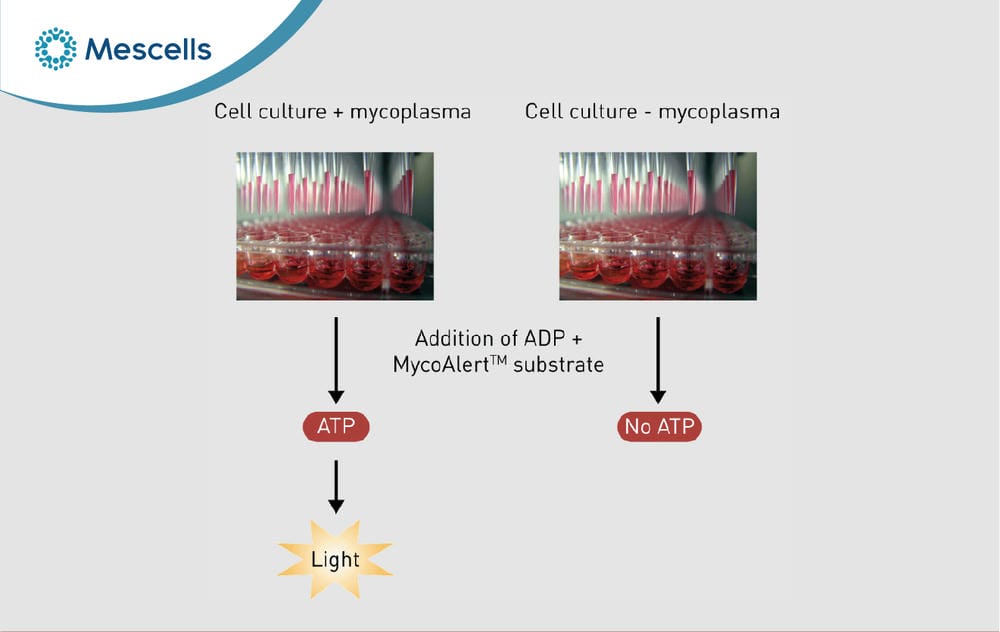
Mycoplasma seriously affects cell culture results and therefore needs to be tested for regularly so that it is detected in time
4. How to prevent Mycoplasma in the cell culture room
Because Mycoplasma is hard to detect and hard to eliminate completely once it has entered, the most effective strategy is always proactive prevention combined with regular screening using highly sensitive methods.
4.1. Build strict aseptic technique habits
- Always work in a properly disinfected biosafety cabinet, and avoid working with several different cell lines at the same time in the same workspace.
- Handle unverified or suspected-contaminated cell lines last in the working day, to limit the risk of cross-contamination to other cell lines.
- Always keep culture medium bottles and culture dishes tightly closed when not in use.
- Do not share a bottle of culture medium or pipetting tools between different cell lines, because the most common routes of Mycoplasma spread in the laboratory are aerosols generated during pipetting and shared media or equipment.
4.2. Quarantine and regular screening
Every newly received cell line, even from a clearly documented source, should be quarantined and tested for Mycoplasma before being used alongside the cell lines already in the laboratory.
Carry out monthly testing of all active cultures and of thawed samples before they are put into use. Testing by PCR or enzymatic assay is also mandatory before freezing for long-term storage and before sharing a cell line with another laboratory.
>>> Learn more: Contamination control in the cell culture room

Adhering to aseptic technique is one of the ways to prevent Mycoplasma contamination during cell culture
4.3. Use reliable materials and cell sources
Prefer to purchase stem cells from reputable cell banks that certify them as Mycoplasma-negative (such as ATCC or ECACC), rather than receiving them directly from another laboratory with an unknown quality control history.
Use serum, culture media and supplements that have been tested and certified Mycoplasma-free by the manufacturer. Consider using dedicated filters with a pore size smaller than the usual standard for high-risk solutions.
4.4. What to do when contamination is detected
When a cell line is found to be contaminated with Mycoplasma, the first recommended option is still to discard that cell line completely and replace it with clean stock stored previously (if available), rather than trying to treat it with specialized antibiotics. Using specialized antibiotics to eliminate Mycoplasma is technically feasible, but carries a risk of later recontamination or of affecting host cell growth, leading to discrepancies in experimental results.

When Mycoplasma contamination is detected, the cell line should be discarded completely and the whole culture area re-sterilized
Mycoplasma, despite its extremely small size and genome, is one of the greatest challenges for cell research and culture. Because of these effects, Mycoplasma demands a proactive, systematic control strategy rather than reliance on everyday visual observation alone. Establishing strict aseptic procedures, combined with regular screening by PCR or fluorescent staining, is the key to protecting the integrity of cell lines and the reliability of research results. In the future, as techniques develop, Mycoplasma control promises to become a standardized process, minimizing risk for all research based on cell culture.
MESCELLS | MSC – SPECIALIZED HEALTHCARE SYSTEM FOR REGENERATIVE MEDICINE AND CELL THERAPY
- Hotline: 0866 022 097
- Address: TT21, No. 204 Nguyen Tuan, Thanh Xuan Ward, Hanoi, Vietnam.
- Fanpage: Mescells Institute of Applied Cell Technology Research
REFERENCES:
- “Mycoplasma”, Science Direct, https://www.sciencedirect.com/topics/biochemistry-genetics-and-molecular-biology/mycoplasma
- Jingyi Liang, 2025, “Mycoplasma Biofilms: Characteristics and Control Strategies”, MDPI, https://www.mdpi.com/2076-2607/13/8/1850#Biological_Characteristics_of_Mycoplasma
- Laleh Nikfarjam, 2011, “Prevention and Detection of Mycoplasma Contamination in Cell Culture”, PMC, https://pmc.ncbi.nlm.nih.gov/articles/PMC3584481/
Note: The content of this article is compiled from and refers to scientific reports and reputable medical journals around the world. However, this information is for reference only and is not a substitute for diagnosis or specialist medical treatment by a doctor.

Deputy Director, Mescells Institute of Applied Cell Technology Research







 Hotline
 Zalo
Zalo
 Fanpage