 0866 022 097
 institute@mescells.com
What Is a CO₂ Incubator? Principles and Applications in Cell Culture


Keeping cells alive and functioning as they originally did once they are removed from the absolute protection of the human body is one of the greatest challenges of modern biomedicine. For scientists, culturing cells is not simply a matter of keeping them alive; it means recreating a simulated ecosystem as perfect as the in vivo environment. In that effort, the CO₂ incubator has emerged as a rescue solution, acting as a silent “guardian” that coordinates the most demanding physical parameters to nurture cells. In the article below, Mescells helps you understand what a CO₂ incubator is, how it works and the role it plays in the cell culture process.
1. What is a CO₂ incubator?
In modern medical infrastructure, especially in cell research and application centers, the CO₂ incubator is not merely a laboratory heating device; it is an “artificial womb” that protects the integrity and health of the most sensitive cell lines. If the Petri dish is where cells are grown, the CO₂ incubator is the device that creates and maintains a suitable living environment, allowing cells to grow stably outside the body.
A CO₂ incubator is a sophisticated device designed to control temperature, CO₂ concentration and relative humidity simultaneously and precisely. The ultimate goal is to simulate the physiological environment inside the body so that cells can grow and differentiate along the correct pathway. Without it, cells would immediately suffer heat shock, pH imbalance and drying out due to rapid evaporation of the culture fluid.
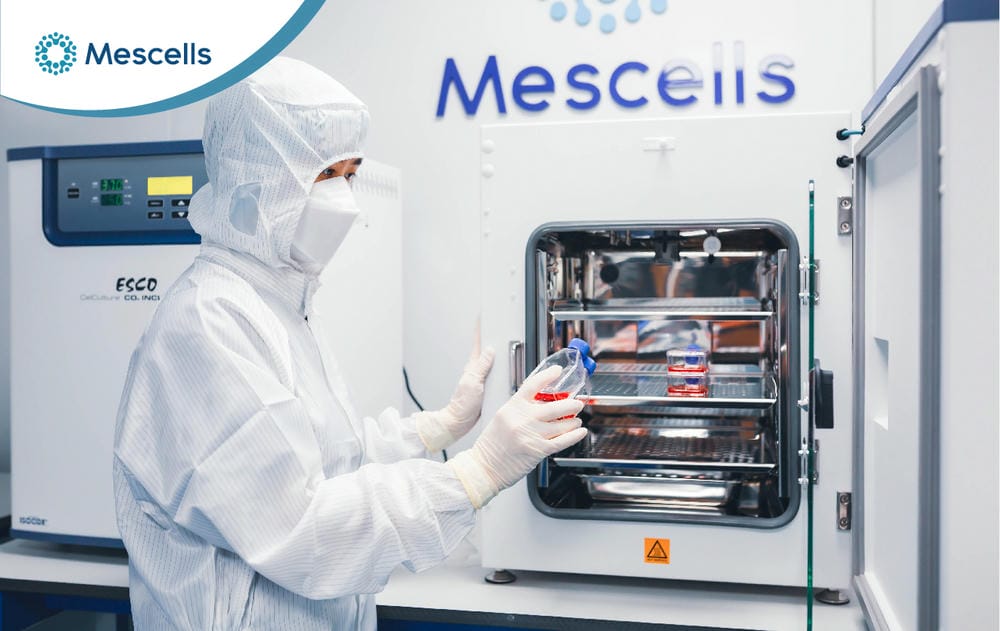
A CO₂ incubator for stem cell culture in the Mescells lab
Precise control of conditions such as temperature, CO₂ concentration and humidity in the CO₂ incubator directly affects the cells’ ability to survive, grow and maintain their properties. This stability ensures that cell responses in the laboratory can accurately predict biological responses once the cells are introduced into the patient’s body. Even a small deviation can compromise the integrity of the therapy, so that treatment results fall short of expectations.
Investment in high-quality incubator technology is insurance for the safety and efficacy of every cell therapy process. Understanding the physical equilibrium inside the incubation chamber is the essential first step towards fully respecting the core biological needs of cells.
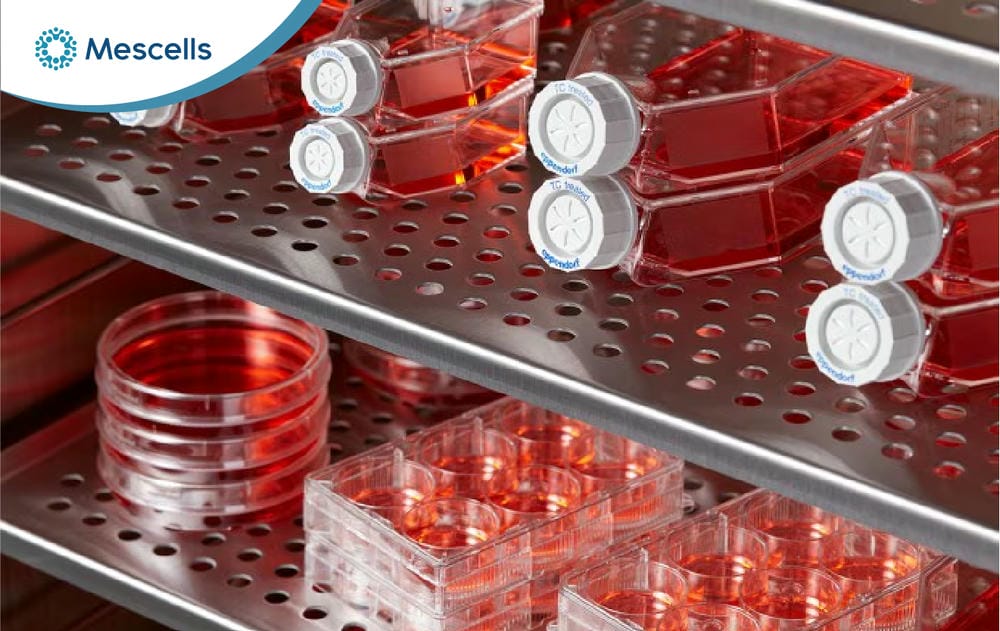
Cell samples are cultured and kept in a dedicated CO₂ incubator to maintain optimal properties and viability
2. How does a CO₂ incubator work?
The sophistication of the CO₂ incubator lies in its ability to coordinate physical parameters smoothly to reach a dynamic equilibrium. Based on specialist materials from the University of Utah and Eppendorf, three core factors make this possible:
- Temperature (37°C): This is the standard physiological temperature of the human body. Modern models use direct heating or an air jacket to ensure uniform temperature at every point in the chamber. This stability lets cellular enzymes work optimally, promoting replication without causing mutations due to heat shock.
- CO₂ concentration and pH balance: This is the most important mechanism for sustaining life. In the body, blood pH is kept stable by the bicarbonate buffer system. The incubator simulates this by maintaining a CO₂ concentration (usually 5%) that dissolves into the culture medium, producing the chemical reaction: CO₂ + H₂O ⇌ H₂CO₃ ⇌ H+ + HCO₃⁻-. This reaction keeps the pH of the medium stable at 7.2 – 7.4. Any fluctuation in CO₂ concentration shifts this equilibrium, causing pH shock and possibly cell death.
- Saturated humidity: Humidity in a CO₂ incubator is usually kept above 95% to limit evaporation of water from the culture medium. If humidity falls, water in the medium evaporates and the concentration of salts, minerals and amino acids becomes too high (hypertonic), which is toxic to cells.
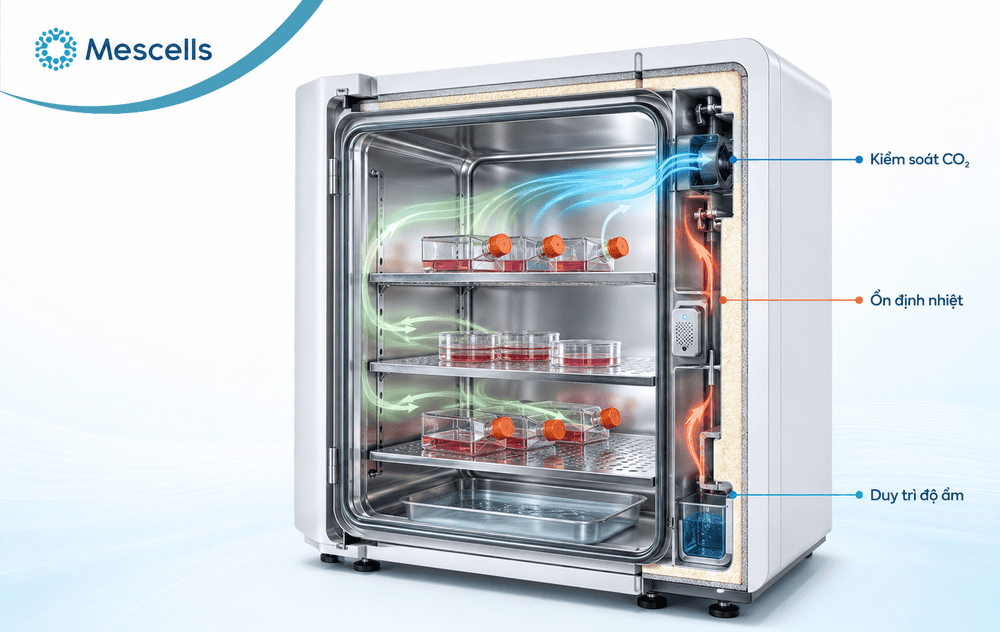
Environment maintenance mechanism and optimized design of the CO₂ incubator
The detailed operating mechanism of a CO₂ incubator is as follows:
- The sensor system continuously samples the air in the chamber.
- If the CO₂ concentration falls below the set point, a solenoid valve opens to admit more pure CO₂.
- A fan system or a natural-convection (fanless) design mixes the gas evenly to ensure uniformity.
With the mechanism understood, the next step is to look at the specific technological components that make these ideal parameters a reality.
3. Construction and technology of the CO₂ incubator
The choice of technology depends not only on budget but also on how sensitive the cell type is. Experts always favor technologies that restore the environment fastest after each door opening.
3.1. CO₂ sensors: IR versus TC technology
The difference between infrared (IR) and thermal conductivity (TC) sensors is one of the key factors determining culture quality:
| Feature | Thermal conductivity (TC) sensor | Infrared (IR) sensor |
| Measurement principle | Measures changes in the thermal conductivity of the air. | Uses a wavelength of light to measure CO₂ molecules directly. |
| Accuracy | Low, affected by temperature and humidity. | High, unaffected by other factors. |
| Recovery speed | Slow. | Very fast after the door is opened. |
| Humidity sensitivity | Very sensitive (prone to error if humidity fluctuates). | Unaffected. |
| Application | Basic culture with few changes. | Culture of sensitive stem cells with frequent door openings. |
3.2. HEPA filtration and antimicrobial materials
To protect specimens from the 100–1000 microorganisms present in every cubic meter of lab air, HEPA filtration plays a vital role. According to the University of Utah, the HEPA filter should be installed inside the chamber itself for optimal filtration of dust and fungal spores (99.97% efficiency).
As for materials, electropolished stainless steel is the common standard. However, high-end models are often fitted with interiors of pure copper (100% copper). Copper is naturally antimicrobial, killing microorganisms through surface contact without harmful chemicals, and does not emit volatile organic compounds (VOCs) that could harm cells. This technology becomes especially important when working with high-value, highly sensitive cell types.
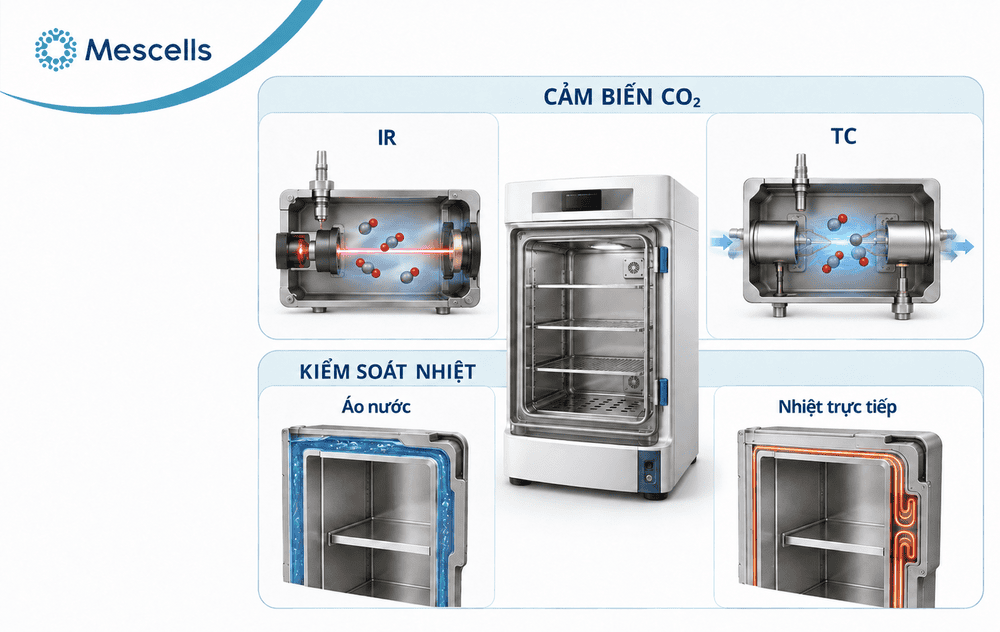
Comparison of CO2 incubator technologies: IR and TC sensors, water jacket and direct heat
4. The role of the CO₂ incubator in culturing stem cells and immune cells
Stem cells are extremely sensitive living units. A fluctuation of just 0.5°C or 1% CO₂ can activate stress proteins or change the differentiation pathway, causing them to lose their inherent totipotency or pluripotency.
Using a CO₂ incubator that meets the required standards is a prerequisite for ensuring the quality of mesenchymal stem cells or immune cells (such as NK cells and T cells). A stable environment helps cells retain their original phenotype and the highest biological activity.
If the culture environment is unstable, cell quality after expansion will decline. This not only reduces therapeutic efficacy but may also cause unwanted immune risks when the cells are introduced into the patient’s body. The CO₂ incubator is the first layer of protection, ensuring that every cell produced meets clinical quality standards. To maintain this ideal environment, a rigorous maintenance procedure is essential.
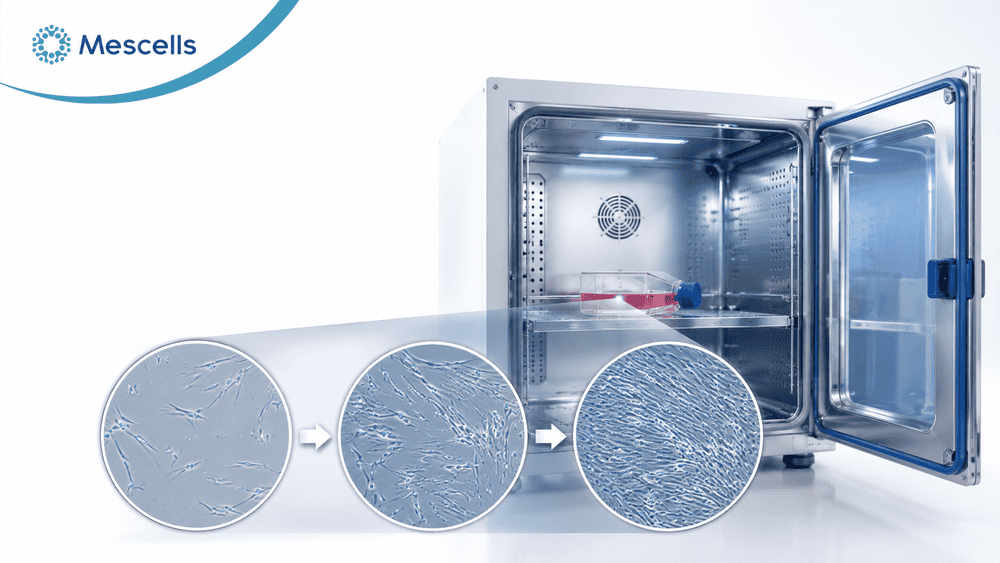
Stem cell growth in the incubator environment
5. CO₂ incubator maintenance and cleaning procedures
Bacterial or mold contamination can ruin an entire culture batch, significantly extending research time, effort and cost. Based on materials from the University of Utah, maintenance should follow these precise specifications:
5.1. Water management
Many laboratories make the mistake of using ultrapure (Type 1) water. Because it contains almost no dissolved ions, Type 1 water actively draws ions from stainless steel and copper surfaces, causing corrosion and pitting.
- Water standard: Use only sterile distilled water.
- pH: must be between 7 and 9.
- Conductivity: 1-20 microSiemens/cm.
- Resistivity: 50 K-1 M Ohm-cm.
5.2. Routine cleaning
- Weekly: Replace all the water in the tray rather than just topping it up.
- Monthly: Wipe down the entire chamber with 70% ethanol or suitable quaternary ammonium compounds. Avoid chlorine-based cleaners, as they cause severe metal corrosion.
- High-temperature sterilization: Use the Steri-Run feature (sterilization at 180°C) periodically, every 1-6 months. This cycle completely destroys bacteria and fungal spores without the need to remove the sensors.

Cleaning and wiping down the entire CO₂ incubator chamber with a suitable solution to ensure a sterile environment for cells
Maintenance checklist:
- Clean the door and handle: Every 2 weeks with 70% ethanol.
- Water tray management: Check the water level weekly to avoid a drop in humidity that could damage the CO₂ sensor.
- Filter replacement: Replace the HEPA filter and gas inlet filter every 6-12 months.
- Calibration: Check the CO₂ concentration with an independent gas analyzer every quarter.
Maintenance is not just cleaning; it is compliance with international standards in biomedical manufacturing.
6. Cleanroom standards in cell manufacturing
In pharmaceutical and cell manufacturing, CO₂ incubators must operate in a stringent cleanroom environment. According to Fisher Scientific, laboratories need to use equipment that is ISO Class 5 certified and compatible with Grade A/B areas.
>>> Learn more: Serum-free cell culture
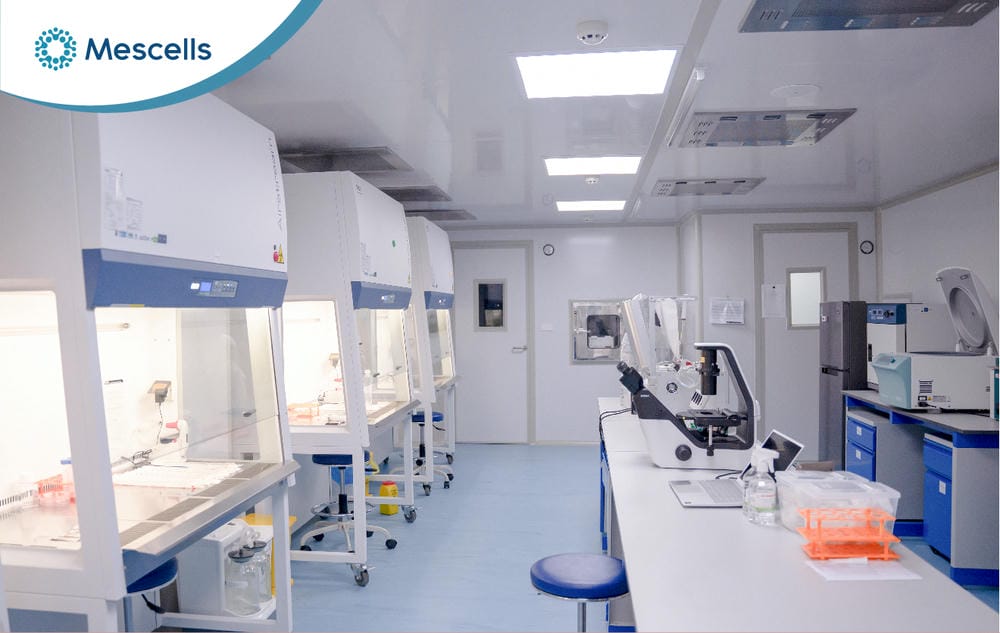
Laboratories need equipment that meets ISO Class 5 and is compatible with Grade A/B areas to ensure maximum sterility
Particle management technology
Laboratory equipment contributes about 15% of the particles generated in a cleanroom. Modern models such as the Heracell Vios CR and Forma Steri-Cycle CR are specially designed to minimize this risk:
- Particle capture: The onboard HEPA system captures particles generated by hinges, door gaskets and electronic components, filtering them before they are released.
- Peak emission point (hot spot): Real-world tests show that the highest point of particle generation is at the upper right, just above the top door hinge. Control at this point is the key to meeting ISO Class 5.
- ISO 14644-14 certification: This is the global standard for assessing the suitability of equipment for cleanrooms, ensuring that it does not contaminate air that is many times cleaner than outside air.

Working with a CO₂ incubator in a compliant cleanroom environment
7. Technology trends in CO2 incubators
The convergence of biotechnology and digital technology is giving culture equipment a new face.
- Remote monitoring (VisioNize®): Scientists at Mescells can now monitor temperature, CO₂ and equipment status 24/7 through a mobile app. An instant alert system helps prevent the loss of samples due to power failure or gas running out.
- Stackable design: Makes the most of expensive cleanroom space by stacking culture units without affecting one another’s temperature stability.
- Smart interface: A touchscreen displaying real-time charts makes it easy to retrieve data (audit trail) for the most stringent quality control processes.

The smart control interface of a new-generation CO₂ incubator
Looking back over the whole process, it is clear that the CO2 incubator is not just a supporting device but an irreplaceable foundation for the development of stem cell technology. These silent “guardians” will continue to be the pillars that make the feats of regenerative medicine a reality in the future, bringing new hope to millions of patients around the world.
MESCELLS | MSC – SPECIALIZED HEALTHCARE SYSTEM FOR REGENERATIVE MEDICINE AND CELL THERAPY
- Hotline: 0866 022 097
- Address: TT21, No. 204 Nguyen Tuan, Thanh Xuan Ward, Hanoi, Vietnam.
- Fanpage: Mescells Institute of Applied Cell Technology Research
REFERENCES:
- University of Utah. (2026). Best Practices for CO₂ Incubator Maintenance. Institutional Biosafety Committee (IBC). https://ibc.utah.edu/library/best-practices-for-co2-incubator–maintenance.php
- Eppendorf SE. (2026). CO₂ Incubators: Product Guide, Effective Contamination Control and Maintenance Resources. https://www.eppendorf.com/us-en/Products/Cell-Incubation/CO2-Incubators-c-WebPSub-H-44551
- Fisher Scientific. (2021). Compliance testing demonstrates CO₂ incubator merits certification for use in grade A/B environments. Thermo Fisher Scientific COL34101 0321. thermofisher.com/cleanroomco2
- TÜV SÜD Industrie Service GmbH. (2020). Compatibility testing and GMP Compliance Certification. Reports No. 3264493-00, 01, 04.
Note: The content of this article is compiled from and refers to scientific reports and reputable medical journals around the world. However, this information is for reference only and is not a substitute for diagnosis or specialist medical treatment by a doctor.

Deputy Director, Mescells Institute of Applied Cell Technology Research



 Hotline
 Zalo
Zalo
 Fanpage