 0866 022 097
 institute@mescells.com
Treating Cirrhosis with Mesenchymal Stem Cells: A New Advance in Regenerative Medicine


Liver disease is now an enormous health burden for many countries around the world. Once the disease reaches an advanced stage, conventional methods usually only relieve symptoms, leaving many patients with nowhere to turn. Fortunately, advances in regenerative medicine have brought a highly promising approach: treating cirrhosis with mesenchymal stem cells (MSCs).
This advanced solution not only opens up the possibility of repairing the underlying damage, but also greatly improves quality of life for millions of patients. In this article, Mescells explores this new approach to treating cirrhosis with you.
1. Cirrhosis and the challenges of conventional treatment
To understand why cell technology is needed, Mescells asks you to picture the liver as a huge detoxification plant. When the body is continually exposed to harmful agents such as hepatitis viruses, alcohol abuse or drug overdose, liver cells are seriously damaged. This repeated cycle of injury and self-repair creates a dense web of scar tissue that gradually replaces healthy liver cells. In medicine this condition is called cirrhosis. When the disease moves into the decompensated (end) stage, patients face a high mortality rate and a series of dangerous complications such as fluid in the abdomen (ascites), gastrointestinal bleeding and coma.
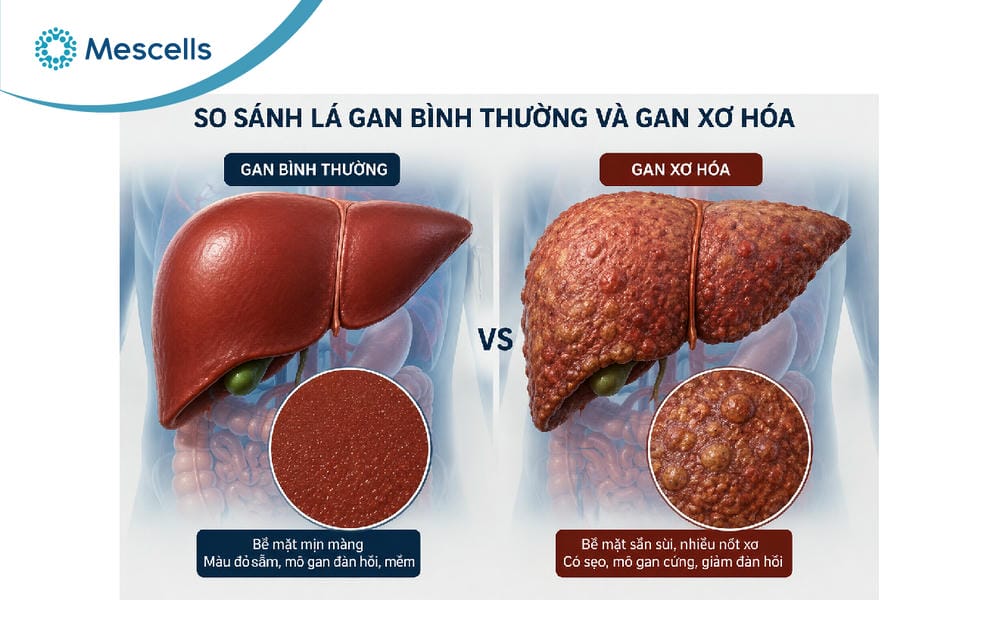
Comparison of a normal liver and a fibrotic liver
In conventional treatment, doctors focus mainly on managing symptoms, for example using diuretics to reduce abdominal fluid or requiring patients to stop drinking alcohol completely. Although these measures can prolong survival, they cannot reverse the cell damage that has already occurred. For end-stage liver disease, liver transplantation is regarded as the only effective treatment.
However, Mescells must stress that liver transplantation faces countless obstacles in practice. The greatest difficulty is the severe shortage of donor organs and the extremely high cost of surgery. Moreover, even after a successful transplant, patients still face the risk of the body rejecting the graft and must take immunosuppressants for the rest of their lives. This lack of safe and definitive treatment options has driven scientists around the world to seek a new solution, leading to the advent of cell therapy.
2. What are mesenchymal stem cells (MSCs) and what role do they play in treating cirrhosis?
You may have heard a great deal about “stem cells”, but in medicine the term is actually very broad. In organ regeneration, mesenchymal stem cells (MSCs) act as the “chief architects”. They are multipotent adult stem cells, able to differentiate (transform) into many different cell types in the body.
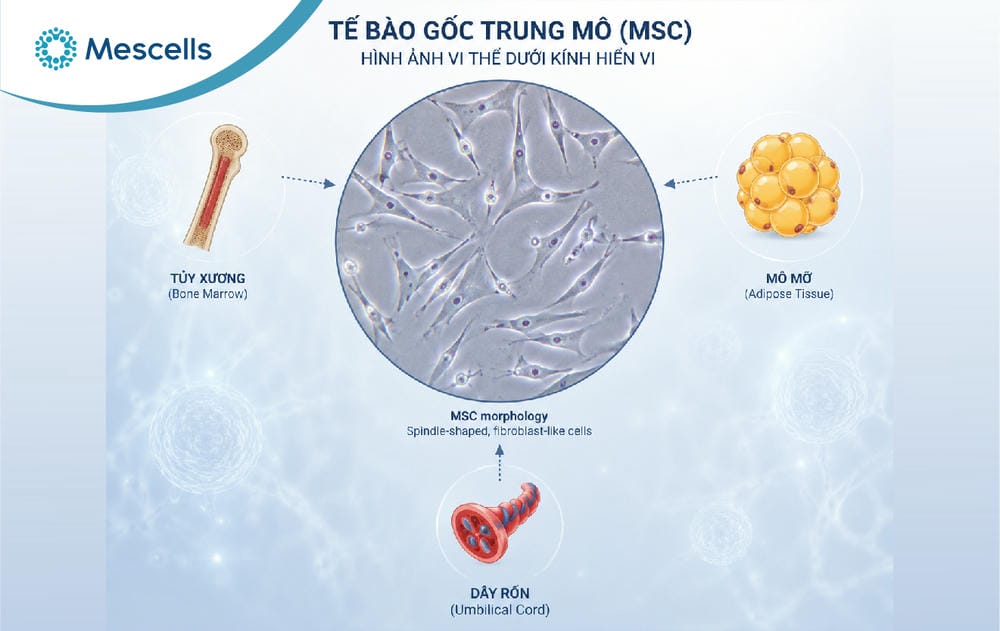
Mesenchymal stem cells and their common sources in the body
According to medical research, MSCs can be isolated and collected from many different human tissue sources, such as bone marrow, adipose tissue, umbilical cord tissue, the placenta and even menstrual blood. What makes mesenchymal stem cells (MSCs) the leading candidate in regenerative medicine is that they have been thoroughly studied and shown to be safe for use in humans. Furthermore, MSCs can be expanded in large numbers in the laboratory, have low immunogenicity (they are unlikely to be rejected by the body) and do not raise bioethical concerns.
When it comes to function, Mescells often likens mesenchymal stem cells to a versatile rapid-response rescue team. When infused into the patient’s body, they not only seek out damaged liver tissue to repair it directly, but also release a range of important biological substances that help remodel the liver’s microenvironment, thereby restoring liver function remarkably.
3. The science behind treating cirrhosis with mesenchymal stem cells (MSCs)
As a specialist in cells, Mescells would like to explain the remarkable way MSCs work in the patient’s liver. Treating cirrhosis with stem cells is not magic; it rests on three very robust molecular biological mechanisms:
First, liver regeneration
The liver is an organ with a naturally high capacity for self-regeneration, but in severe fibrosis this capacity almost disappears. When MSCs are introduced into the body, they can differentiate directly into hepatocyte-like cells to replace dead liver cells. However, their main benefit lies in the “paracrine” effect.
That is, MSCs synthesize and secrete large amounts of growth factors such as VEGF (vascular endothelial growth factor), HGF (hepatocyte growth factor) and IGF-1 (insulin-like growth factor). These biological nutrients act like a special fertilizer, preventing the death of existing liver cells while awakening the ability of the remaining healthy liver cells to multiply.
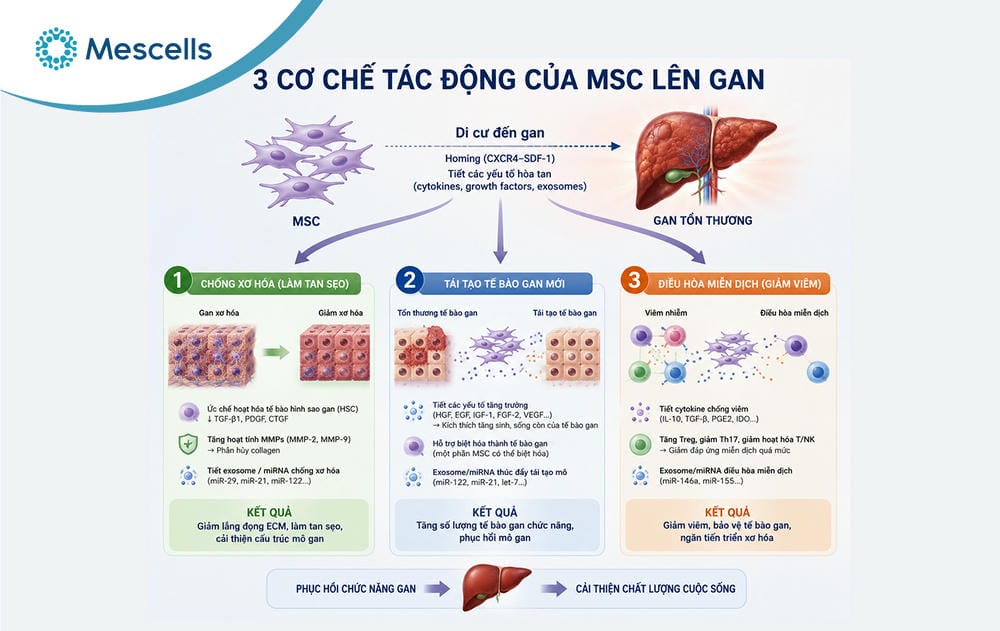
Three mechanisms by which mesenchymal stem cells (MSCs) act on the liver
Second, anti-fibrosis
Cirrhosis is essentially the excessive accumulation of scar tissue caused by a type of cell called the hepatic stellate cell (HSC). When the liver is inflamed, these HSCs are activated and continually produce collagen fibers (scar tissue). Mesenchymal stem cells can directly inhibit the proliferation of HSCs by regulating complex signaling pathways in the body (such as the TGF-β/Smad pathway). As a result, MSCs reduce the synthesis and deposition of scar tissue, helping to “soften” the hardened structure of the liver.
Third, immunoregulation and anti-inflammation
In patients with cirrhosis there is always serious chronic inflammation. MSCs are able to change the nature of this environment. For example, they act on macrophages (a type of immune cell that clears away bacteria and dead cells). MSCs help switch these macrophages from the M1 state (pro-inflammatory, tissue-destroying) to the M2 state (anti-inflammatory, tissue-healing) by secreting immunosuppressive molecules such as PGE2 and IL-10. This helps put out the “fire” of inflammation ravaging the liver, creating ideal conditions for the liver to heal itself.
4. Real-world evidence and clinical trials of mesenchymal stem cells (MSCs) in treating cirrhosis
Mescells understands that, when faced with a new treatment, what patients care about most is real-world evidence. Going beyond theory, the efficacy of MSC treatment for cirrhosis has been, and continues to be, demonstrated in a series of clinical trials worldwide. According to global clinical trial registry data, as of May 2024, of 94 clinical trials of cell-based treatment for liver disease, as many as 73 (77.7%) used mesenchymal stem cells (MSCs). These trials mainly target patients with decompensated cirrhosis and liver failure.
A typical example is a large Phase II clinical study with the longest follow-up, up to 75 months, in 219 patients with decompensated cirrhosis due to hepatitis B virus. The study confirmed that patients who received MSC infusions had a marked improvement in liver function and a significant increase in overall survival, with no serious treatment-related complications recorded.
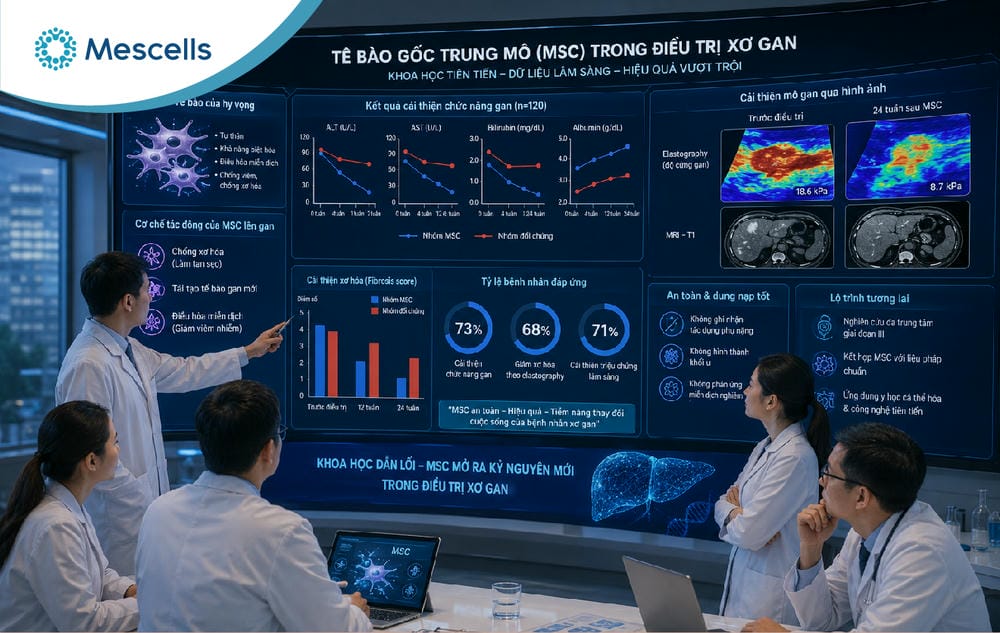
The effect of treating cirrhosis with mesenchymal stem cells is supported by evidence from clinical trials
In addition, a meta-analysis of 11 clinical trials in 854 patients found that mesenchymal stem cell therapy significantly increased albumin levels (an important protein made by the liver) and reduced the MELD score (a scale for rating the severity of liver failure) within just 6 months of treatment. Another analysis of data from 2018 to 2025 showed that the rate of fibrosis regression in patients receiving MSC therapy was as high as 45%, a figure that outperforms conventional anti-fibrotic drugs.
In the United States, the respected medical institution Mayo Clinic is collaborating with the biotechnology company HepaTx to study an experimental tissue-regenerating therapy for patients with end-stage liver disease. This new technology uses adipose-derived mesenchymal stem cells, culturing and directing them to behave like true liver cells in order to repair damage caused by alcoholic hepatitis.
Another very new approach being tested is the use of “exosomes” derived from mesenchymal stem cells. In Iran, a Phase IIa clinical trial (NCT05871463) is evaluating the safety and efficacy of exosomes extracted from umbilical cord MSCs in 15 patients with decompensated cirrhosis. Exosomes are tiny extracellular vesicles containing beneficial genetic material and proteins that help liver cells recover without the need to infuse living cells directly into the body. These are the most vivid proof that regenerative medicine is not just far-fetched theory.
5. The future of treating cirrhosis with mesenchymal stem cells (MSCs)
Mescells believes we are only in the first chapters of the era of regenerative medicine. In the future, the treatment of cirrhosis with mesenchymal stem cells (MSCs) will be flexibly combined with conventional medical approaches for the best results. Rather than relying on a single therapy, the combination of antiviral drugs, liver-protecting drugs and stem cell therapy will create a solid “wall” that protects the liver from new attacks while restoring worn-out cells.
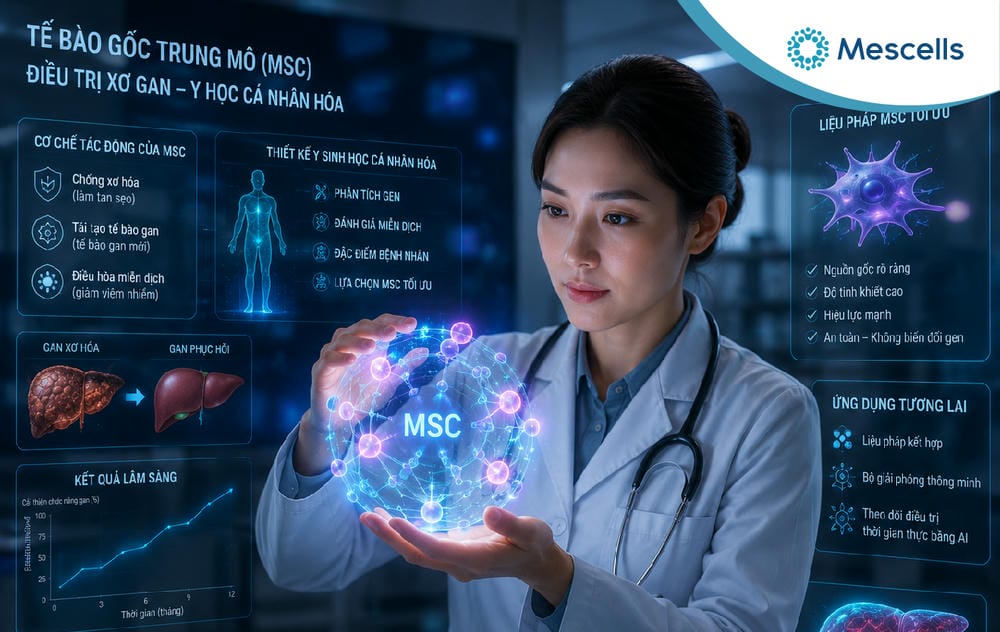
The future of cirrhosis treatment lies in personalized medicine
In addition, pre-treatment of stem cells in a low-oxygen environment, and their combination with 3D bioprinting to create miniature organs (organoids), are major advances in biotechnology. Although in many countries, including the United States, regulators such as the FDA still regard most stem cell approaches as experimental and subject to a stringent approval process, the positive clinical signals described above mean the future for patients with cirrhosis is brighter than ever.
Overall, treating cirrhosis with mesenchymal stem cells (MSCs) is kindling great hope for patients fighting this serious disease. Rather than only controlling symptoms temporarily, this approach goes deeper, countering fibrosis, regulating immunity and naturally regenerating the damaged structure of the liver.
A body of medical evidence and real-world trials has confirmed the safety and outstanding efficacy of mesenchymal stem cells (MSCs) in restoring liver function. Mescells’ experts firmly believe that, with the continuing progress of science, this modern technology for treating cirrhosis will soon become the gold standard, bringing a long and healthy life to millions of patients around the world.
MESCELLS | MSC – SPECIALIZED HEALTHCARE SYSTEM FOR REGENERATIVE MEDICINE AND CELL THERAPY
- Hotline: 0866 022 097
- Address: TT21, No. 204 Nguyen Tuan, Thanh Xuan Ward, Hanoi, Vietnam.
- Fanpage: Mescells Institute of Applied Cell Technology Research
REFERENCES:
- A Mayo Clinic collaboration studies engineered stem cells for liver disease – Mayo Clinic News Network, 2024. Link: https://newsnetwork.mayoclinic.org/discussion/a-mayo-clinic-collaboration-studies-engineered-stem-cells-for-liver-disease
- Cell therapy for end-stage liver disease: Current state and clinical challenge – MedNexus (Chinese Medical Journal), 2024. Link: https://mednexus.org/doi/full/10.1097/CM9.0000000000003332
- Emerging Therapeutic Strategies for Liver Cirrhosis: Integrating Pharmacologic and Regenerative Approaches – ClinicSearch, 2025. Link: https://clinicsearchonline.org/uploads/articles/1766229076IJCCS-25-RA-39-Galley_Proof.pdf
- Is Stem Cell Therapy Legal in the USA? – R3 Stem Cell. Link: https://r3stemcell.com/is-stem-cell-therapy-legal-in-the-us
- Study Details | NCT05871463 | Effect of Mesenchymal Stem Cells-derived Exosomes in Decompensated Liver Cirrhosis | ClinicalTrials.gov, 2023. Link: https://clinicaltrials.gov/study/NCT05871463
Note: The content of this article is compiled from and refers to scientific reports and reputable medical journals around the world. However, this information is for reference only and is not a substitute for diagnosis or specialist medical treatment by a doctor.

Deputy Director, Mescells Institute of Applied Cell Technology Research




 Hotline
 Zalo
Zalo
 Fanpage