 0866 022 097
 institute@mescells.com
What Is rRNA? Characteristics, Functions and Applications


In the cell, mRNA, tRNA and rRNA are the three main types of RNA, working closely together to complete protein synthesis. Of these, rRNA accounts for the largest share of total cellular RNA and is also the building block of the ribosome, the organelle often described as the cell’s protein assembly factory. So what exactly is rRNA, what are its characteristics and structure, what functions does it perform, and how are scientists using it in biological research? Join Mescells to find out in the article below.
1. What is rRNA?
rRNA (ribosomal RNA) is a type of RNA molecule that makes up the majority (about 80%) of total RNA in the cell. It combines with proteins to form the structure of the ribosome. As the ribosome reads the instructions encoded in mRNA, rRNA carries out the chemical reactions that assemble new proteins step by step [1].
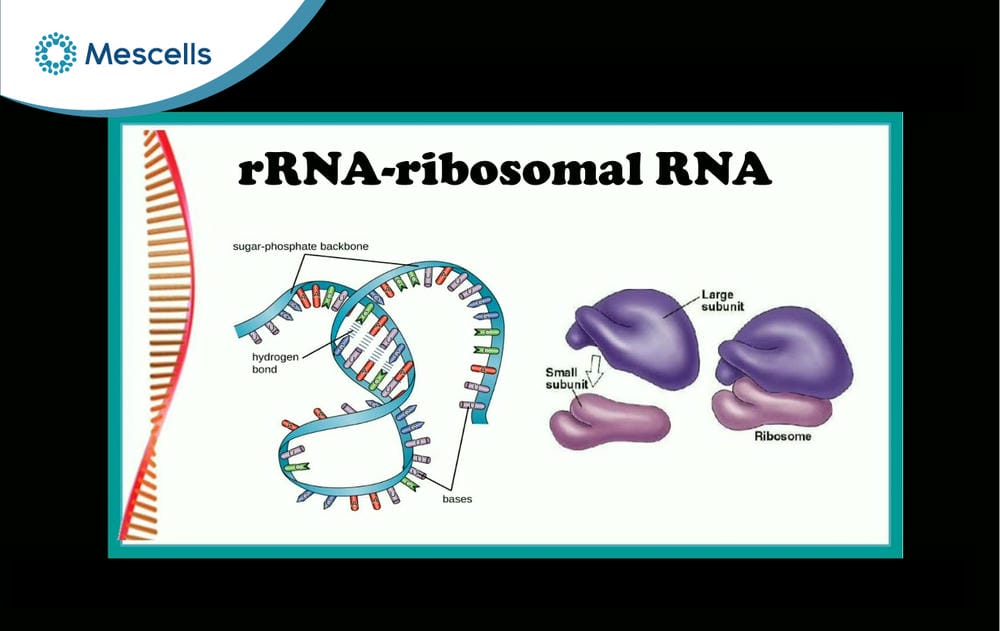
rRNA accounts for a large share of total cellular RNA and is long-lived
2. Characteristics and structure of rRNA
What is rRNA and how is it structured? A complete ribosome is always made up of two subunits of different sizes, each containing one or more distinct rRNA molecules combined with many ribosomal proteins. Unlike messenger RNA (mRNA), which is short-lived, rRNA is stable and long-lived. This component differs markedly between eukaryotic cells and bacteria, as compared in the table below:
| Criterion | Eukaryotic ribosome (80S) | Bacterial ribosome (70S) |
| Small subunit | 40S, containing 18S rRNA and about 33 proteins | 30S, containing 16S rRNA and about 21 proteins |
| Large subunit | 60S, containing 28S, 5.8S and 5S rRNA and about 49 proteins | 50S, containing 23S and 5S rRNA and about 34 proteins |
| Site of rRNA transcription | The nucleolus, by RNA polymerase I and III | The cytoplasm, as there is no separate nucleus or nucleolus |
| Research significance | Species-specific at a finer level, used in eukaryote phylogenetics | The 16S rRNA gene is highly conserved and is the gold standard for bacterial identification |
Sources for the comparison table: [2], [3], [4]
In terms of molecular structure, an rRNA chain does not lie straight but forms intramolecular complementary base pairs, folding into numerous complex stem-loops. This creates a robust three-dimensional scaffold to which ribosomal proteins attach, stabilizing the overall shape. Notably, precursor rRNA molecules also undergo hundreds of subtle chemical modifications, mainly methylation and the conversion of uridine to pseudouridine, before becoming fully functional mature rRNA [2].
3. Functions of rRNA
To fully understand what rRNA is and what role it plays in the cell, we need to look at its function inside the ribosome. For a long time, scientists believed that rRNA served only as a passive scaffold, while ribosomal proteins were the components that actually performed catalysis.
However, high-resolution structural studies in the early 2000s completely overturned this view. They showed that the catalytic center that forms peptide bonds between amino acids (the peptidyl transferase center) is in fact composed entirely of rRNA, with no protein directly involved in that key chemical reaction. In other words, the ribosome itself is a giant ribozyme, that is, an RNA molecule that acts as a true enzyme [4].
Beyond this core catalytic role, the rRNA of the small subunit also monitors the accuracy of pairing between the codon on mRNA and the anticodon on tRNA, helping to minimize errors during translation.
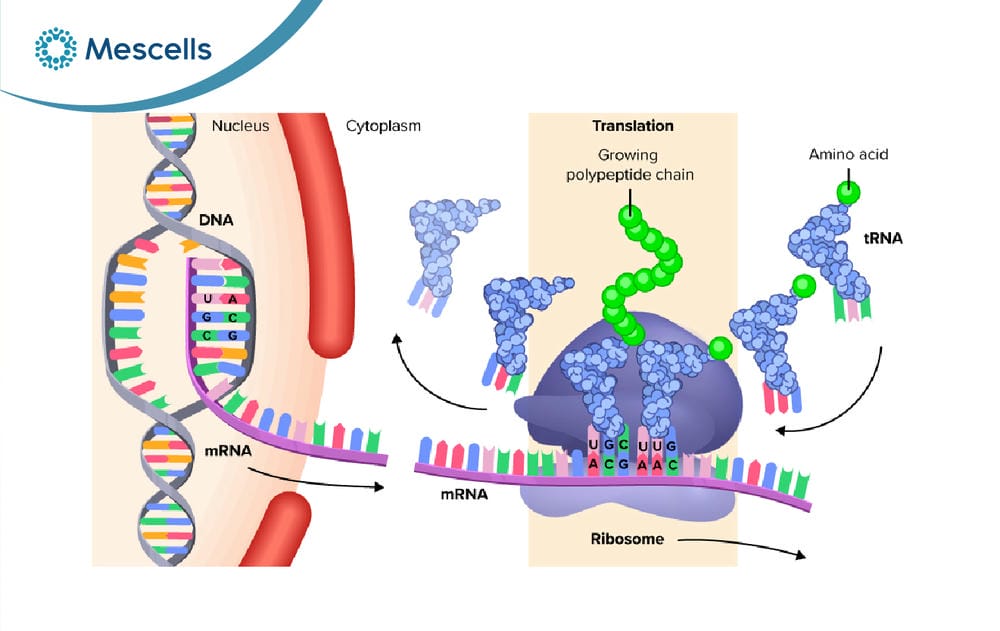
rRNA acts as a ribozyme, catalyzing the formation of peptide bonds between amino acids
4. Applications of rRNA in biological research
Because it is both highly conserved across species and an essential physiological target for the life of the cell, rRNA has become an important tool and target in many fields of research and medicine.
4.1. Potential applications
- Microbial identification: Scientists use the 16S rRNA gene sequence to identify bacteria and classify unknown microorganisms. Because this gene contains both regions that are highly conserved across most bacterial species and nine hypervariable regions (V1-V9) that are specific to each species, 16S rRNA sequencing has become the standard method for determining the bacterial composition of a clinical or environmental sample without direct culture [5].
- Evolutionary research: The conserved regions in rRNA help trace the deep evolutionary history of life and define the major domains of biology.
- Metagenomic sequencing: Universal amplification primers target rRNA to map entire microbial communities in soil, water and the human gut.
- Translational control research: Researchers examine rRNA variants and modifications to see how cells alter protein production under stress or disease
At the same time, precisely because rRNA structure differs significantly between bacterial and human ribosomes, rRNA has become an ideal target for many of the most important classes of antibiotics in clinical medicine.

Diagram of 16S rRNA sequencing to characterize the respiratory microbiota of African elephants
4.2. Remaining challenges
- Low taxonomic resolution: Standard 16S rRNA sequencing often cannot distinguish very closely related bacterial species such as Escherichia coli and Shigella [6].
- PCR and amplification bias: Amplification primers may miss certain groups of microorganisms, leading to skewed results for the sample.
- Abundance in samples: rRNA makes up most of the total RNA in the cell, which can drown out useful messenger RNA (mRNA) signals during sequencing unless it is deliberately removed.
- Misinterpretation of activity: In many cases, when high rRNA levels are observed, it is easy to assume mistakenly that microorganisms are growing vigorously. However, this result can only indicate a high basic translational potential.
For antibiotics that target rRNA, the greatest challenge is drug resistance arising from point mutations right at the drug’s binding site on rRNA. For example, a mutation at position A2058 of 23S rRNA can sharply reduce the binding affinity of macrolides, leading to widespread drug resistance [7].
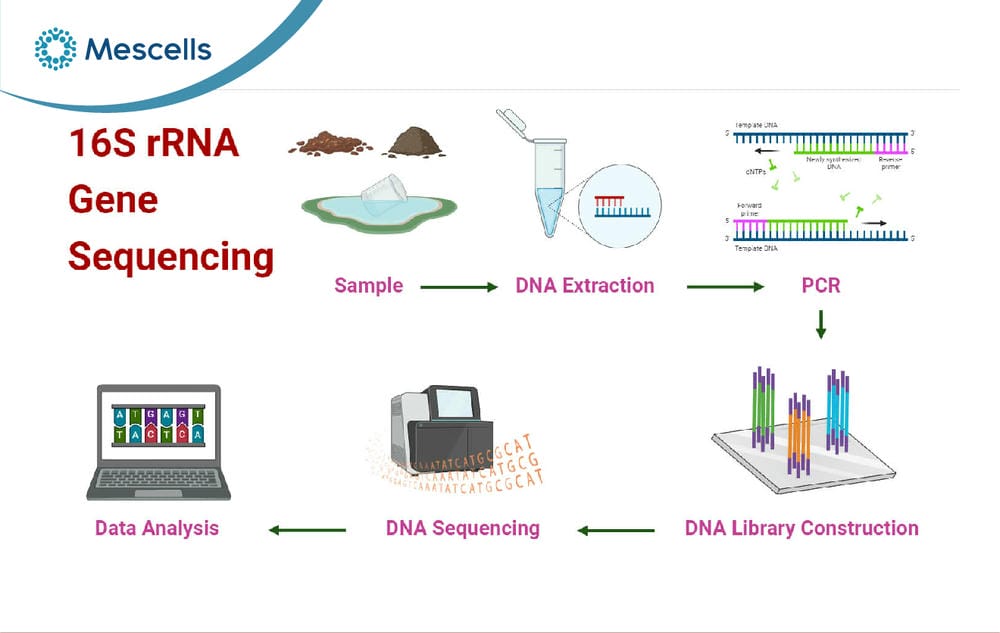
Although it is the most effective tool available today, 16S rRNA sequencing still has significant limits in resolution
As the analysis above shows, the answer to the question “what is rRNA” is more than a simple biological definition. Although it is not mentioned as often as mRNA or tRNA, rRNA is by far the most abundant RNA in every living cell and plays the central catalytic role in the whole process of protein synthesis, the foundation of all life activities.
From helping microbiologists accurately identify a bacterial species that has never been cultured, to being the target of antibiotic classes that save millions of lives every year, rRNA deserves to be seen not merely as a structural component but as one of the biological molecules with the most far-reaching influence on both basic research and applied medicine.
MESCELLS | MSC – SPECIALIZED HEALTHCARE SYSTEM FOR REGENERATIVE MEDICINE AND CELL THERAPY
- Hotline: 0866 022 097
- Address: TT21, No. 204 Nguyen Tuan, Thanh Xuan Ward, Hanoi, Vietnam.
- Fanpage: Mescells Institute of Applied Cell Technology Research
REFERENCES:
- (1). “Ribonucleic Acid (RNA)”, NHGRI, https://www.genome.gov/about-genomics/educational-resources/fact-sheets/ribonucleic-acid-fact-sheet
- (2). Marie-Line Dubois, 2016, “The Nucleolus: Structure and Function”, PMC, https://pmc.ncbi.nlm.nih.gov/articles/PMC7123373/
- (3). “5.8S Ribosomal RNA — Overview”, ScienceDirect, https://www.sciencedirect.com/topics/biochemistry-genetics-and-molecular-biology/5-8s-ribosomal-rna
- (4). Mauro D Locati, 2017, “Expression of distinct maternal and somatic 5.8S, 18S, and 28S rRNA types during zebrafish development”, PMC, https://pmc.ncbi.nlm.nih.gov/articles/PMC5513064/
- (5). Nancy J Ames, 2018, “The Human Microbiome and Understanding the 16S rRNA Gene in Translational Nursing Science”, PMC, https://pmc.ncbi.nlm.nih.gov/articles/PMC5535273/
- (6). Paula Araujo de Souza, 2025, “Application and Limitations of 16S rRNA Gene Sequencing for Identifying WHO Priority Pathogenic Gram-Negative Bacilli”, PMC, https://pmc.ncbi.nlm.nih.gov/articles/PMC12684418/
- (7). Birte Vester, 2021, “Macrolide Resistance Conferred by Base Substitutions in 23S rRNA”, Antimicrobial Agents and Chemotherapy, https://journals.asm.org/doi/10.1128/aac.45.1.1-12.2001
Note: The content of this article is compiled from and refers to scientific reports and reputable medical journals around the world. However, this information is for reference only and is not a substitute for diagnosis or specialist medical treatment by a doctor.

Deputy Director, Mescells Institute of Applied Cell Technology Research




 Hotline
 Zalo
Zalo
 Fanpage