 0866 022 097
 institute@mescells.com
What Is RNA? Decoding the Versatile Molecule Behind the Life of the Cell


RNA is often mentioned together with DNA, but they are two types of molecule with different structures and functions in the cell. RNA is an independent biological molecule, diverse in both structure and function, and some argue that RNA may even have appeared earlier than DNA in the history of life. A detailed understanding of what RNA is, its structure, its types and its applications in medicine helps us grasp how the body synthesizes proteins, regulates life activities and develops modern medical solutions. In this post, Mescells explores the key characteristics and functions of RNA to help you better understand its important role in biology and medicine.
1. What is RNA?
RNA (ribonucleic acid) is a type of nucleic acid found in all living cells, with a structure similar to that of DNA. Unlike DNA, however, RNA is usually single-stranded. The RNA molecule has a backbone made of alternating phosphate groups and ribose sugars, with one of four nitrogenous bases – A, U, C or G – attached to each sugar. There are many different types of RNA in the cell, such as messenger RNA (mRNA), ribosomal RNA (rRNA) and transfer RNA (tRNA). In addition, some RNAs are involved in regulating gene expression. Some viruses also use RNA as their genetic material [1].
2. Structure of RNA
RNA consists of the following main components:
- Ribose sugar: A five-carbon ring with a highly reactive 2′ hydroxyl (-OH) group, which makes RNA less stable than DNA.
- Phosphate group: Links the 3′ carbon of one sugar to the 5′ carbon of the next to form the backbone.
- Nitrogenous bases: Adenine (A), guanine (G), cytosine (C) and uracil (U). A pairs with U, and C pairs with G.
Although it is single-stranded, RNA does not exist as a simple straight strand. Through intramolecular complementary base pairing, many types of RNA can fold into complex three-dimensional structures. It is this ability to adopt diverse three-dimensional shapes that underlies most of RNA’s rich biological functions.
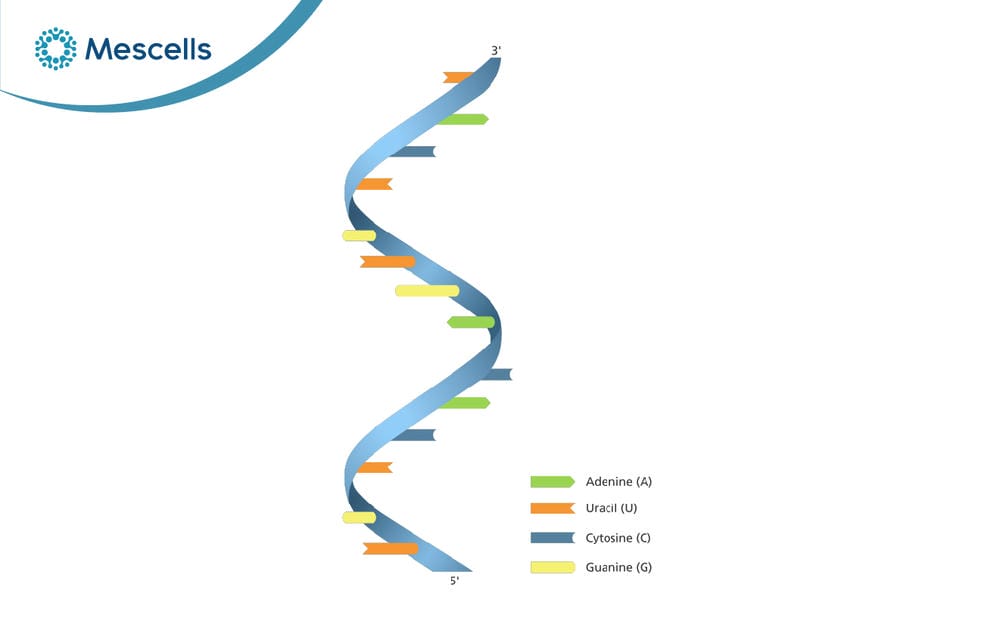
RNA has a single-stranded helical structure
3. How is RNA made?
Knowing what RNA is is not enough; we also need to know how it is made. RNA is synthesized through transcription, driven by the enzyme RNA polymerase. In this process, DNA serves as the template and the RNA molecule is assembled from complementary nucleotides. The result is an RNA chain carrying the information encoded in the DNA, and this information enables the RNA to carry out its function in the cell [3].
The steps of transcription are:
- Initiation: RNA polymerase binds to the promoter region on the DNA and opens the DNA strands to begin RNA synthesis.
- Elongation: RNA polymerase moves along the DNA strand, adding ribonucleotides one by one to extend the RNA chain, following the rule that adenine (A) pairs with uracil (U) and cytosine (C) pairs with guanine (G).
- Termination: RNA polymerase recognizes the transcription termination signal and synthesis stops. The new RNA is released and RNA polymerase detaches from the DNA.
In eukaryotic cells there are several different RNA polymerases. RNA polymerase I transcribes most of the genes encoding rRNA; RNA polymerase II is responsible for transcribing protein-coding genes to produce mRNA, along with many non-coding regulatory RNAs; and RNA polymerase III transcribes tRNA and some other small RNAs. This division of labor lets the cell independently control the rate of production of each group of RNA according to its own needs, instead of regulating everything through a single machine.
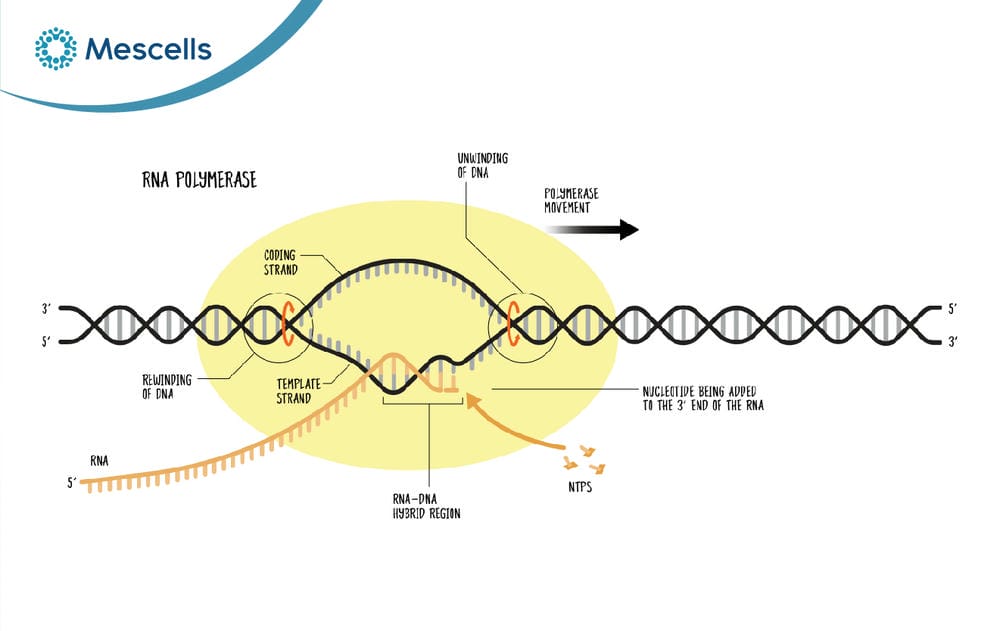
RNA is made through transcription
4. Types of RNA and their functions
The cell contains a great many different types of RNA, classified mainly by the biological function they perform. The table below summarizes the most common and important types [2], [4]:
| Type of RNA | Full name | Main function |
| mRNA | Messenger RNA | Carries genetic information copied from DNA to the ribosome to serve as the template for protein synthesis |
| tRNA | Transfer RNA | Recognizes codons on mRNA and carries the corresponding amino acid to the ribosome during translation. It is the base pairing between tRNA and mRNA that allows the correct amino acid to be inserted into the polypeptide chain being synthesized |
| rRNA | Ribosomal RNA | Combines with proteins to form the ribosome, and directly catalyzes the formation of peptide bonds between amino acids |
| miRNA | MicroRNA | A small non-coding RNA that binds to target mRNA to inhibit translation or promote mRNA degradation, thereby regulating gene expression after transcription |
| siRNA | Small interfering RNA | A short double-stranded RNA that activates the RISC complex to specifically cleave target mRNA, silencing the corresponding gene |
| lncRNA | Long non-coding RNA | A long RNA that does not code for protein, involved in regulating chromatin structure, gene expression and many other cellular processes |
Besides these main groups, the cell also contains many other specialized RNAs, such as snRNA (part of the spliceosome) and snoRNA (involved in the chemical modification of rRNA), reflecting the astonishing functional diversity of RNA compared with DNA’s relatively simple role of storing information.
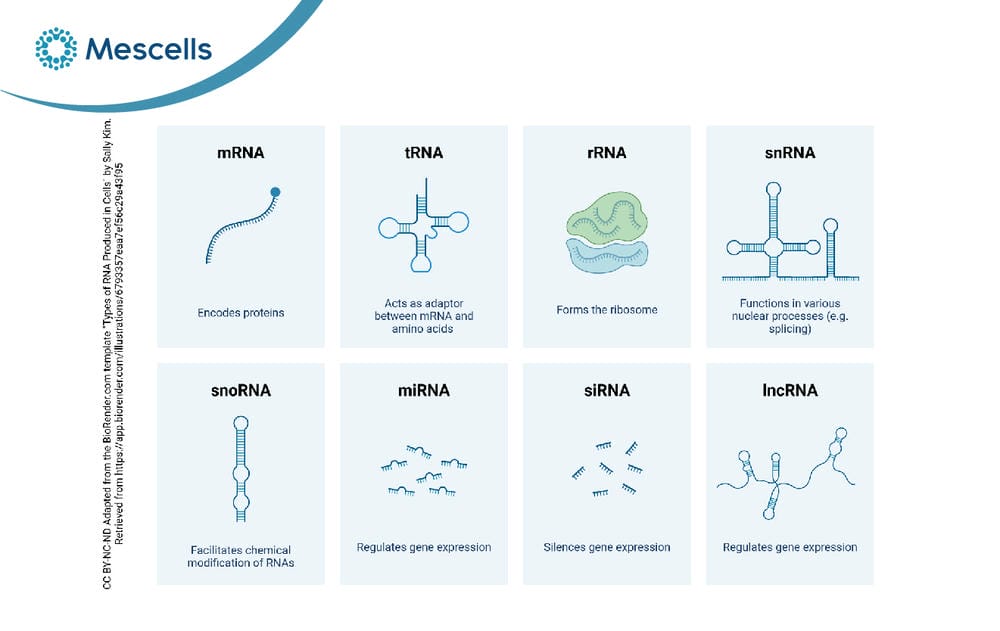
The different types of RNA and their main functions
5. What role does RNA play in the cell?
The best-known role of RNA is to convey genetic information from DNA to the protein synthesis machinery. However, a discovery at the end of the 20th century showed that it is the rRNA in the ribosome, not the ribosomal proteins, that directly catalyzes the formation of peptide bonds. This proved that RNA can also act as a true biological enzyme, known as a ribozyme [5].
In addition, many small non-coding RNAs such as miRNA help fine-tune the expression levels of thousands of different genes, enabling the cell to respond quickly and precisely to changes in the environment or to developmental signals.
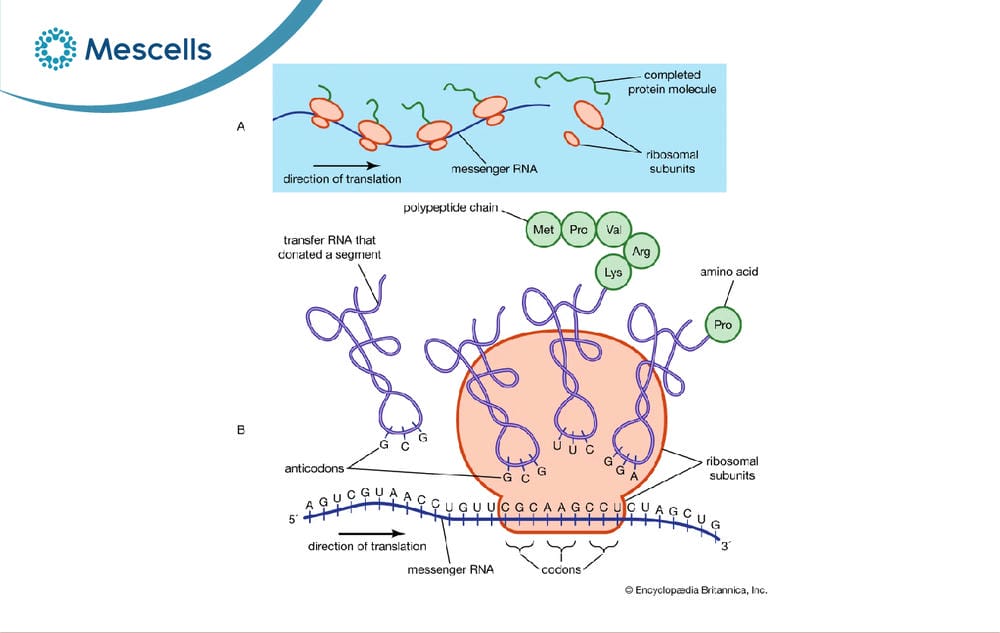
RNA conveys genetic information from DNA to the protein synthesis machinery
6. Applications of RNA in medicine
The functional versatility of RNA is valuable not only in basic biological research; it has also laid the foundation for many new directions in biomedical technology over the past two decades.
6.1. mRNA vaccines and RNA-based therapies
RNA is becoming an important platform for developing methods of disease prevention and treatment. The most prominent application is the mRNA vaccine against COVID-19, which marked the first time this technology was licensed and deployed on a large scale. Beyond infectious diseases, RNA technology is also being studied for the treatment of cancer, neurodegeneration, metabolic disorders and rare genetic diseases. Much of this potential rests on the roles RNA plays in the cell, from conveying genetic information to regulating gene expression and taking part in important biological processes [6].
6.2. Cancer immunotherapy
Personalized vaccines: Neoantigen mRNA targets the specific mutations that characterize each patient’s tumor.
Targeted delivery: RNA nanoparticles deliver anti-cancer agents precisely to cancer cells without harming healthy tissue [6].
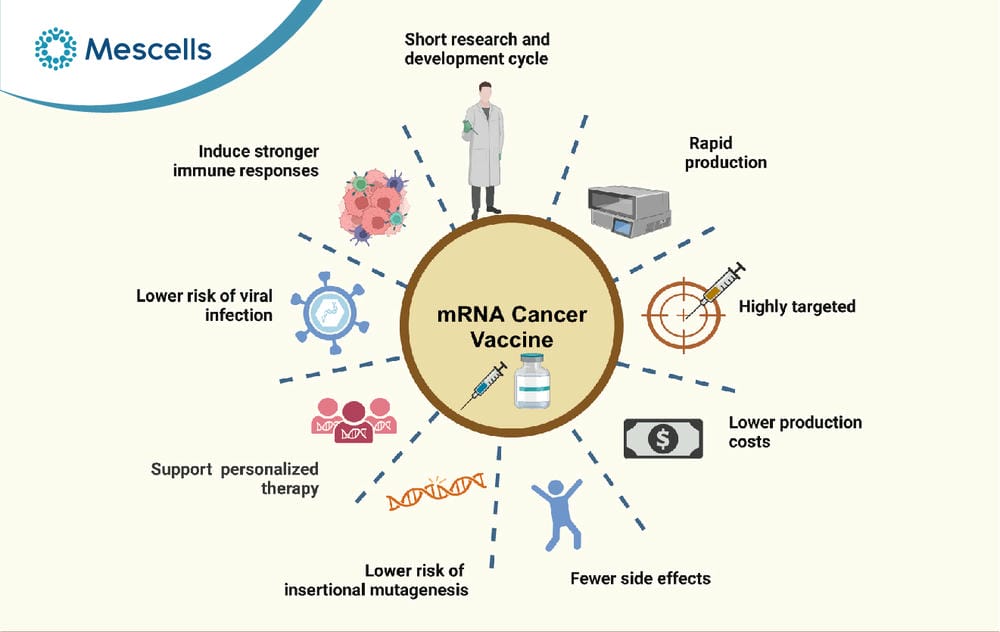
mRNA cancer vaccines are attracting wide interest and research
6.3. Other medical applications of RNA
Besides vaccines, RNA is also the basis for other therapies such as siRNA-based gene-silencing drugs, which selectively reduce the expression of disease-causing genes, and for RT-PCR diagnostic testing – a technique that directly detects viral RNA and has become the gold standard for testing for COVID-19 and many other viral infections.
6.4. Remaining challenges
Despite its potential, the use of RNA as a therapy still faces many obstacles, including poor pharmacological properties, difficulty of delivery into cells and toxicity related to the immune system. Because its structure is very easily hydrolyzed, and the lipid nanoparticles that encapsulate it are physically unstable, most mRNA vaccines and drugs today must be stored at extremely low temperatures (-20°C to -80°C), creating major difficulties for transport and distribution, especially in areas lacking cold-chain infrastructure [7]. These are technical bottlenecks that many research groups around the world are actively working to resolve in order to broaden the applicability of RNA technology.

Storing and transporting mRNA vaccines is a major challenge that demands advanced techniques and high costs
To answer the question of what RNA is in full, we cannot stop at seeing it as merely an intermediate molecule that passes on genetic information. RNA is now recognized as one of the most versatile and important biological molecules of life, with roles in storing information, catalyzing reactions and regulating the activity of thousands of other genes. Thanks to this versatility, RNA has been, is and will continue to be the foundation for many medical breakthroughs, from next-generation vaccines to targeted gene therapies, promising many outstanding solutions for healthcare and health protection in the future.
MESCELLS | MSC – SPECIALIZED HEALTHCARE SYSTEM FOR REGENERATIVE MEDICINE AND CELL THERAPY
- Hotline: 0866 022 097
- Address: TT21, No. 204 Nguyen Tuan, Thanh Xuan Ward, Hanoi, Vietnam.
- Fanpage: Mescells Institute of Applied Cell Technology Research
REFERENCES:
- “Ribonucleic Acid (RNA)”, NHGRI, https://www.genome.gov/genetics-glossary/Ribonucleic-Acid-RNA
- “22.3: Structure and Function of RNA”, Biology LibreTexts, https://bio.libretexts.org/Courses/Portland_Community_College/Cascade_Microbiology/22:_Appendix_B_-_Molecular_Genetics_Review/22.3:_Structure_and_Function_of_RNA
- “Ribonucleic Acid (RNA)”, NHGRI, https://www.genome.gov/about-genomics/educational-resources/fact-sheets/ribonucleic-acid-fact-sheet
- Suzanne Clancy, 2008, “RNA Functions”, Scitable by nature education, https://www.nature.com/scitable/topicpage/rna-functions-352/
- Hirohide Saito, 2022, “The RNA world ‘hypothesis’”, Nature, https://www.nature.com/articles/s41580-022-00514-6
- Anke Sparmann, 2023, “RNA‐based medicine: from molecular mechanisms to therapy”, PMC, https://pmc.ncbi.nlm.nih.gov/articles/PMC10620767/
- MD Faizul Hussain Khan, 2026, “mRNA Vaccines for Tuberculosis Prevention: A Review of Current Research and Prospects”, NCBI, https://www.ncbi.nlm.nih.gov/pmc/articles/PMC12791538/
Note: The content of this article is compiled from and refers to scientific reports and reputable medical journals around the world. However, this information is for reference only and is not a substitute for diagnosis or specialist medical treatment by a doctor.

Deputy Director, Mescells Institute of Applied Cell Technology Research





 Hotline
 Zalo
Zalo
 Fanpage