 0866 022 097
 institute@mescells.com
What Is Translation? Stages, Role and Applications in Medicine


Translation is an important process in gene expression that converts the genetic information encoded in messenger RNA (mRNA) into a polypeptide chain to make protein. Through this process, the cell can produce the proteins needed for structure, metabolism, signaling and many other life activities. Translation takes place mainly at the ribosome, with the participation of mRNA, tRNA, amino acids and many supporting factors.
Understanding what translation is, the components involved, its stages and the factors that regulate it helps explain how cells control protein activity, and opens up many applications in research and the treatment of disease. Join Mescells for a detailed look at translation in the sections below.
1. What is translation?
Translation is the process by which the cell uses the information encoded in mRNA to synthesize a polypeptide chain, which can then fold and be modified to become a functional protein.
The flow of information can be pictured simply as:
DNA → transcription → mRNA → translation → protein
Here, DNA stores the genetic information, transcription produces mRNA, and translation uses the information on the mRNA to determine the sequence of amino acids in the protein.
The ribosome acts as the “protein synthesis machine”. It reads the mRNA codon by codon, each codon consisting of three nucleotides. tRNA acts as an adaptor molecule, recognizing the codon through its anticodon and bringing the corresponding amino acid to the ribosome.
Translation is not simply about making protein; it is the key step at which genetic information is turned into specific biological function.
>>> Learn more: What is RNA? Decoding the versatile molecule behind the life of the cell
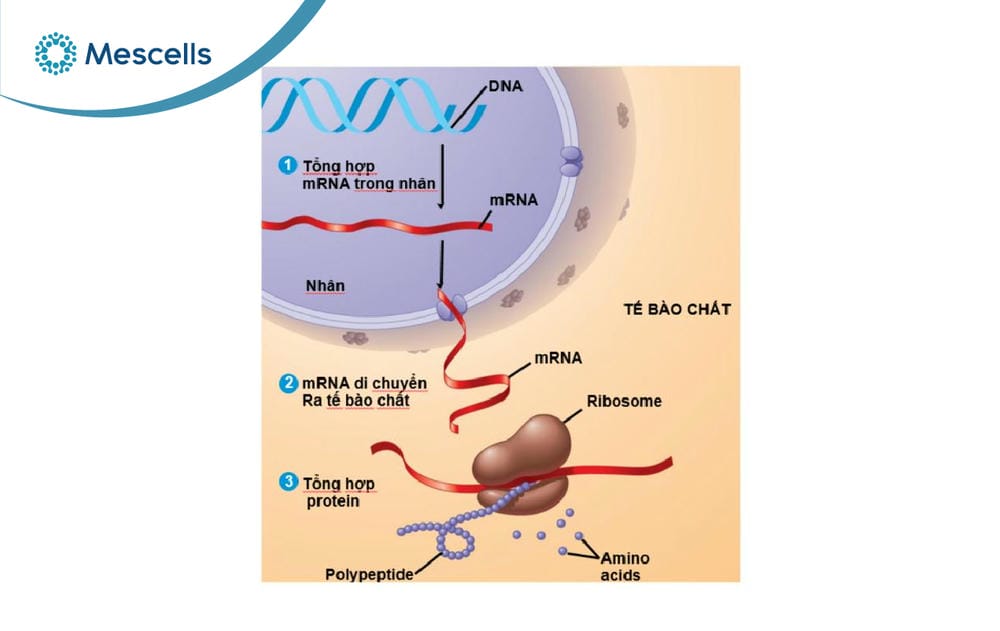
The process of translation from mRNA to protein
2. Components involved in translation
For translation to proceed accurately, the cell needs many components to work together. Each has its own role, but they are closely linked.
2.1. mRNA
mRNA (messenger RNA) is the molecule that carries genetic information from DNA to the ribosome. On the mRNA are codons containing the information that specifies the order of amino acids in the polypeptide chain. The ribosome moves along the mRNA and reads these codons in turn to build the protein. mRNA can be thought of as the cell’s instruction sheet for making protein.
2.2. Ribosome
The ribosome is where translation actually takes place. It is made of rRNA and ribosomal proteins and consists of two subunits. In eukaryotic cells, the cytoplasmic ribosome is the 80S ribosome, comprising the small 40S subunit and the large 60S subunit.
The ribosome’s tasks are to:
- Bind to the mRNA.
- Position the tRNA.
- Check the pairing between codon and anticodon.
- Catalyze the formation of peptide bonds.
- Move along the mRNA to elongate the polypeptide chain.
2.3. tRNA
tRNA (transfer RNA) carries amino acids to the ribosome. Each tRNA has an anticodon region that recognizes the corresponding codon on the mRNA. In this way, amino acids are added to the polypeptide chain in the encoded order. To ensure accuracy, each amino acid must be attached to the correct tRNA. This process involves the enzyme aminoacyl-tRNA synthetase.
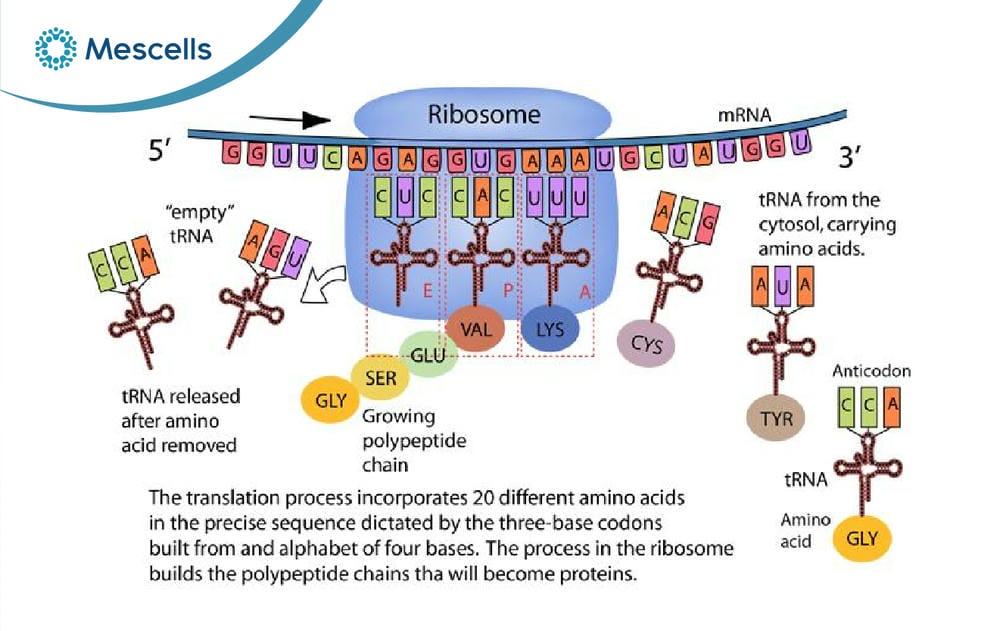
Translation – synthesis of the polypeptide chain at the ribosome
2.4. Amino acids
Amino acids are the raw material of proteins. During translation, amino acids are joined one after another by peptide bonds, forming a polypeptide chain. The order of amino acids is determined by the sequence of codons on the mRNA.
2.5. Translation factors
Besides mRNA, tRNA and the ribosome, translation also requires many supporting proteins such as initiation factors, elongation factors and termination factors. These help the ribosome begin translation, bring tRNA into the correct position, support chain elongation and release the protein when the process ends. The coordination between mRNA – ribosome – tRNA – amino acids – translation factors thus forms a highly accurate protein synthesis system.
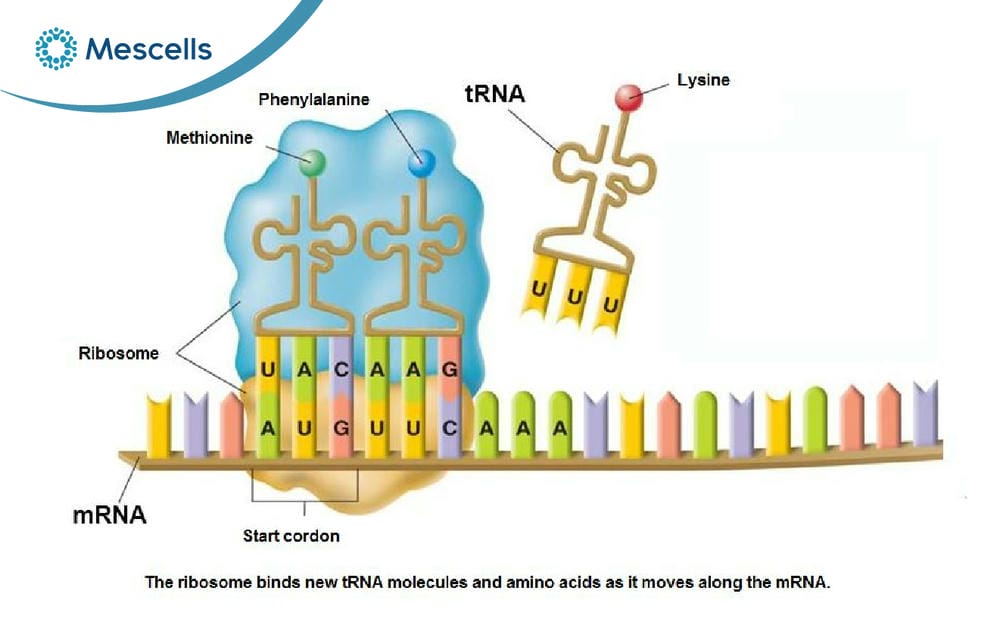
The ribosome moves along the mRNA while tRNAs bring amino acids to synthesize the polypeptide chain
3. Stages of translation
Having understood the components involved, the next step is to see how translation proceeds. Essentially, translation consists of three main stages:
3.1. Initiation
This is the first step of translation. The small ribosomal subunit recognizes and binds to the mRNA and scans it to find the start codon (AUG). At the same time, the tRNA carrying the initiator amino acid enters and pairs complementarily with this codon. The large ribosomal subunit then joins the small subunit to form a complete ribosome. Once the initiation complex has formed, the ribosome is ready to move on to elongation.
3.2. Elongation
In this stage, the ribosome reads the codons on the mRNA one after another. A tRNA carrying the corresponding amino acid enters the ribosome and pairs with the codon on the mRNA. The ribosome then catalyzes the formation of a peptide bond between the amino acids. The ribosome continues to move along the mRNA, the used tRNA is released and a new tRNA is brought in. This cycle repeats, making the polypeptide chain longer and longer.
3.3. Termination
Elongation continues until the ribosome reaches a stop codon on the mRNA. Stop codons do not code for an amino acid. Instead, release factors step in to help free the newly formed polypeptide chain from the ribosome. The components of the translation complex then separate, and the ribosome can be reused for further rounds of translation.
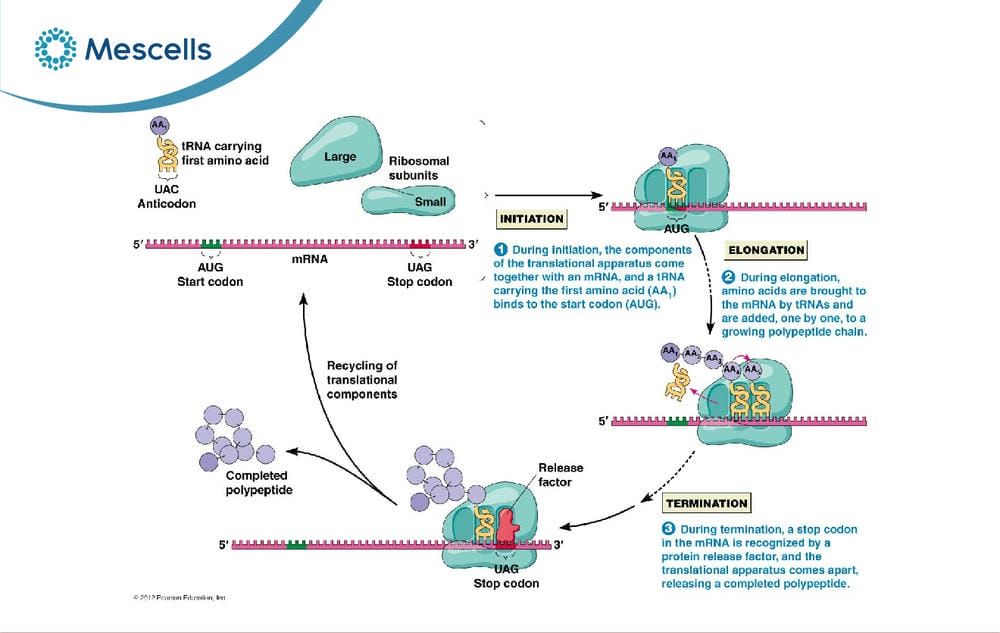
Diagram of translation from mRNA to protein, comprising initiation, elongation and termination with the participation of the ribosome and tRNA
4. Factors affecting translation
The speed and accuracy of translation are not fixed; they can vary depending on many factors within the cell.
- mRNA sequence and structure: The structure of the mRNA can affect how readily the ribosome can access and translate it. Non-coding regions such as the 5′ UTR and 3′ UTR also help regulate mRNA stability and the efficiency of protein production.
- Number and activity of ribosomes: The ribosome is the center of translation. Changes in the number, composition or function of ribosomes can therefore alter the cell’s capacity for protein synthesis. Ribosome-related abnormalities can lead to disorders of translation and a group of diseases known as ribosomopathies.
- tRNA and amino acids: The cell needs sufficient suitable tRNA and amino acids for translation to proceed continuously. Aminoacyl-tRNA synthetase plays a very important role in attaching the correct amino acid to its corresponding tRNA, thereby helping to maintain the accuracy of protein synthesis.
- Translation factors: Initiation, elongation and termination factors coordinate each step of translation. Changes in the activity of these factors can increase or decrease protein synthesis. In particular, translational regulation helps the cell adapt to nutritional status, stress, development and differentiation.
- Cell conditions: The supply of amino acids, energy, cellular stress and intracellular signals can all affect translation. Translation is therefore a dynamic process that the cell constantly adjusts to balance the need for protein against actual physiological conditions.
5. The role of translation
Having looked at the mechanism, we can see that translation plays a central role in gene expression and the life of the cell.
Protein synthesis: The most basic role of translation is to make protein from the information encoded in mRNA. Proteins then take part in many activities, such as:
- Building cell structure.
- Catalyzing metabolic reactions.
- Transporting substances.
- Cell signaling.
- Regulating gene activity.
- Taking part in immune responses.
Regulating gene expression: The cell controls not only the production of mRNA but also the extent to which mRNA is converted into protein. Through translational regulation, the cell can rapidly change the amount of protein produced in response to changes in the environment and in physiological needs.
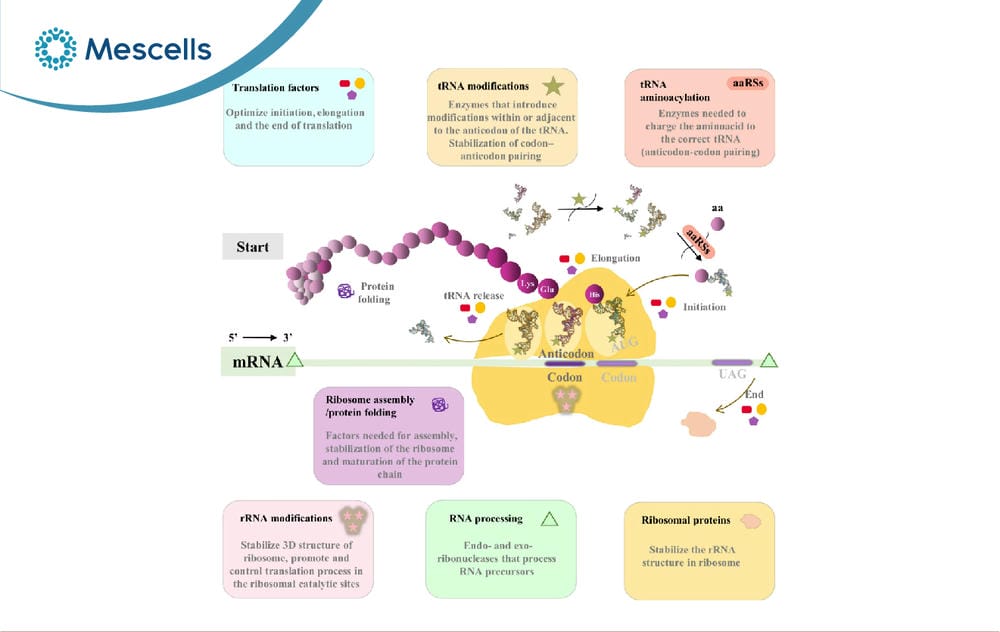
The role of translation in the flow of genetic information
Maintaining cell activity and adaptation: As cells grow, differentiate or undergo stress, their protein requirements change. Adjusting translation lets the cell prioritize production of the proteins needed at each moment. Conversely, dysregulated translation can lead to abnormal changes in protein expression and contribute to disease.
6. Applications of translation in medicine
Having looked at the mechanism and role of translation, we can see that this process not only enables cells to make protein but also opens up many applications in modern medicine. In particular, the ability to deliver mRNA into cells so that ribosomes translate it into a desired protein is becoming an important basis for mRNA vaccines, protein replacement therapy, cancer treatment and some gene technology-based treatments.
6.1. Potential applications of translation in medicine
- mRNA vaccine development: mRNA is delivered into cells and translated into antigen, stimulating an immune response. This technology has been applied successfully in the prevention of COVID-19 and is being studied for many infectious diseases as well as cancer. It is one of the most prominent applications of translation-based technology.
- Protein replacement therapy: mRNA can carry the information for cells to produce a protein that is missing or needs supplementing, opening up a line of research for certain genetic and other diseases.
- Cancer treatment: Translational control and RNA technology are being studied to develop cancer vaccines, therapies that produce therapeutic proteins, and methods that act selectively on cancer cells.
- Personalized medicine: mRNA sequences can be designed for specific therapeutic targets, creating the potential for therapies better suited to each patient.
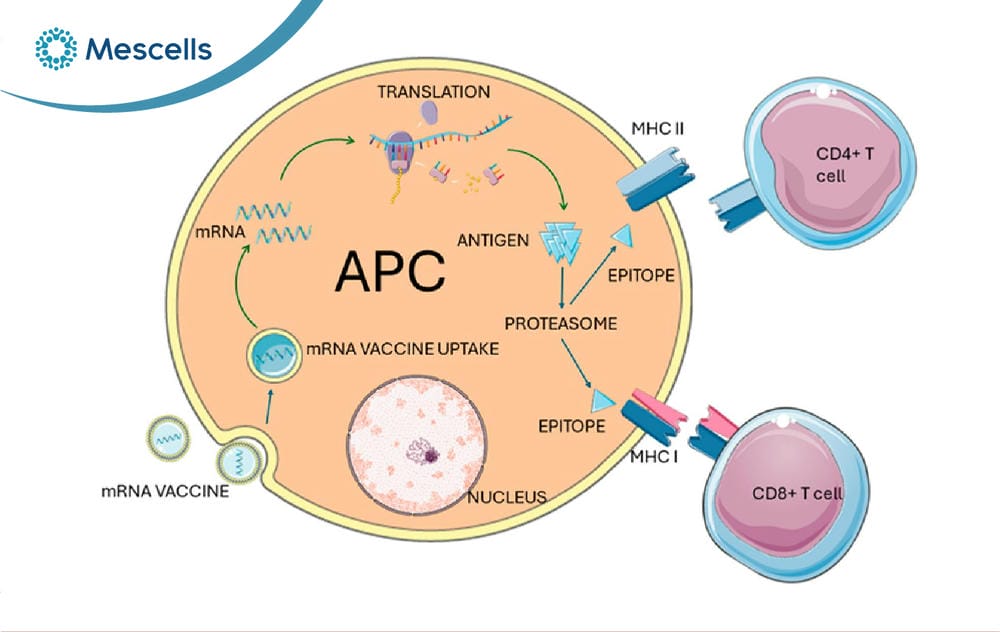
How vaccine mRNA works during translation
6.2. Challenges
Despite its great potential, the application of translation in medicine still faces some difficulties. mRNA can be unstable, easily degraded and hard to deliver precisely to target cells. In addition, translation efficiency and the level of immune response need to be controlled to achieve therapeutic effect and limit unwanted effects. Furthermore, the large-scale manufacture, storage, transport and quality control of mRNA products still need further refinement.
Translation is the essential process by which cells convert the genetic information in mRNA into protein, thereby sustaining many of the body’s life activities. By understanding the mechanism of translation, scientists can develop many medical applications such as mRNA vaccines, protein replacement therapy and methods that support cancer treatment. However, challenges concerning mRNA stability, delivery of mRNA to the right cells and control of translation efficiency still need further research. With the development of RNA technology, translation is expected to play an increasingly important role in modern medicine.
MESCELLS | MSC – SPECIALIZED HEALTHCARE SYSTEM FOR REGENERATIVE MEDICINE AND CELL THERAPY
- Hotline: 0866 022 097
- Address: TT21, No. 204 Nguyen Tuan, Thanh Xuan Ward, Hanoi, Vietnam.
- Fanpage: Mescells Institute of Applied Cell Technology Research
REFERENCES:
- Sonenberg N, Hinnebusch AG. Regulation of translation initiation in eukaryotes: mechanisms and biological targets. Cell. 2009;136(4):731-745. https://pubmed.ncbi.nlm.nih.gov/19239892/
- Jackson RJ, Hellen CUT, Pestova TV. The mechanism of eukaryotic translation initiation and principles of its regulation. Nature Reviews Molecular Cell Biology. 2010;11(2):113-127. https://pubmed.ncbi.nlm.nih.gov/20094052/
- Hinnebusch AG. Molecular mechanism of scanning and start codon selection in eukaryotes. Microbiology and Molecular Biology Reviews. 2011;75(2):307-322. https://pubmed.ncbi.nlm.nih.gov/21885680/
- Wadhwa A, Aljabbari A, Lokras A, Foged C, Thakur A. Opportunities and Challenges in the Delivery of mRNA-based Vaccines. Pharmaceutics. 2020;12(2):102. https://pubmed.ncbi.nlm.nih.gov/32013049/
Note: The content of this article is compiled from and refers to scientific reports and reputable medical journals around the world. However, this information is for reference only and is not a substitute for diagnosis or specialist medical treatment by a doctor.

Deputy Director, Mescells Institute of Applied Cell Technology Research



 Hotline
 Zalo
Zalo
 Fanpage