 0866 022 097
 institute@mescells.com
What Is tRNA? Structure, Functions and Potential Applications


tRNA (transfer RNA) is an important type of RNA that links the genetic code on mRNA with amino acids during protein synthesis. Beyond its role in translation, tRNA is also studied in synthetic biology, protein engineering and genetic code expansion. Join Mescells in the article below to learn more about what tRNA is, from its structure and functions to its potential applications in research and biotechnology!
1. What is tRNA?
tRNA is an RNA molecule that carries amino acids to the ribosome during translation. Each tRNA contains an anticodon that recognizes the corresponding codon on mRNA, thereby delivering the correct amino acid to the growing protein chain. Thanks to this mechanism, tRNA is regarded as a “bridge” between genetic information and protein, helping to ensure that protein synthesis proceeds accurately.
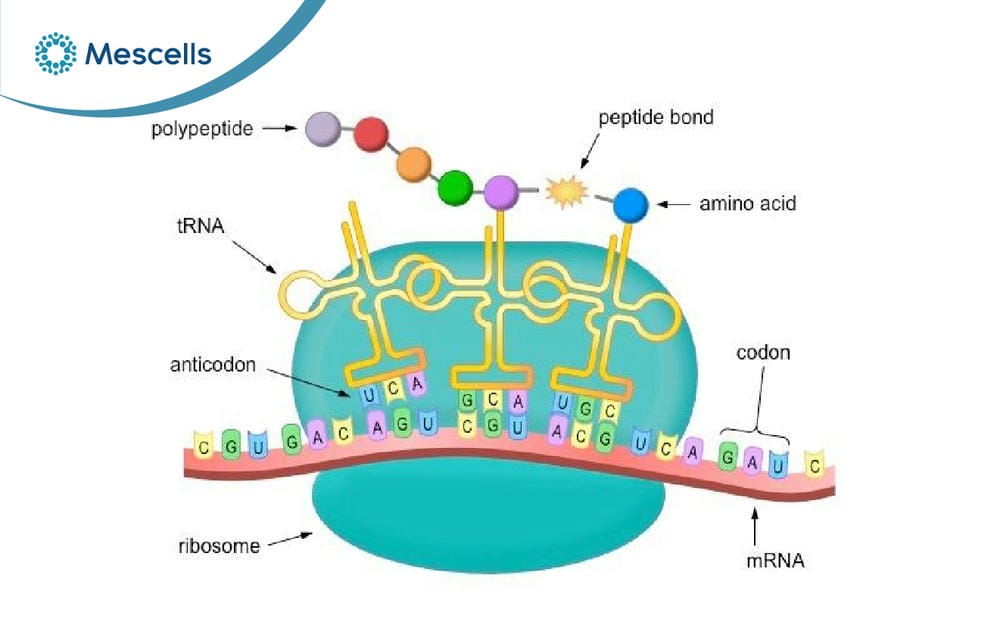
tRNA carries amino acids to the ribosome during translation
2. Structure of tRNA
To understand what tRNA is in terms of morphology, scientists point out that tRNA is relatively small but tightly organized. When drawn in two dimensions, tRNA typically has a “cloverleaf” shape consisting of the following main regions:
- Acceptor stem: the site where the amino acid attaches at the 3′ end.
- Anticodon arm: contains the anticodon that recognizes the codon on mRNA.
- D-arm: helps form the spatial structure and is recognized by the relevant enzymes.
- T-arm: supports interaction with the ribosome and translation factors.
- Variable loop: varies in length depending on the type of tRNA.
In three dimensions, these regions form a characteristic L-like structure that allows tRNA to interact efficiently with aminoacyl-tRNA synthetase and the ribosome. In addition, tRNA contains many modified nucleotides, which help maintain its structure, stability and accurate recognition during translation.

The cloverleaf structure of tRNA in translation
3. What does tRNA do?
Alongside the question of what tRNA is, the role of this RNA in the cell also attracts particular interest. The most prominent function of tRNA is to carry amino acids and decode genetic information during protein synthesis.
Before taking part in translation, tRNA is attached to its corresponding amino acid by the enzyme aminoacyl-tRNA synthetase. The tRNA then brings the amino acid to the ribosome and uses its anticodon to recognize the codon on mRNA. This process arranges amino acids in the correct order to form a protein.
Beyond this classical function, modern research shows that tRNA is also involved in translational regulation, stress responses, cell signaling and small tRNA-derived RNAs. These features open up many new research directions, especially in biotechnology and synthetic biology.

tRNA recognizes codons and carries amino acids during protein synthesis
4. Applications of tRNA in research and biotechnology
4.1. Potential applications of tRNA
tRNA is being exploited in many areas of research and biotechnology. One notable application is genetic code expansion, in which tRNA is engineered together with aminoacyl-tRNA synthetase to incorporate non-natural amino acids into proteins at desired positions. This approach supports the study of protein structure and function and the design of new proteins.
In addition, tRNA is being studied in cell-free biological systems, synthetic biology, protein engineering and gene editing technology. Some studies also use the tRNA scaffold to support the expression of multiple guide RNAs in CRISPR systems.
tRNA-derived fragments (tRFs) are attracting interest as molecules that may take part in gene regulation and other biological processes, adding further potential for biomedical research.
>>> Learn more: What is mRNA? The potential of mRNA technology in medicine
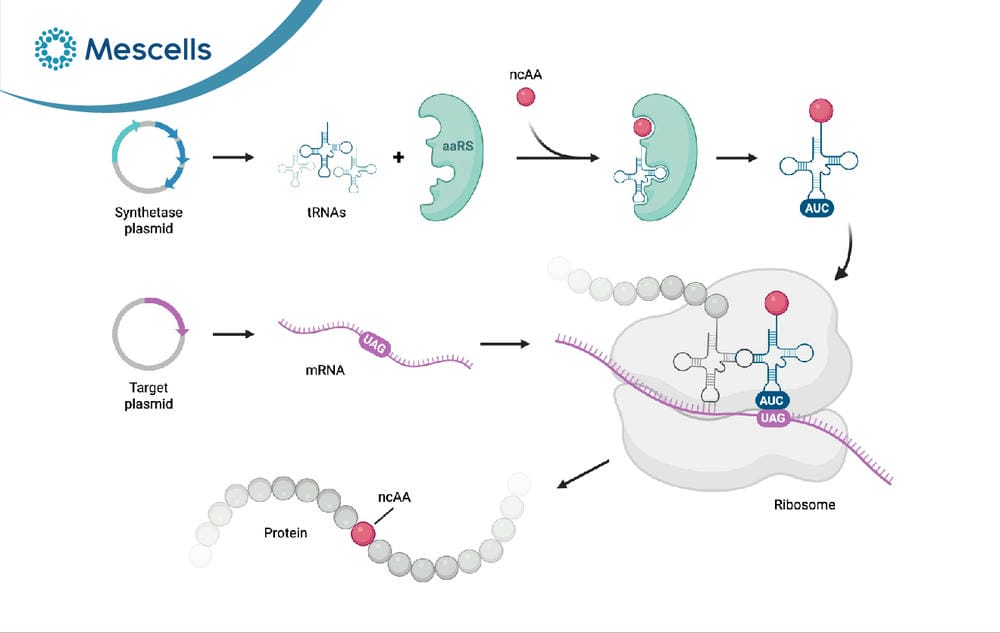
Applications of tRNA in research and biotechnology
4.2. Challenges in applying tRNA
Despite its great potential, the application of tRNA still faces a number of challenges. tRNA design must ensure proper folding, correct enzyme recognition and interaction with the ribosome, while limiting off-target effects. In particular, when engineered tRNA is used to expand the genetic code, the efficiency of incorporating non-natural amino acids into proteins may not yet be stable.
Moreover, chemical modifications of tRNA and differences in tRNA expression between cell types make controlling tRNA activity complex. Further research is therefore needed to improve the accuracy, efficiency and safety of tRNA-based systems.
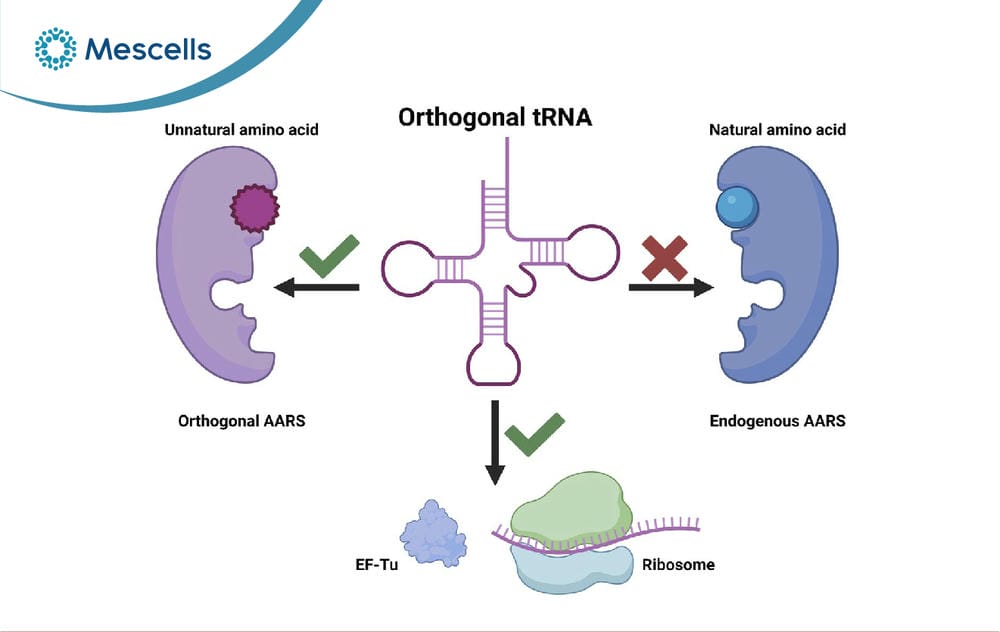
Challenges in designing artificial tRNA and translation systems
Understanding what tRNA is clarifies the role of this molecule in converting genetic information into protein, and shows its great potential in research and biotechnology. From translation research and protein engineering to genetic code expansion, tRNA is opening up many new applications. However, controlling the structure, accuracy and efficiency of tRNA remains an area requiring further study. Advances in this field will help broaden the use of tRNA in modern biotechnology and biomedicine.
MESCELLS | MSC – SPECIALIZED HEALTHCARE SYSTEM FOR REGENERATIVE MEDICINE AND CELL THERAPY
- Hotline: 0866 022 097
- Address: TT21, No. 204 Nguyen Tuan, Thanh Xuan Ward, Hanoi, Vietnam.
- Fanpage: Mescells Institute of Applied Cell Technology Research
REFERENCES:
- Berg MD, Brandl CJ. (2021). Transfer RNAs: diversity in form and function. RNA Biology, 18(3), 316–339.DOI: 10.1080/15476286.2020.1809197. https://pubmed.ncbi.nlm.nih.gov/32900285/
- Pan T. (2018). Modifications and functional genomics of human transfer RNA. Cell Research, 28(4), 395–404. https://pubmed.ncbi.nlm.nih.gov/29463900/
- Su Z, Wilson B, Kumar P, Dutta A. (2020). Noncanonical Roles of tRNAs: tRNA Fragments and Beyond. Annual Review of Genetics, 54, 47–69. https://pubmed.ncbi.nlm.nih.gov/32841070/
- Italia JS, Addy PS, Wrobel C, et al. (2017). The central role of tRNA in genetic code expansion. Biochimica et Biophysica Acta (BBA) – General Subjects, 1861(1 Pt B), 2801–2811. https://pubmed.ncbi.nlm.nih.gov/28323071/
Note: The content of this article is compiled from and refers to scientific reports and reputable medical journals around the world. However, this information is for reference only and is not a substitute for diagnosis or specialist medical treatment by a doctor.

Deputy Director, Mescells Institute of Applied Cell Technology Research



 Hotline
 Zalo
Zalo
 Fanpage